Cajun Chicken and Garlic Parmesan Linguine
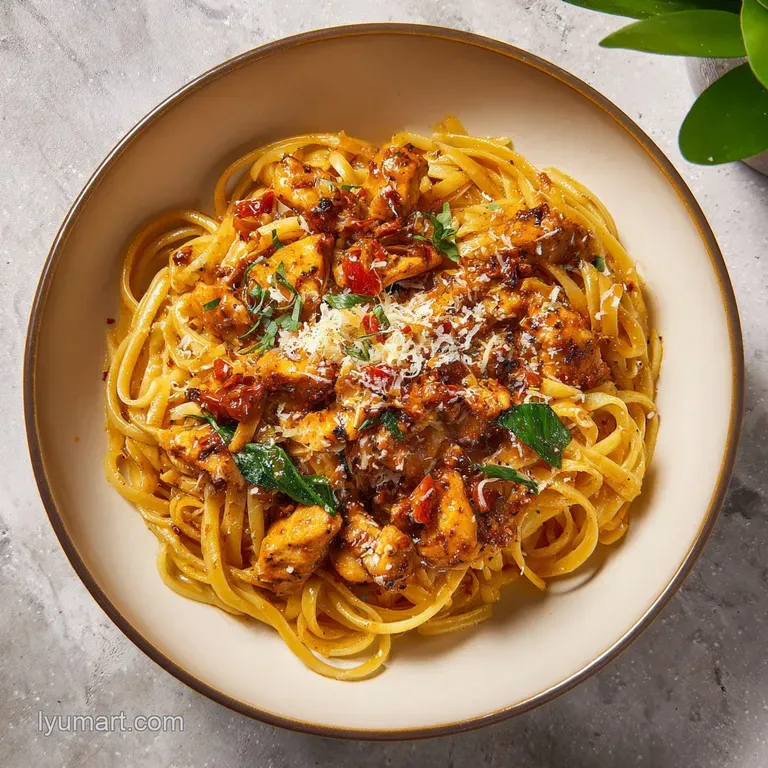
- Time: Active 15 minutes, Passive 15 minutes, Total 30 minutes
- Flavor/Texture Hook: Zesty, smoky spice meets a velvety, cheese coated linguine
- Perfect for: Busy weeknights, meal prep, or a simple date night
- The Secret to the Glossy Emulsion
- Essential Metrics for Your Pasta Night
- The Elements of Zesty Cajun Flavor
- The Basic Tools You Need Now
- Mastering the Flow of the Pan
- How to Fix Common Sauce Problems
- Smart Tweaks for Every Single Budget
- Kitchen Myths About Pasta and Searing
- Practical Storage and Waste Free Tips
- Perfect Sides for Your Spicy Pasta
- Very High in Sodium
- Recipe FAQs
- 📝 Recipe Card
The first time I tried to make a version of this, I ended up with a pan full of broken cream and chicken that felt like chewing on a pencil eraser. I had high hopes for that "sizzle" when the meat hit the oil, but I crowded the pan so much that the chicken just boiled in its own juices.
It was a grey, unappealing mess, and the "Cajun" flavor was basically non existent.
But we've all been there, right? That one Tuesday night where you just want something that tastes like it came out of a professional kitchen but you only have half an hour before the kids lose it.
I spent the next few months obsessing over the physics of the sear and the chemistry of the cream sauce until I finally nailed it. Now, this is the dish my friends beg for when we do potlucks.
The secret isn't in some fancy hidden ingredient or a secret spice blend you can only buy in New Orleans. It is all about the timing and how you treat that heavy cream. You want the spices to toast just enough to release their oils without burning the garlic.
When you get that balance right, the aroma filling your kitchen is better than any candle you could ever buy.
The Secret to the Glossy Emulsion
Starch Based Sauce Stability
When you add that 1/2 cup of reserved pasta water to your heavy cream and Parmesan, the residual starches act as a bridge between the fats and the liquids. This prevents the sauce from "breaking" or becoming oily, ensuring every strand of linguine is coated in a velvety, uniform layer of flavor.
The Maillard Reaction Boost
Searing the chicken at a high temperature creates a crust of complex flavor molecules that wouldn't exist if the meat were just simmered. These browned bits, or "fond", get scraped up into the sauce, providing a deep, savory backbone that complements the heat of the Cajun seasoning.
Fat Enclosed Spice Aromatics
Toasting the Cajun seasoning and smoked paprika in the olive oil and butter for 30 seconds before adding liquids "blooms" the spices. This process dissolves the flavor compounds into the fat, which then carries that heat more effectively to your taste buds than if the spices were just stirred into the liquid at the end.
| Chicken Thickness | Internal Temp | Rest Time | Visual Cue |
|---|---|---|---|
| 1 cm strips | 74°C | 3 mins | Opaque center, golden crust |
| 2 cm strips | 74°C | 5 mins | Firm to touch, no pink juice |
| Whole breast | 74°C | 8 mins | Deep golden, juices run clear |
If you're looking for another way to use these flavors, my Irresistible Garlic Parmesan recipe is a total winner for family dinner nights. It uses a similar flavor profile but in a more classic comfort food format.
| Fresh Component | Shortcut Swap | Flavor Impact |
|---|---|---|
| Fresh Garlic Cloves | Jarred Minced Garlic | Milder, slightly more acidic |
| Freshly Grated Parm | Canned "Green Shaker" | Saltier, grainier texture |
| Heavy Cream | Half and Half | Thinner, less stable sauce |
Essential Metrics for Your Pasta Night
| Ingredient | Science Role | Pro Secret |
|---|---|---|
| Heavy Cream | Fat Base | Bring to a simmer, never a hard boil to avoid curdling |
| Parmesan | Emulsifier | Grate it yourself; pre shredded has cellulose that prevents melting |
| Pasta Water | Binding Agent | It is "liquid gold" that fixes a dry or broken sauce instantly |
The Elements of Zesty Cajun Flavor
- 1.5 lbs chicken breasts: Sliced into thin strips. Why this? Strips cook faster and provide more surface area for the spices to cling to. (Substitute: Chicken thighs for more juice)
- 2 tbsp extra virgin olive oil: For searing. Why this? It has a high enough smoke point for the initial chicken sear. (Substitute: Avocado oil)
- 2 tbsp low sodium Cajun seasoning: The main flavor. Why this? Using low sodium allows you to control the final salt level yourself. (Substitute: Creole seasoning)
- 1 tsp smoked paprika: Adds depth. Why this? Provides a wood fired aroma without needing a grill. (Substitute: Sweet paprika)
- 1/2 tsp onion powder: Savory base. Why this? Distributes flavor more evenly than fresh onions in a quick sauce. (Substitute: Garlic powder)
- 4 tbsp unsalted butter: The sauce foundation. Why this? Controls the salt while providing a rich, creamy mouthfeel. (Substitute: Salted butter, but skip the extra salt)
- 5 cloves fresh garlic: Mince these finely. Why this? Fresh garlic provides a sharp, aromatic punch that powder lacks. (Substitute: 1 tbsp garlic paste)
- 1.5 cups heavy cream: For the velvety texture. Why this? High fat content prevents the sauce from separating when acidic spices are added. (Substitute: Whole milk with a teaspoon of cornstarch)
- 1 cup Parmesan cheese: Freshly grated is a must. Why this? It melts into the cream to create a thick, cheesy coating. (Substitute: Pecorino Romano for a saltier bite)
- 1/2 tsp red pepper flakes: For heat. Why this? Adds a targeted "zing" that lingers on the tongue. (Substitute: Cayenne pepper)
- 1 lb linguine pasta: The vessel. Why this? The flat surface area holds onto the heavy cream sauce better than spaghetti. (Substitute: Fettuccine)
- 1/2 cup pasta water: Reserved from the pot. Why this? The starch acts as a natural thickener for the final emulsion. (Substitute: Plain water with a pinch of flour)
- 1/4 cup Italian parsley: Chopped fine. Why this? Cuts through the richness of the cream with a hit of freshness. (Substitute: Fresh basil)
- 1/2 tsp kosher salt: To taste. Why this? Coarse grains make it harder to over salt the dish. (Substitute: Sea salt)
- 1/2 tsp black pepper: Freshly cracked. Why this? Essential for that bite at the back of the throat. (Substitute: White pepper)
The Basic Tools You Need Now
You don't need a professional kitchen to make this work, but having a large skillet is non negotiable. I usually reach for my 12 inch stainless steel pan because it develops a better "fond" (those little brown bits) than non stick.
If you only have non stick, that's fine, just know you might need to cook the chicken a minute longer to get that golden color.
A sturdy pair of tongs is your best friend here. You'll need them to flip the chicken strips individually so they don't just steam in a pile. Also, grab a microplane or a fine grater for that Parmesan.
Trust me, the stuff that comes out of a green can will not melt properly into the sauce, and you'll end up with a gritty texture that ruins the whole vibe.
Finally,, make sure you have a large pot for the linguine. Pasta needs room to dance! If the pot is too small, the starch concentration gets too high, and your noodles will stick together in a giant clump. We want individual strands coated in sauce, not a pasta loaf.
Mastering the Flow of the Pan
Phase 1: Boiling Water
Start by boiling a large pot of salted water. Add the 1 lb linguine and cook until just al dente, which usually takes about 9-10 minutes. Before you drain it, dip a measuring cup in and save 1/2 cup of that cloudy pasta water. This is your insurance policy for a perfect sauce.
Phase 2: Searing Chicken
While the pasta boils, toss your chicken strips with the Cajun seasoning, smoked paprika, and onion powder. Heat the olive oil in your skillet over medium high heat. Add the chicken in a single layer don't crowd it!
Cook for about 3-4 minutes per side until the edges are crisp and golden. Remove the chicken and set it aside on a plate.
Phase 3: The Sauce
Reduce the heat to medium and melt the 4 tbsp of butter in the same pan. Toss in the minced garlic and red pepper flakes. Cook for about 1 minute until the garlic smells fragrant but hasn't turned brown.
Pour in the 1.5 cups of heavy cream and bring it to a gentle simmer, scraping up all those flavorful brown bits from the bottom of the pan.
Phase 4: Final Emulsion
Whisk in the 1 cup of Parmesan cheese. Keep whisking until the cheese has completely melted into a smooth sauce. If it looks too thick, splash in some of that reserved pasta water. It should look like a thick, glossy coat that can cover the back of a spoon.
Phase 5: Finishing Touches
Add the cooked linguine and the seared chicken back into the pan. Toss everything together with the fresh parsley, salt, and black pepper. Continue tossing for 1-2 minutes over low heat until the sauce clings to every strand of pasta.
Serve it immediately while the sauce is at its peak silkiness.
For another fast meal with a different flavor profile, you might like this Mexican Chicken Recipe. It's just as quick but swaps the cream for a zesty lime finish.
How to Fix Common Sauce Problems
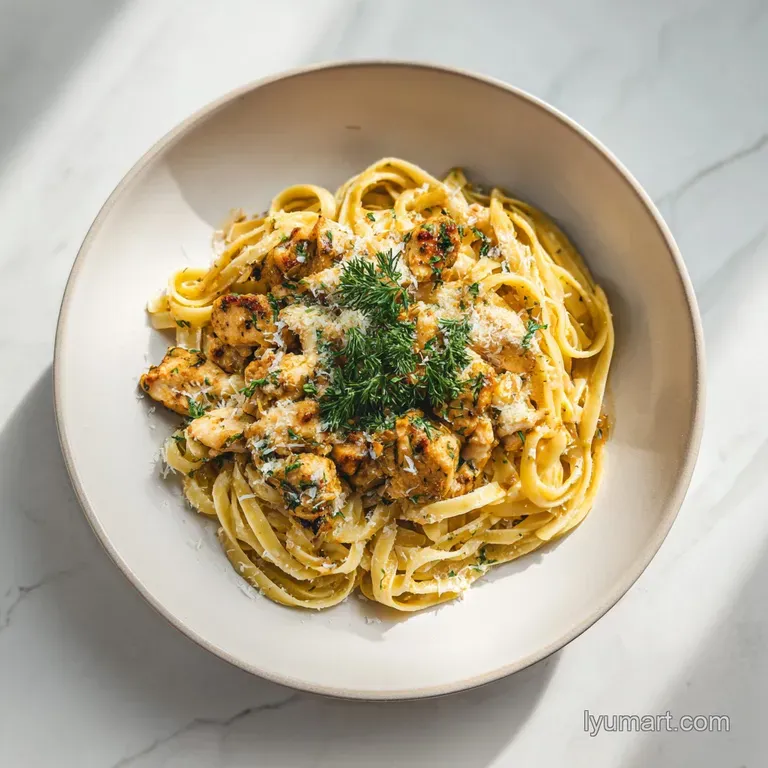
Why is my sauce grainy?
This usually happens for two reasons: either the heat was too high when the cheese was added, or you used pre shredded cheese. The anti caking agents in bagged cheese don't dissolve. To fix this, try adding a tablespoon of very hot pasta water and whisking vigorously off the heat.
What if my sauce is too thin?
If the sauce looks more like soup than a coating, don't panic. Let it simmer for another 2-3 minutes to reduce the liquid. You can also add an extra handful of Parmesan cheese, which acts as a thickening agent. Just remember that the sauce will continue to thicken significantly as it cools.
| Problem | Root Cause | Solution |
|---|---|---|
| Broken/Oily Sauce | Heat too high; fat separated | Whisk in a splash of cold cream off the heat |
| Bland Flavor | Not enough salt or "bloom" | Add a squeeze of lemon or more Cajun spice |
| Tough Chicken | Overcooked or crowded pan | Cook in batches; pull at 74°C internal temp |
Common Mistakes Checklist
- ✓ Pat the chicken strips dry before seasoning to ensure they sear instead of steam.
- ✓ Don't rinse your pasta! You need that surface starch to help the sauce stick.
- ✓ Add the Parmesan gradually while whisking to ensure a smooth melt.
- ✓ Keep that pasta water! Never drain the pot completely until the meal is served.
- ✓ Use a heavy bottomed pan to prevent the cream from scorching on the bottom.
Smart Tweaks for Every Single Budget
If you are cooking for a larger crowd, you can easily double this recipe. Just be sure to work in batches when searing the chicken. If you put 3 lbs of chicken in one skillet, it will drop the temperature too fast, and you'll lose that beautiful golden crust.
For the spices, you only need to increase them by 1.5x rather than a full 2x to keep the heat from becoming overwhelming.
Scaling down is even easier. For a solo dinner, use half a pound of chicken and half a box of linguine. Since you're using less liquid, the sauce will reduce much faster, so keep a close eye on the skillet. It’s better to pull it off the heat early than to let the cream turn into butter!
- If you want it creamier, swap 1/2 cup of the heavy cream for mascarpone cheese.
- If you want it lighter, use half and half but add an extra egg yolk to the sauce at the very end (off the heat) to keep the richness.
- If you want more crunch, top the finished dish with toasted panko breadcrumbs mixed with a little lemon zest.
| Method | Time | Texture | Best For |
|---|---|---|---|
| Stovetop (Classic) | 15 mins | Velvety and glossy | Most authentic results |
| One Pot Method | 22 mins | Starchier, thicker sauce | Less cleanup, busy nights |
| low-fat Version | 18 mins | Thinner, sharper spice | Health conscious eaters |
Kitchen Myths About Pasta and Searing
One of the biggest myths I hear is that you need to add oil to your pasta water to keep the noodles from sticking. Please, don't do this! All it does is coat the pasta in a slick film of oil, which then prevents this gorgeous Cajun sauce from sticking to the linguine.
The only thing you need in your pasta water is a generous amount of salt.
Another common misconception is that searing meat "seals in the juices." Science has proven this isn't true moisture is lost during searing regardless of the crust. However, we sear the chicken because it creates the Maillard reaction, which is where all that deep, savory flavor comes from.
It's about taste, not moisture retention.
Practical Storage and Waste Free Tips
This pasta is definitely best eaten fresh, as cream sauces have a habit of soaking into the noodles as they sit. If you do have leftovers, keep them in an airtight container in the fridge for up to 3 days.
When you go to reheat it, add a splash of milk or water to the bowl before microwaving or tossing it back in a pan. This helps "loosen" the sauce back to its original glory.
I don't recommend freezing this dish. Cream based sauces often separate and become grainy once thawed and reheated. If you have extra parsley or garlic, don't throw it out! Mix them with some softened butter and freeze that in an ice cube tray.
You'll have "Garlic Parmesan Butter" ready to go for your next steak or piece of toast.
Perfect Sides for Your Spicy Pasta
Because this Cajun Chicken and Garlic Parmesan Linguine is so rich and bold, you really want something bright or crunchy on the side to balance it out. A simple arugula salad with a lemon vinaigrette is usually my go to.
The peppery bite of the arugula mimics the Cajun heat, while the lemon cleanses the palate between bites of heavy cream.
If you want to go the classic route, you can't go wrong with a crusty baguette or garlic bread. Use it to swipe up every last drop of that sauce from the bottom of your bowl I promise nobody will judge you!
If you have leftover Cajun seasoning, sprinkle a little bit on some roasted broccoli or asparagus for a quick, spicy side dish that stays within the theme.
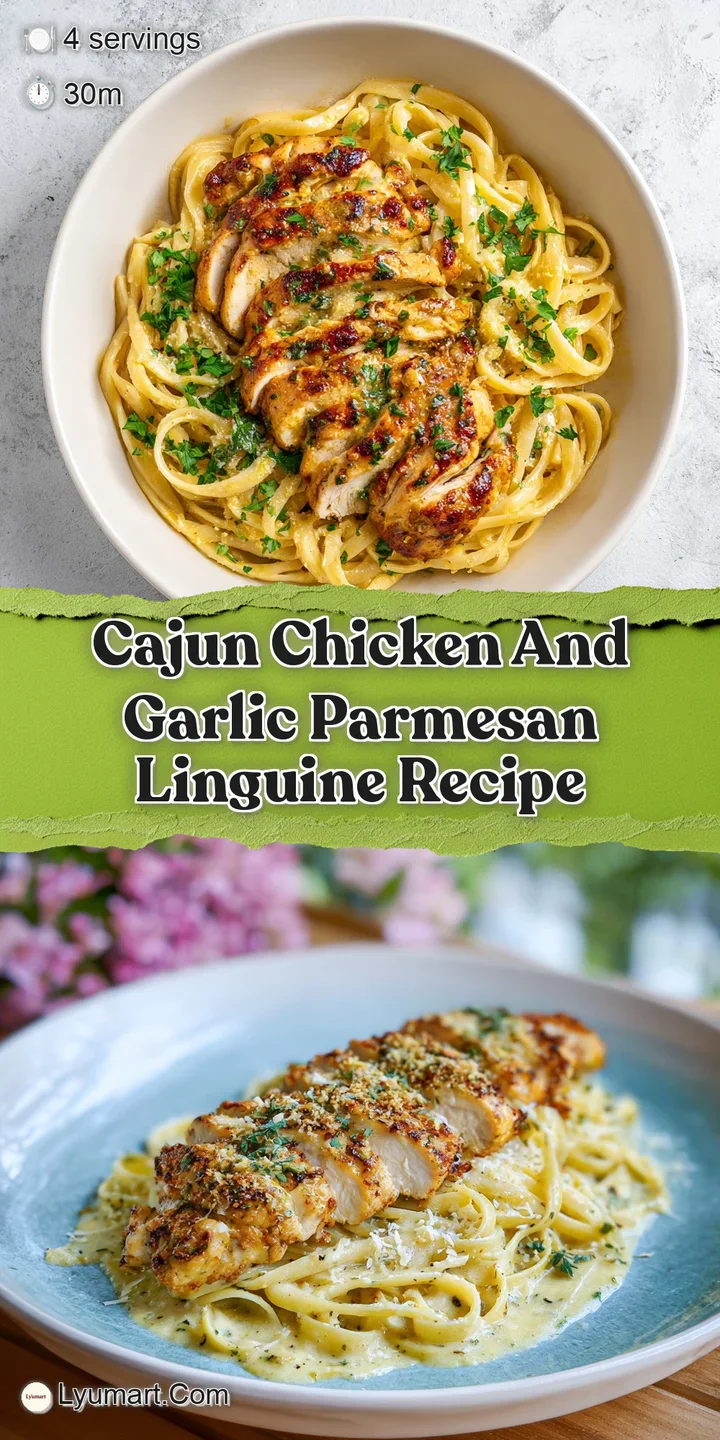
Very High in Sodium
1180 mg mg of sodium per serving (51% % of daily value)
The American Heart Association recommends limiting sodium intake to about 2,300mg per day for most adults.
Tips to Reduce Sodium in Your Cajun Chicken Pasta:
-
Reduce Parmesan-15%
Parmesan cheese is a significant source of sodium. Reduce the amount of Parmesan by half, or substitute with a lower sodium cheese like part skim ricotta (approximately 80mg sodium per 1/4 cup).
-
Omit Added Salt-25%
Eliminate the 1/2 teaspoon of kosher salt. The Cajun seasoning and Parmesan already contribute sodium. Taste the dish before adding any additional salt.
-
DIY Cajun Seasoning-20%
Create your own low-sodium Cajun seasoning. Most store-bought Cajun blends are high in sodium. Mix your own using herbs and spices like paprika, cayenne pepper, garlic powder, onion powder, oregano, and thyme. This allows you to control the sodium content and avoid unnecessary additives.
-
Unsalted Butter
Using unsalted butter is excellent! It helps control the overall sodium content in the dish. No change needed.
-
Enhance Flavor with Herbs
Experiment with fresh herbs like basil, oregano, or thyme to boost the flavor of your pasta dish. These herbs can add depth and complexity without adding any sodium.
Recipe FAQs
Is cajun chicken good with alfredo?
Yes, they create a popular fusion flavor. The spicy, smoky Cajun seasoning cuts through the richness of the traditional Alfredo, creating a balanced but decadent profile. This recipe utilizes a Garlic Parmesan base which achieves a similar effect to a spicy Alfredo.
What cream do you use for cajun chicken pasta?
Use heavy cream (at least 35% fat content). The high fat content stabilizes the sauce when the acidic Cajun spices are introduced, preventing curdling or breaking. Lighter creams, like Half and Half, will result in a much thinner final consistency.
What sauce compliments cajun chicken?
A rich, cheese forward cream sauce is ideal. The fat in the cream balances the heat and acidity of the Cajun blend perfectly, as demonstrated in this Garlic Parmesan Linguine. If you want to explore a different preparation that still uses bold garlic, check out the Garlic Parmesan Roasted recipe for inspiration.
Can I add cajun seasoning to pasta?
Yes, but you must toast it first for best results. Stirring the seasoning directly into the sauce without blooming it in fat results in a duller flavor. Toasting the dry spice blend in the hot oil/butter before adding liquid awakens the essential oils, similar to how we bloom spices in the Green Chicken Chili recipe for depth.
How do I prevent the heavy cream sauce from breaking or separating?
Never let the cream boil hard after adding cheese or acid. Maintain a gentle simmer and always use freshly grated Parmesan, as pre-shredded varieties contain cellulose that inhibits smooth melting. If you nail the sauce stability here, you've mastered a key emulsion technique applicable to many dishes.
Can I make this with chicken thighs instead of breasts?
Yes, chicken thighs are an excellent, flavorful substitute. Thigh meat has a higher fat content, making it significantly more forgiving if accidentally overcooked, resulting in a juicier texture. This works well, especially if you are looking for a richer outcome than the Low Carb Cheesy recipe alternative.
What is the purpose of saving the starchy pasta water?
The starch binds the fat and liquid together, creating a stable emulsion. This starchy water, often called "liquid gold," is essential for coating the noodles evenly and thickening the sauce without relying only on flour or cornstarch. It helps bridge the gap between the heavy cream and the liquids.
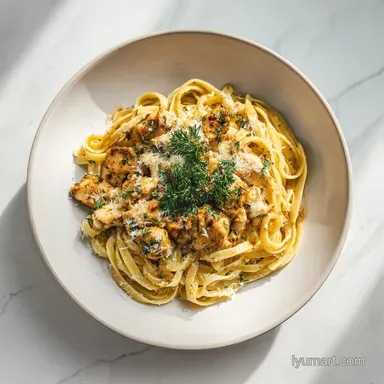
Cajun Garlic Parmesan Linguine
Ingredients:
Instructions:
Nutrition Facts:
| Calories | 1234 kcal |
|---|---|
| Protein | 75 g |
| Fat | 65 g |
| Carbs | 90 g |
| Fiber | 4 g |
| Sugar | 5 g |
| Sodium | 1180 mg |
