Air Fryer French Fries: Ultra-Crispy
- Time: Active 15 minutes, Passive 50 minutes, Total 65 minutes
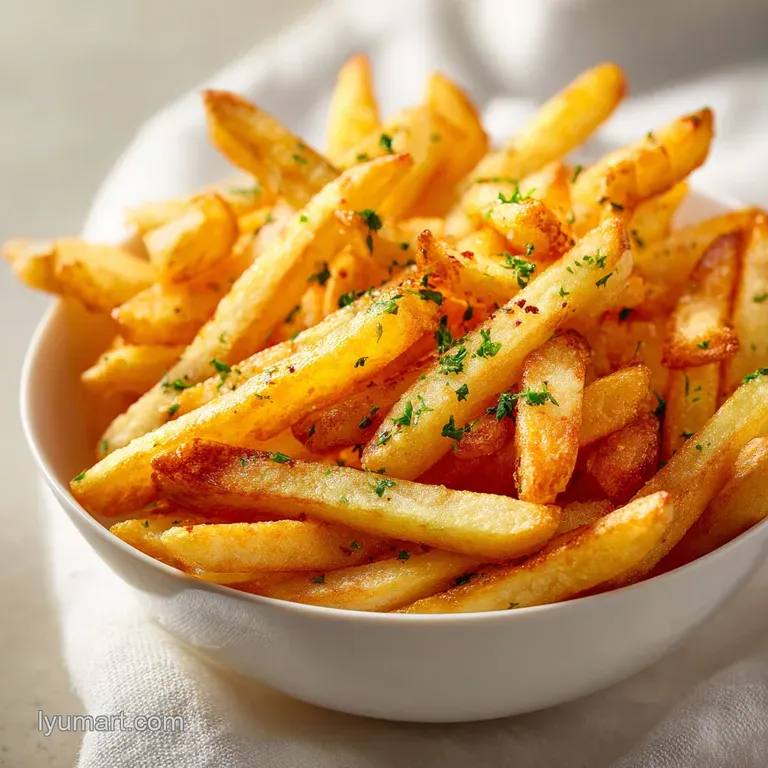
- Flavor/Texture Hook: A glass like shatter on the outside with a fluffy, cloud like center.
- Perfect for: A budget-friendly weeknight side or a guilt free burger night companion.
- The Secret to Air Fryer French Fries
- Essential Specs for Success
- Budget Ingredients and Swaps
- Simple Gear for Crispiness
- From Raw Potato to Plate
- Solving Common Texture Issues
- Smarter Swaps for All
- Storing and Using Every Scrap
- Classic Sides and Pairings
- Potato Myths Debunked
- Recipe FAQs
- 📝 Recipe Card
The Secret to Air Fryer French Fries
Have you ever wondered why some potatoes turn into dark, bitter sticks in the fryer while others come out looking like golden bars of treasure? It actually comes down to a invisible struggle happening inside the potato cells involving starch and surface sugars.
I used to think a quick rinse was enough to get that classic crunch, but honestly, I was just making limp, sad potato wedges that lacked any real personality.
The first time I tried the sugar water trick, I thought it sounded like a total mistake. Why would we add sugar to something we want to be salty and savory? But then I heard that first "shatter" when I bit into a fry, and I realized I’d been doing it wrong for years.
The sugar helps draw out the excess starch while actually assisting with a controlled browning that looks beautiful rather than burnt. It’s the kind of kitchen hack that feels like a tiny miracle when you see the results on your plate.
We are going for that satisfying, classic comfort food vibe here. No fancy equipment is required, just a bit of patience and a willingness to dry your potatoes like they're a prized possession.
If you've been disappointed by soggy results in the past, trust me, this specific sequence of soaking and coating is going to change your Friday nights forever. We're skipping the greasy mess of deep frying and sticking to the humble, effective air fryer method that actually delivers on its promises.
Essential Specs for Success
Starch Management: Soaking in water pulls out the surface amylose, which is the culprit behind that gummy, sticky texture that makes fries clump together.
Surface Dehydration: Using a lint free towel to remove every drop of moisture ensures the oil can actually bond with the potato skin instead of steaming it from the outside in.
Thermal Circulation: The high speed fan in the air fryer mimics the intense heat of a deep fryer by moving hot air around the starch slurry, creating a rigid, crispy shell.
Sugar Equilibrium: A tiny amount of granulated sugar in the soak helps the exterior caramelize at exactly 380°F (195°C), giving you that mahogany color without the bitter charred taste of overcooked starch.
| Cook Method | Total Time | Texture Outcome | Best For |
|---|---|---|---|
| Deep Frying | 35 minutes | Very oily and soft | Traditional pub style |
| Oven Baking | 45 minutes | Crispy but uneven | Large batch cooking |
| Air Fryer | 20 minutes | Shatter crisp and light | Healthy, quick results |
This comparison highlights why the air fryer is such a win for the home cook. While deep frying gives you that heavy, saturated feel, the air fryer method focuses on the integrity of the potato itself. You get a much cleaner flavor profile that pairs beautifully with a simple salt seasoning.
| Ingredient | Science Role | Pro Secret |
|---|---|---|
| Russet Potatoes | High starch content | Keeps the inside fluffy and dry |
| Avocado Oil | High smoke point | Allows for 380°F heat without scorching |
| Cornstarch | Moisture absorber | Creates a microscopic "crust" on the skin |
| Cold Water | Starch extraction | Keeps the potato rigid before the cook |
Budget Ingredients and Swaps
The beauty of this recipe is that it relies on pantry staples that cost pennies. You don't need expensive specialty oils or exotic seasonings to get a result that tastes like it came from a high end bistro.
Russet potatoes are the workhorse of the kitchen for a reason they are cheap, shelf stable, and possess the perfect internal structure for frying.
- 2 lbs Russet Potatoes: These are non negotiable for the best fluff. Why this? High starch to water ratio ensures the center doesn't turn into mush.
- 4 cups Cold Water: Essential for the soak. Why this? Cold temps keep the potato cells tight and crisp.
- 1 tsp Granulated Sugar: Our secret browning agent. Why this? Promotes even browning through the Maillard reaction without adding sweetness.
- 1.5 tbsp Avocado Oil: A clean tasting, over high heat fat. Why this? Won't smoke at 380°F, keeping the flavor neutral and fresh.
- 1 tbsp Cornstarch: The crunch multiplier. Why this? Absorbs any leftover surface moisture to create a brittle exterior.
- 1 tsp Fine Sea Salt: For that essential punch. Why this? Fine grains stick better to the textured surface of the fry.
- 0.5 tsp Garlic Powder: A humble flavor booster. Why this? Adds depth without the risk of burning like fresh garlic.
| Original Ingredient | Substitute | Why It Works |
|---|---|---|
| Avocado Oil | Refined Coconut Oil | High smoke point but adds a very faint sweetness |
| Russet Potatoes | Yukon Gold | Creamier interior but will be less crunchy |
| Cornstarch | Potato Starch | Similar moisture absorption. Note: Result is slightly more "glassy" |
| Fine Sea Salt | Celery Salt | Adds a savory, herbal note common in old school diners |
Simple Gear for Crispiness
You really only need a few basic tools to make this work. A sharp chef's knife is your best friend here because uniform sticks mean uniform cooking. If you have a mandoline, use the safety guard! I once tried to rush the slicing process and let's just say the potatoes weren't the only thing that got "cut" that day.
Chef's Tip: If your air fryer basket is older and prone to sticking, give it a 3 minute preheat before adding the fries. This creates a "non stick" thermal barrier that helps the starch slurry set instantly rather than clinging to the metal.
Make sure you have a large bowl for the soaking phase. Crowding the potatoes in the water prevents the starch from washing away properly. You want enough room for the water to circulate.
Also, grab some lint free kitchen towels paper towels tend to shred and stick to the wet potatoes, which is a nightmare to clean off.
From Raw Potato to Plate
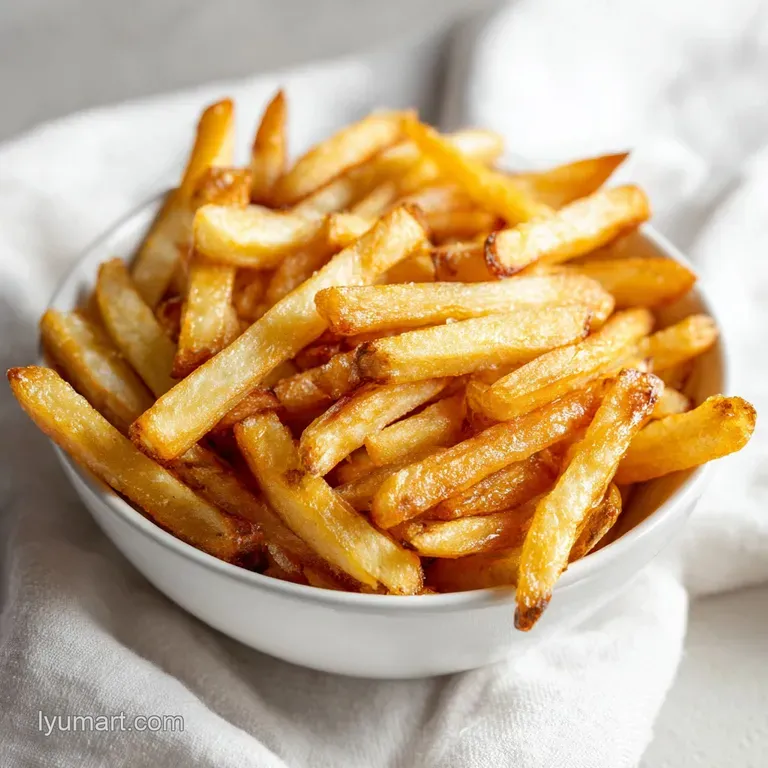
- Peel and slice. Slice the 2 lbs Russet potatoes into uniform 1/4 inch thick sticks using a knife or mandoline. Note: Uniformity ensures every fry finishes at the exact same moment.
- Start the soak. Submerge the potato sticks in a large bowl with 4 cups of cold water and 1 tsp of sugar. Let them sit for 30 minutes to draw out the excess surface starch.
- Drain and dry. Pour off the water and lay the potatoes on lint free kitchen towels. Pat them until bone dry; moisture will turn your fries into steamed mash if left behind.
- Oil coating. Transfer the dry potatoes to a clean, dry bowl and toss with 1.5 tbsp avocado oil until every surface is shimmering.
- Add the starch. Sift the 1 tbsp cornstarch, 0.5 tsp garlic powder, and 1 tsp salt over the oiled potatoes. Toss vigorously until the starch turns into a very thin, invisible slurry.
- Arrange the basket. Place the fries in the air fryer in a single layer. Work in batches if your fryer is small; overcrowding is the fastest way to get soggy results.
- The first fry. Set the temperature to 380°F (195°C) and air fry for 10 minutes.
- The shake. Open the basket and give it a good shake to redistribute the fries and ensure the hot air hits the pale spots.
- The final crisp. Continue frying for another 5-10 minutes until they are mahogany colored and sizzle when you move them.
- Serve immediately. Dump them into a bowl while they are still screaming hot to maintain that essential crunch.
Solving Common Texture Issues
The most frustrating thing about making "Air Fryer French Fries" is when they come out looking great but feeling like wet cardboard. Usually, this happens because of one of two things: either the potatoes were still damp when they met the oil, or the air fryer was packed too tightly.
If the air can't dance around each individual fry, they just end up sweating on each other.
Correcting Limp Potato Sticks
If your fries aren't standing up straight, it's a moisture problem. It could be that your Russets were particularly watery, or the soak didn't last long enough. Sometimes, just giving them an extra 3 minutes at a higher temp (400°F) right at the end can save a batch, but the real fix starts in the drying phase.
Preventing Burnt Sugar Edges
If you notice the tips are turning black while the centers are raw, your slices are likely too thin or uneven. The sugar in the soak is meant to help with browning, but if the heat is too aggressive or the fries are spindly, they will catch fire (metaphorically).
Stick to that 1/4 inch thickness for the best balance of crispy shell and velvety interior.
| Problem | Root Cause | Solution |
|---|---|---|
| Soggy texture | Excess surface water | Use a hair dryer on "cool" if towels aren't enough |
| Bitter taste | Burned starch | Lower heat to 370°F and extend time by 5 mins |
| Uneven browning | Overcrowded basket | Cook in two separate batches with space between |
Common Mistakes Checklist:
- ✓ Never skip the 30 minute soak; it's the difference between "okay" and "shatter crisp."
- ✓ Ensure the potatoes are truly bone dry before adding oil.
- ✓ Don't dump all the starch in one spot; sifting it ensures a thin, even coat.
- ✓ Shake the basket at least twice if you are cooking a larger batch.
- ✓ Let the air fryer preheat for 3 minutes for a more consistent cook.
Smarter Swaps for All
If you are looking for a lower glycemic option, you can actually use this same method with sweet potatoes, though the cook time will be slightly shorter as they have more natural sugar. For those watching their salt intake, swap the sea salt for a blend of smoked paprika and onion powder.
It gives the illusion of saltiness through a savory "umami" punch without the sodium spike.
If you love the texture of these fries but want something even more substantial, you might enjoy this Tater Tot Casserole which uses similar potato principles to achieve a satisfying, crisp top layer.
For a keto friendly version, you can swap the Russets for jicama sticks. Note that jicama has a much higher water content, so you'll want to skip the sugar soak and increase the air frying time by about 10 minutes.
The cornstarch should be swapped for a light dusting of almond flour or unflavored whey protein isolate to keep the carb count low while still providing that "slurry" effect that clings to the surface.
Storing and Using Every Scrap
French fries are notoriously bad at sitting around. If you have leftovers, do not I repeat, do not put them in the microwave. They will turn into sad, mushy ghosts of their former selves. Instead, keep them in an airtight container in the fridge for up to 3 days.
To reheat, toss them back into the air fryer at 380°F for about 4 minutes. They’ll actually come out even crispier the second time around!
If you find yourself with small potato nubs and scraps from the slicing process, don't throw them away. I like to toss them in the same oil and starch mixture and fry them up as "potato croutons" for a salad or a bowl of soup. They add a wonderful little sizzle to a boring bowl of greens.
You can even freeze the par soaked and dried sticks on a baking sheet, then bag them up for a "frozen fry" experience that blows the store-bought bags out of the water.
Classic Sides and Pairings
These fries are a humble masterpiece on their own, but they really sing when paired with a protein that has some juice to it. I love serving these alongside baked chicken thighs because the crispy skin of the chicken matches the shatter crisp texture of the fries perfectly. It’s a comfort food match made in heaven.
Another brilliant way to serve these is "loaded style." While the fries are still hot, hit them with a bit of extra garlic powder and a flurry of freshly grated parmesan cheese. The residual heat will melt the cheese just enough to make it cling to the fries without losing that velvety interior.
If you're feeling adventurous, a side of malt vinegar for dipping provides a sharp, tangy contrast to the earthy Russet flavor that is absolutely addictive.
Potato Myths Debunked
Many people believe that you need a gallon of oil to get a "real" fry texture. This is simply not true. The air fryer uses convection to move a tiny amount of fat across the surface of the potato so quickly that it creates the same dehydration effect as a deep vat of oil.
The crust adds flavor through the Maillard reaction, not through oil saturation.
Another common myth is that you should soak potatoes in hot water to speed things up. Never do this! Hot water starts to cook the starch and turns the outside of the potato into a gummy paste that will never get crispy.
Always use cold water to keep the structure of the potato stick intact while the excess starch gently drifts away.
Finally,, some say you should leave the skins on for "health" and others say peel them for "crunch." In my experience, leaving the skins on actually helps the fry hold its shape better in the air fryer.
The skin acts like a natural skeleton that prevents the potato from collapsing as the water evaporates, leading to a much more satisfying bite.
Recipe FAQs
How long do you cook French fries in the air fryer?
Cook for 15 to 20 minutes at 380°F. Ensure you shake the basket halfway through the cycle to ensure the fries achieve a consistent, mahogany colored crisp.
Is an air fryer good for pancreatitis?
No, proceed with caution. Even with the minimal 1.5 tablespoons of avocado oil used in this recipe, air-fried foods can be difficult for some individuals with pancreatic issues to digest due to the concentration of starch and fat.
Why soak potatoes in water before air frying?
Soaking removes excess surface starch. This step is essential because surface starch prevents potatoes from becoming crispy and can cause them to glue together in the basket.
Is air frying ok for diabetics?
No, consult your healthcare provider first. Potatoes are high in carbohydrates, which can cause significant blood sugar spikes regardless of the cooking method used.
Is it true I must reheat leftover fries in the microwave?
No, this is a common misconception. Microwaves turn fries into mushy, soft scraps; instead, reheat them in your air fryer at 380°F for 4 minutes to restore their crunch.
How to ensure my fries reach maximum crispiness?
Pat the potatoes until bone dry after soaking. If you enjoyed mastering the moisture control technique here, you can apply similar principles to achieve a perfect crust on our crispy baked potatoes.
Can I use potato scraps for other dishes?
Yes, toss scraps in the same oil and starch mixture. They air fry beautifully and can be used as a quick, crispy snack rather than going to waste.
Crispy Air Fryer French Fries
Ingredients:
Instructions:
Nutrition Facts:
| Calories | 236 kcal |
|---|---|
| Protein | 4.8 g |
| Fat | 5.4 g |
| Carbs | 43.8 g |
| Fiber | 3.1 g |
| Sugar | 1.2 g |
| Sodium | 585 mg |
