Baked Potato with Sea Salt

- Time: Active 10 minutes, Passive 60 minutes, Total 1 hour 10 minutes
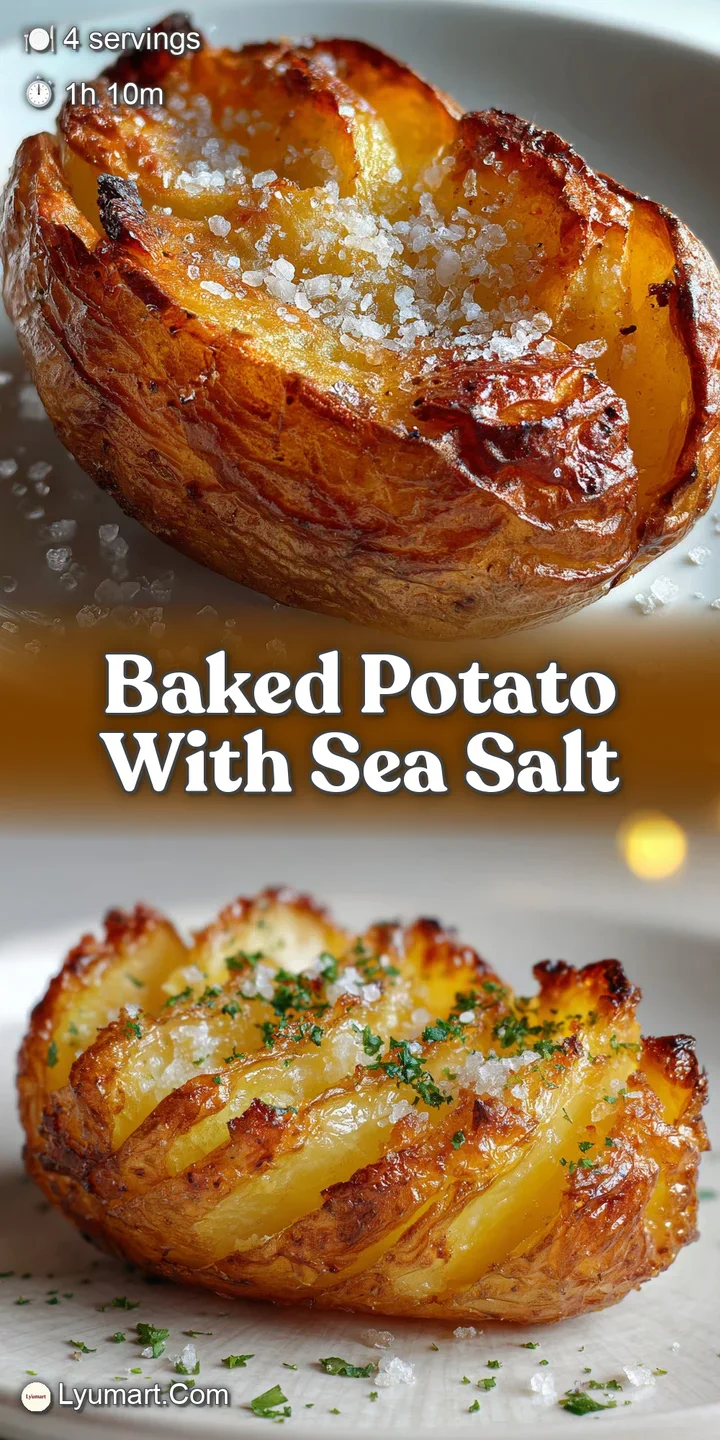
- Flavor/Texture Hook: A shattering, salty crust surrounding a velvety, cloud like interior.
- Perfect for: Low effort weeknight dinners, holiday sides, or a solo comfort meal.
- Master the Flawless Baked Potato with Sea Salt
- Vital Statistics for Success
- Components for a Fluffy Interior
- Essential Gear for Great Spuds
- Step-by-Step Method for Crispy Skin
- Common Potato Texture Solutions
- Creative Ways to Swap Ingredients
- Storage and Reheating Guidelines
- Ideal Pairings for Every Meal
- Critical High in Sodium
- Recipe FAQs
- 📝 Recipe Card
Master the Flawless Baked Potato with Sea Salt
I used to be a "wrap it in foil" kind of person because that's how my mom did it. But every single time, I ended up with a potato that felt more like it had been steamed in a damp basement rather than roasted in a hot oven. The skin was always leathery and sad.
One night, after a particularly disappointing dinner, I decided to ditch the foil entirely and treat the potato like a piece of high end sourdough. I cranked the heat, massaged the skins with oil, and didn't hold back on the salt.
When I pulled them out 60 minutes later, the aroma was like a campfire at a beach. I tapped the skin with a fork and it actually made a "clink" sound. This article shares the ultimate recipe for a perfectly fluffy Baked Potato with Sea Salt and Butter.
Since that night, I've never gone back to the soggy foil method.
You don't need fancy tools to get this right, just a bit of patience and the right kind of salt. We're aiming for a contrast that makes your taste buds wake up the kind where you actually want to eat the skin more than the middle.
Trust me, once you hear that first crack of the crust, you'll understand why this is the only way to cook them.
Vital Statistics for Success
Starch Dehydration: High heat drives moisture out of the potato skin, allowing the surface to crisp up while the internal steam builds pressure to create a fluffy texture.
The 1.5 tbsp coarse sea salt acts as a desiccant, pulling even more moisture from the surface to ensure that signature "shatter" when you bite in.
| Method | Time | Texture | Best For |
|---|---|---|---|
| Conventional Oven | 60 minutes | Maximum crunch, fluffy center | The gold standard |
| Air Fryer | 45 minutes | Very crispy, slightly denser | Small batches |
| Microwave (Shortcut) | 12 minutes | Soft, pale skin, moist inside | True emergencies only |
Choosing the right method depends on how much you value that crust. If you have the time, the oven is non negotiable for the best result. It's the difference between a soggy snack and a meal defining side dish.
Components for a Fluffy Interior
To get that velvety finish, we need to look at the specific 4 large Russet potatoes (10-12 oz each) we're using. These are high starch potatoes, which is the "science" secret to a meal that isn't gummy. If you're looking to round out your dinner, these spuds go beautifully with a Honey Garlic Chicken recipe because the sweet glaze balances the salty potato skin perfectly.
| Ingredient | Science Role | Pro Secret |
|---|---|---|
| Russet Potatoes | High starch content | Scrub them hard to remove dirt but keep the skin intact for crisping. |
| Coarse Sea Salt | Moisture extractor | Use coarse grains; they don't dissolve immediately, providing a tactile crunch. |
| European Butter | High fat, low water | The higher fat content (82%+) creates a richer mouthfeel than standard butter. |
- 4 large Russet potatoes (10-12 oz each), scrubbed and dried Why this? Russets have the starch structure needed for a dry, flaky interior.
- 2 tbsp extra virgin olive oil Why this? Provides the fat needed to "fry" the skin in the oven.
- 1.5 tbsp coarse sea salt Why this? Essential for texture and drawing out surface moisture.
- 4 tbsp high fat European butter Why this? Adds a velvety richness that regular butter lacks.
- 1/4 tsp fresh cracked black pepper Why this? Adds a sharp, woody heat to the finish.
- 2 tbsp fresh chives, finely snipped Why this? Cuts through the fat with a bright, oniony zip.
Essential Gear for Great Spuds
You don't need a lot of specialized equipment, but a wire cooling rack set inside a rimmed baking sheet is the real MVP here. It allows hot air to circulate under the potato so the bottom doesn't get soggy.
If you don't have a rack, you can place them directly on the oven grate, but be careful of salt falling onto the heating element.
A fork is also your best friend. Not just for eating, but for piercing the potatoes before they go in. This lets steam escape so your potato doesn't literally explode in the oven. I've seen it happen, and cleaning potato shrapnel off oven walls is not a fun Saturday night activity.
Chef Tip: Freeze your 4 tbsp high fat European butter for 10 minutes before you plan to serve. Then, use a box grater to shred it over the hot potato. It melts instantly into all the nooks and crannies for a more even distribution.
step-by-step Method for Crispy Skin

- Preheat your oven to 425°F. Note: This high temperature is the only way to get the skin to sizzle.
- Scrub the 4 large Russet potatoes thoroughly under cold water.
- Pat the potatoes completely dry with a kitchen towel. Note: Any leftover moisture will steam the skin instead of crisping it.
- Prick each potato 6-8 times with a fork.
- Rub the 2 tbsp extra virgin olive oil over the skins until they are glossy and fully coated.
- Roll the potatoes in the 1.5 tbsp coarse sea salt.
- Place them on a wire rack over a baking sheet.
- Bake for 60 minutes until the skin is visibly wrinkled and feels hard to the touch.
- Remove from the oven and immediately cut a slit down the center.
- Press the ends toward the middle until the white interior bursts upward like a cloud.
This method works just as well if you're serving something like a Baked Salmon with Lemon recipe alongside it. The brightness of the lemon on the fish plays so well against the heavy, salty crunch of the potato with Sea Salt and Butter.
Common Potato Texture Solutions
The most frustrating part of a Baked Potato with Sea Salt is when the skin is perfect but the inside is still a little firm. This usually happens if the potatoes are larger than the 10-12 oz specified.
If you find your potatoes are consistently underdone, check your oven temperature with an external thermometer many ovens run 25 degrees cold!
Fixing Leathery Skins
Leathery skin happens when the oven temperature is too low. The potato cooks slowly, and the skin toughens up instead of crisping. To fix this, always ensure you hit that 425°F mark before the potatoes go in. If you've already started, crank the heat for the last 15 minutes.
| Problem | Root Cause | Solution |
|---|---|---|
| Soggy bottom | Potato sat in its own juices | Use a wire rack to allow 360 degree airflow. |
| Gummy interior | Under baked or wrong variety | Bake until internal temp hits 205°F; use Russets. |
| Salt won't stick | Skin was too dry | Ensure the olive oil coating is generous before salting. |
- ✓ Always use Russet potatoes for the highest starch content.
- ✓ Never wrap your potato in foil if you want crispy skin.
- ✓ Use a wire rack to prevent a flat, soggy "bald spot" on the bottom.
- ✓ Don't forget to prick the skin to prevent steam related explosions.
- ✓ Serve immediately while the internal steam is still active and fluffy.
Creative Ways to Swap Ingredients
If you're out of Sea Salt and Butter, you can still make a decent spud, but the texture will shift. Using standard table salt will make the potato much saltier because the grains are smaller and cover more surface area. If you go that route, cut the salt amount by half.
| Original Ingredient | Substitute | Why It Works |
|---|---|---|
| European Butter | Ghee (Clarified Butter) | Similar fat content but with a nuttier, toasted flavor. |
| Olive Oil | Avocado Oil | Higher smoke point, though lacks the distinct olive aroma. |
| Chives | Green Onion Tops | Similar flavor profile but a bit more pungent and crunchy. |
For a budget friendly swap, you can use standard salted butter, but you might want to slightly reduce the coarse salt on the skin to keep the sodium levels balanced. If you're feeling adventurous, a dollop of Greek yogurt can provide the same creamy tang as sour cream but with a boost of protein.
Storage and Reheating Guidelines
You can store leftovers in the fridge for up to 4 days. However, the skin will lose its "shatter" quality as it absorbs moisture from the air. To revive it, never use the microwave. Instead, pop the potato back into a 400°F oven for 10-15 minutes.
This will crisp the skin back up and warm the Sea Salt and Butter center without making it gummy.
I don't recommend freezing whole baked potatoes. The starch structure changes when frozen and thawed, leading to a watery, grainy mess. If you have leftovers you can't eat, scoop out the flesh and freeze it as mashed potatoes instead.
You can use the skins to make "potato skin" appetizers the next day by frying them in a little oil until they sizzle.
Ideal Pairings for Every Meal
A Baked Potato with Sea Salt is a canvas. While it's a "classic" for a reason, you can really push the boundaries by pairing it with bold proteins. The saltiness of the skin works wonders with something slightly sweet or acidic.
It’s a staple for a reason it fits in anywhere from a backyard BBQ to a formal holiday dinner.
Texture Pairing
The crunch of the skin is best highlighted when served with something silky. Think along the lines of a slow roasted pot roast or a creamy mushroom gravy. The contrast between the crispy exterior and a velvety sauce is what makes this simple Baked Potato with Sea Salt and Butter feel like a gourmet experience.
Utilizing the Air Fryer
If you're only making one or two potatoes, the air fryer is a fantastic alternative. Set it to 400°F and cook for 40-45 minutes. You'll get an even more intense crunch on the skin because the fan forced air is so efficient at removing moisture.
Just make sure to still use the 1.5 tbsp coarse sea salt to get that crust right.
This potato with Sea Salt and Butter is one of those recipes that proves you don't need a pantry full of ingredients to make something spectacular. It’s about the technique the heat, the salt, and the timing. Next time you’re at the store, grab the biggest Russets you can find and give this a shot.
Your dinner table will thank you.
Critical High in Sodium
2180 mg 2180 mg of sodium per serving (95% 95% of daily value)
The American Heart Association recommends limiting sodium intake to about 2,300mg per day.
Tips to Reduce Sodium in this Recipe
-
Reduce Sea Salt-25%
Coarse sea salt is a major sodium contributor. Reduce the amount from 1.5 tbsp to 0.75 tbsp, tasting as you go. This will significantly lower sodium without sacrificing all the flavor.
-
Unsalted Butter-15%
Switch to unsalted butter instead of high fat European butter. Many butters, especially European varieties, contain added salt. This small change can make a noticeable difference.
-
No-Salt Skins-10%
Ensure potatoes are scrubbed very well and consider peeling the potato skin, as salt easily clings to the surface. This removes a concentrated source of sodium.
-
Flavor with Spices
Enhance the flavor with other spices instead of relying solely on salt. Experiment with garlic powder, onion powder, or smoked paprika for a more complex taste.
Recipe FAQs
Is a baked potato with butter and salt healthy?
It can be, in moderation. A plain baked potato is a good source of potassium and fiber. Adding butter and sea salt increases calories and sodium, so portion control is key. Consider using a high fat butter sparingly and coarse sea salt for texture rather than just saltiness.
Is sea salt good for potatoes?
Yes, for texture and flavor. Coarse sea salt draws moisture from the potato skin, helping it to crisp up beautifully in the oven. Its larger crystals also provide a satisfying crunch that regular table salt can't replicate.
For other starchy sides, see how we apply similar texture principles in our Garlic Mashed Potatoes Recipe: Silky & Buttery Finish.
Is it better to bake a potato at 350 or 400?
400°F is better for crispy skin. The higher temperature drives moisture out of the skin more effectively, leading to a crispier, more shatter like texture. Baking at 350°F tends to yield a softer, more steamed skin.
How do restaurants make their baked potatoes so good?
High heat, salt, and proper drying. Restaurants often bake potatoes at high temperatures (around 400°F or more) and generously salt the skins. Crucially, they ensure the potatoes are thoroughly dried before oiling and salting, which is key to achieving that signature crispy, shatter proof skin.
Can I use regular salt instead of sea salt for baked potatoes?
Yes, but the texture will differ. Regular table salt has much finer grains, which dissolve more readily and can make the potato skin taste overly salty rather than giving it a textural crunch. Coarse sea salt is preferred for its ability to draw out moisture and provide a satisfying bite. If you enjoyed mastering the texture of the potato skin here, you might also like how we achieve crispiness in our Fried Apples Recipe: Crispy Baked.
What's the secret to a fluffy baked potato interior?
Use the right potato and bake it properly. Russet potatoes have a high starch content, which results in a fluffy, dry interior. Ensure the potato is pricked to allow steam to escape, and bake it until the internal temperature reaches about 205°F for maximum fluffiness.
How can I reheat a baked potato to keep the skin crispy?
Use your oven, not the microwave. Reheat leftovers in a preheated oven at around 400°F for 10-15 minutes. This high heat will help crisp up the skin again, preventing the dreaded soggy texture that microwaving often causes.
It's a technique similar to how we revive other dishes, focusing on hot, dry air circulation.
Baked Potato Sea Salt

Ingredients:
Instructions:
Nutrition Facts:
| Calories | 407 kcal |
|---|---|
| Protein | 6.8 g |
| Fat | 18.3 g |
| Carbs | 56.5 g |
| Fiber | 4.1 g |
| Sugar | 1.9 g |
| Sodium | 2180 mg |
