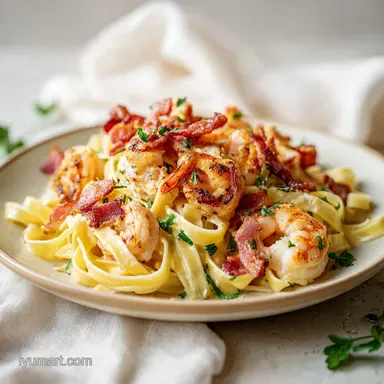
Olive Garden Chicken and Shrimp Carbonara: Creamy Copycat
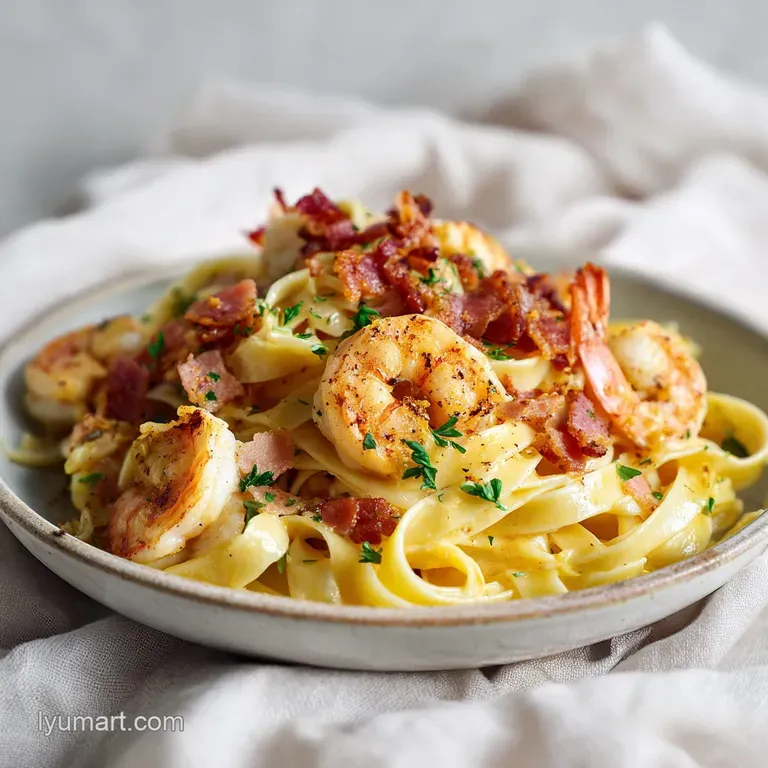
- Time: 10 min active + 25 min cooking = Total 35 mins
- Flavor/Texture Hook: Velvety cream sauce with salty, shatter crisp bacon
- Perfect for: Date nights or comfort food cravings
- Olive Garden Chicken and Shrimp Carbonara
- Why This Recipe Hits Different
- The Core Components
- Essential Ingredient List
- Necessary Kitchen Tools
- Cooking Step-by-Step
- Fixing Common Pasta Issues
- Troubleshooting Common Issues
- Adjusting the Portion Size
- Debunking Pasta Myths
- Storage and Leftovers
- Serving Your Dish
- Recipe FAQs
- 📝 Recipe Card
That unmistakable scent of rendered bacon fat hitting minced garlic is enough to make anyone in the house run to the kitchen. I remember the first time I tried to recreate this at home. I wanted that specific, heavy, comforting vibe of a Friday night out, but I didn't want to deal with the crowds or the wait.
I ended up with a sauce that looked like cottage cheese because I let the heat get too high, and the shrimp were basically rubber balls. It was a disaster.
But once I stopped treating it like a delicate science experiment and started focusing on the timing of the proteins, everything shifted. The trick is in the sequence. You can't just throw everything in a pot and hope for the best.
You need those distinct layers of flavor, from the golden brown sear on the chicken to the glossy finish of the sauce.
When you make this olive garden chicken and shrimp carbonara, you're looking for a specific kind of luxury. It's not about being "light" or "healthy," it's about a dish that feels like a warm hug.
We're talking about fettuccine that is completely enveloped in a rich, cheesy coating, topped with proteins that have been seared just enough to stay juicy. Trust me on this, don't skip the nutmeg - it's the secret that makes the cream taste complex rather than just fatty.
Olive Garden Chicken and Shrimp Carbonara
Right then, let's get into why this version actually holds up. Most home cooks make the mistake of boiling the pasta too long or adding the cream while the pan is screaming hot. If you do that, the sauce separates and you're left with an oily mess.
The goal here is a velvety consistency that clings to the noodles rather than pooling at the bottom of the bowl.
I've found that using a wide skillet is non negotiable. If the pan is too small, the chicken and shrimp will steam instead of sear, and you'll lose that deep, savory crust. You want to hear a loud sizzle when the meat hits the pan. That's where the flavor lives.
If the pan isn't hot enough, you're just boiling your meat in oil, which is a total waste of a good sear.
Why This Recipe Hits Different
- Starch Binding: Using reserved pasta water helps the sauce stick to the noodles by creating a bridge between the fat and the pasta.
- Fat Layering: Rendering bacon first provides a seasoned base that flavors the chicken and shrimp from the start.
- Temperature Control: Finishing the sauce on low heat prevents the Parmesan from clumping or the cream from breaking.
- Aromatic Depth: A tiny pinch of nutmeg cuts through the richness of the heavy cream, adding a subtle, warm note.
| Method | Time | Texture | Best For |
|---|---|---|---|
| Stovetop | 35 mins | Velvety & Glossy | Traditional feel |
| Oven Baked | 50 mins | Thick & Bubbling | Large crowds |
| Slow Cooker | 4 hours | Heavy & Stew like | Set and forget |
If you're looking for something a bit lighter than this heavy pasta, you might enjoy my grilled shrimp bowl recipe, which swaps the cream for fresh greens and citrus. But for tonight, we're sticking to the comfort stuff.
The Core Components
I call this the "Component Analysis" because every single item here serves a purpose. If you swap the heavy cream for milk, for example, you won't get that signature thickness because milk lacks the necessary fat content to stabilize the cheese. According to Serious Eats, the fat in cream prevents the proteins in the cheese from bonding together and forming clumps.
| Ingredient | Science Role | Pro Secret |
|---|---|---|
| Heavy Cream | Stability | Don't boil it hard or it may separate |
| Parmesan | Umami/Thickener | Grate it yourself; pre shredded has starch |
| Pasta Water | Emulsifier | High starch content binds oil and water |
| Nutmeg | Flavor Balancer | Use a microplane for a tiny, precise amount |
Essential Ingredient List
- 1 lb (450g) fettuccine pasta Why this? Wide ribbons hold the heavy sauce best
- 1 lb (450g) boneless skinless chicken breast, cubed Why this? Lean protein that sears quickly
- 1 lb (450g) large shrimp, peeled and deveined Why this? Sweetness balances the salty bacon
- 6 oz (170g) thick cut bacon, diced Why this? Provides the essential rendered fat
- 1 tbsp (15ml) olive oil Why this? Raises the smoke point for searing
- 1 tsp (5g) Italian seasoning Why this? Classic herb profile
- ½ tsp (2.5g) garlic powder Why this? Adds a base layer of savory flavor
- Salt and black pepper to taste
- 3 cloves (15g) garlic, minced Why this? Fresh punch of aroma
- 2 cups (480ml) heavy cream Why this? Necessary for the velvety texture
- 1 cup (100g) freshly grated Parmesan cheese Why this? Sharpness and body
- ¼ tsp (1.25g) ground nutmeg Why this? The "hidden" restaurant flavor
- ¼ cup (60ml) reserved pasta water Why this? The glue for the sauce
Quick Ingredient Swaps
| Original Ingredient | Substitute | Why It Works |
|---|---|---|
| Heavy Cream | Half and Half | Lighter feel. Note: Sauce will be thinner and less stable |
| Fettuccine | Linguine | Similar shape. Note: Slightly less surface area for sauce |
| Chicken Breast | Chicken Thighs | More flavor. Note: Higher fat, needs longer searing |
| Parmesan | Pecorino Romano | Saltier punch. Note: More aggressive flavor than Parmesan |
Honestly, don't even bother with low-fat cheese here. The starches and cellulose used in pre shredded bags stop the cheese from melting smoothly, which is how you end up with those annoying little clumps of cheese in your sauce.
Necessary Kitchen Tools
You don't need a professional kitchen, but a few specific tools make this olive garden chicken and shrimp carbonara much easier. First, a 12 inch stainless steel or cast iron skillet. Non stick is okay, but you won't get that same mahogany crust on the chicken.
You'll also need a large pot for the pasta and a fine mesh strainer. A whisk is essential for the sauce phase - you need to keep the cream and cheese moving constantly so the heat distributes evenly. If you have a microplane, use it for the Parmesan and nutmeg.
It gives you a fluffy powder that incorporates instantly into the sauce.
Cooking step-by-step
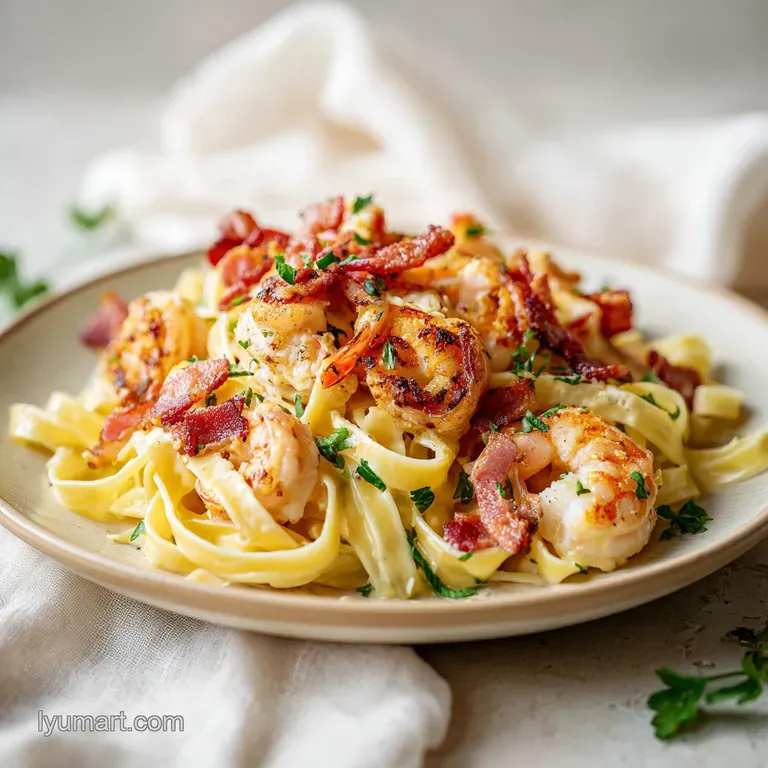
Let's crack on with the actual process. I like to have all my proteins prepped and in bowls before I even turn on the stove. This is a fast moving recipe once the pan is hot, and you don't want to be dicing bacon while your garlic is burning.
1. Boiling the Pasta
Bring a large pot of salted water to a rolling boil. Drop in your fettuccine and cook it until it's just shy of al dente, which is usually about 1-2 minutes less than what the box says. Note: the pasta will finish cooking in the sauce, so if you overcook it now, it'll be mushy later.
Just before you drain the pasta, dip a measuring cup in and save about half a cup of that cloudy, starchy water.
2. Rendering the Bacon
Place your diced bacon in a cold skillet and turn the heat to medium. Let it render slowly until the bits are mahogany colored and shatter crisp. Use a slotted spoon to remove the bacon, but keep every single drop of that liquid gold in the pan.
That bacon fat is the flavor foundation for everything else.
3. Searing the Proteins
Crank the heat up to medium high. Add the chicken cubes in a single layer. Leave them alone for 2-3 minutes until they develop a golden brown crust. Toss them, then add the shrimp. Cook the shrimp for about 90 seconds per side until they turn opaque and a bright pink.
Once they've curled into a "C" shape, remove all the meat and bacon from the pan.
4. Building the Velvety Sauce
Lower the heat to medium and add your minced garlic. Sauté for about 30 seconds until you smell that pungent, toasted aroma. Pour in the heavy cream. Let it come to a gentle simmer, but don't let it reach a violent boil, or you risk the cream splitting.
5. Integrating the Cheese
Turn the heat down to low. Whisk in the Parmesan, nutmeg, salt, and pepper. Keep stirring constantly until the cheese is fully melted and the sauce looks silky. It should thicken slightly, but it should still be pourable.
6. The Final Toss
Add the undercooked pasta, seared chicken, shrimp, and bacon back into the skillet. Toss everything gently over low heat for 2 minutes. Add the reserved pasta water one tablespoon at a time until the sauce becomes glossy and clings to every noodle.
Chef's Note: If the sauce looks too thick or "gloppy," add another splash of pasta water. You want it to look like a velvet coat, not a paste.
Fixing Common Pasta Issues
The most common complaint with this recipe is a sauce that "breaks," meaning the oil separates from the cream. This usually happens because the heat was too high when the cheese was added. If you see little beads of oil floating on top, your sauce has broken.
Troubleshooting Common Issues
| Issue | Solution | |||||
|---|---|---|---|---|---|---|
| Why Your Sauce Broke | This is usually a temperature issue. Cheese is an emulsion of fat and protein; too much heat causes those proteins to tighten and squeeze out the fat. To fix this, remove the pan from the heat immedia | |||||
| Why Shrimp is Rubbery | Overcooking shrimp is the easiest mistake to make. If they curl into a tight "O" shape, they're overdone. They should be a loose "C" shape. Always remove them from the pan the second they turn pink. | |||||
| Why Pasta is Dry | If the pasta absorbs the sauce too quickly, it's because you didn't reserve enough pasta water. The starch in that water keeps the sauce fluid and glossy. | Problem | Root Cause | Solution | --- |
Adjusting the Portion Size
If you're cooking for just two people, you can halve this recipe easily. Use a smaller 8 inch skillet so the sauce doesn't evaporate too quickly. Be careful with the spices - I recommend using 75% of the salt and pepper when halving, then tasting at the end.
Since you can't easily halve a single egg (if you were doing a traditional carbonara), this cream based version is much easier to scale down.
When doubling the recipe for a family gathering, don't try to sear 2 lbs of chicken and 2 lbs of shrimp in one pan. You'll crowd the pan, the temperature will drop, and the meat will steam. Work in batches. Sear the chicken, remove it, sear the shrimp, remove it, and then build your sauce. If you prefer a baked version for a crowd, you can follow the same steps but finish it in the oven. For a different take on baked poultry, my creamy chicken casserole is a great alternative.
Debunking Pasta Myths
One big misconception is that "real" carbonara must use raw eggs. While traditional Roman carbonara uses eggs and pecorino, this Olive Garden style is a creamy American adaptation. Both are great, but they are different dishes.
Using cream makes the sauce more stable and easier for home cooks to master without accidentally making scrambled eggs.
Another myth is that searing meat "seals in the juices." It doesn't. Searing is actually about the Maillard reaction, which creates new flavor compounds on the surface of the meat. You lose just as much moisture whether you sear or not, but the flavor you gain from that brown crust is worth the trade off.
Storage and Leftovers
This dish is best eaten immediately, but it keeps in the fridge for up to 3 days. Store it in an airtight container. When you go to reheat it, you'll notice the pasta has absorbed almost all the sauce, making it look dry. This is normal.
To reheat, put the pasta in a skillet over medium low heat and add a splash of milk or water. This re emulsifies the sauce and brings back that velvety texture. Avoid the microwave if possible, as it tends to heat the edges too quickly and can make the shrimp rubbery.
For zero waste, if you have leftover bacon grease in the pan after searing, don't throw it away. Pour it into a glass jar and keep it in the fridge. It's a fantastic base for sautéing vegetables or frying eggs the next morning.
If you have a few stray shrimp or chicken pieces, they're great tossed into a salad with a lemon vinaigrette.
Serving Your Dish
To get that restaurant look, use the "twirl" method. Use a large carving fork and a ladle to twirl the pasta into a tight nest in the center of the bowl. Spoon the proteins and extra sauce over the top.
The finishing touch is a sprinkle of fresh parsley or a few extra shavings of Parmesan. A crack of fresh black pepper over the top adds a bit of heat and visual contrast. If you want to go all out, serve it with a side of toasted garlic bread to soak up every last drop of that creamy sauce.
This is the kind of meal that turns a regular Tuesday into a celebration.
Trust me, once you've made this olive garden chicken and shrimp carbonara at home, you'll realize you don't need to leave the house for a satisfying Italian American feast. It's all about the timing, the temperature, and that little bit of nutmeg. Let's get cooking!
Recipe FAQs
What is in Olive Garden Chicken and Shrimp Carbonara?
It consists of fettuccine, chicken breast, shrimp, and bacon. These proteins are combined with a creamy sauce made of heavy cream, Parmesan cheese, garlic, and a hint of nutmeg.
What is the carbonara sauce used in this dish?
It is a rich emulsion of heavy cream and Parmesan cheese. Minced garlic and nutmeg provide depth, while reserved pasta water is stirred in at the end to create a glossy consistency.
Does Olive Garden Chicken and Shrimp Carbonara contain shellfish?
Yes, it contains shrimp. For a shellfish-free seafood alternative, you might enjoy our baked cod.
How many calories are in Olive Garden Chicken and Shrimp Carbonara?
One serving contains 1350 kcal. This high caloric count is due to the combination of heavy cream, cheese, and multiple protein sources.
How do you make a copycat Olive Garden Chicken and Shrimp Carbonara at home?
Sauté diced bacon, then sear chicken and shrimp in the rendered fat. Simmer heavy cream with garlic, whisk in Parmesan and nutmeg, and toss everything with fettuccine and reserved pasta water.
Is it true that carbonara sauce must always contain eggs?
No, this is a common misconception. While traditional Italian versions use eggs, this recipe utilizes heavy cream and Parmesan to achieve its characteristic creaminess.
Why is the shrimp rubbery in my carbonara?
You likely overcooked the shrimp. They should be removed from the pan the moment they turn pink and form a loose "C" shape; a tight "O" shape indicates they are overdone.
Creamy Chicken and Shrimp Carbonara