Classic Chicken Fried Steak Recipe with Gravy

- Time: Active 15 minutes, Passive 20 minutes, Total 35 minutes
- Flavor/Texture Hook: Shatter crisp mahogany crust with a buttery, tender interior
- Perfect for: Sunday supper, family gatherings, or a traditional soul food breakfast
- Southern Tradition Authentic Chicken Fried Steak Recipe
- Why This Battered Steak Works
- Timing and Nutrition Facts Overview
- Sourcing High Quality Pantry Staples
- Heavy Cast Iron Cooking Gear
- Mastering the Frying Process
- Solving Common Battered Steak Issues
- Creative Substitutions and Regional Flairs
- Storing and Saving Your Scraps
- Pairing Your Steak With Sides
- Secrets of Proper Meat Frying
- Understanding Traditional Frying Techniques Better
- Chicken Fried Steak FAQs
- 📝 Recipe Card
Southern Tradition Authentic Chicken Fried Steak Recipe
Do you hear that? It is the rhythmic, heavy thud of a meat mallet hitting the counter on a Sunday morning. That sound always meant Grandma was in the kitchen, and something special was coming. If you have ever struggled with a crust that slips off the meat like an oversized coat, you are in the right place.
I spent years watching her, failing a few times myself, and finally uncovering the secrets to that mahogany colored, craggy exterior that makes this dish legendary.
This is not just a meal, it is a piece of soul food history. We are talking about taking a humble, tough cut of beef and transforming it into something so tender you can almost cut it with a fork. The aroma of seasoned flour hitting hot oil is enough to wake up the whole neighborhood.
It is a scent that carries memories of cast iron skillets and worn out wooden spoons.
Today, I am sharing everything I know about this chicken fried steak recipe. We will walk through the science of the dredge, the precision of the fry, and how to make a gravy so silky it should be illegal. Forget those soggy, grey versions you find at cheap diners.
This is the real deal, built on tradition and a little bit of kitchen chemistry that actually works.
Why This Battered Steak Works
Creating the perfect crust is not luck, it is about managing moisture and heat. Most people rush the process, but the secrets are in the small details Grandma never wrote down.
- Starch Gelatinization: The cornstarch in the flour mixture absorbs moisture from the beef, creating a glue like bond that prevents the crust from peeling away during frying.
- Protein Denaturation: Using whole buttermilk and eggs creates a thick, acidic wash that breaks down the surface proteins of the meat while providing a sturdy "velcro" for the flour.
- The Hydration Rest: Letting the breaded steaks sit for a few minutes allows the flour to fully hydrate, turning the dry dust into a cohesive, craggy shell that shatters when bitten.
- Maillard Reaction: Frying in a cast iron skillet provides the consistent, high heat necessary to brown the proteins and sugars in the flour, creating that signature savory flavor profile.
For Shattering Stay Put Crust
The biggest mistake I ever made was frying the steak immediately after dredging. It felt right, but the crust just floated away in the oil. Now, I always let the meat rest on a wire rack for at least 10 minutes. This gives the buttermilk time to soak into the flour.
If you want those little crunchy bits, drizzle a tablespoon of buttermilk into your flour bowl and rub it in with your fingers before you start. This creates tiny clumps that fry up into extra crispy "nubbins" on the steak.
For Fork Tender Beef Results
We are using cube steak here, which is already tenderized, but I like to go one step further. I use the flat side of a mallet to press the meat out just a bit thinner. This ensures the beef cooks at the exact same rate as the breading. There is nothing worse than a burnt crust and raw meat, or vice versa. This technique, similar to what you might see in a Tender & Seared recipe, ensures even heat distribution throughout the protein.
For Velvety Professional Grade Gravy
The gravy is the soul of the dish. I use a ratio of reserved frying oil and flour to create a roux that smells like toasted hazelnuts. The secret is the heavy cracked black pepper. Do not use the fine, dusty stuff from a shaker. You want big, bold flakes of pepper that cut through the richness of the whole milk.
It should be thick enough to coat the back of a spoon but loose enough to pool around the steak like a warm hug.
Timing and Nutrition Facts Overview
| Phase | Time | Cues to Watch For |
|---|---|---|
| Preparation | 15 minutes | Flour should smell spicy; buttermilk should be bubbly. |
| The Rest | 10 minutes | Crust looks "damp" and stays stuck when poked. |
| Frying | 10 minutes | Oil sizzles instantly; crust turns a deep mahogany. |
| Gravy Build | 10 minutes | Roux turns golden; milk thickens to a heavy cream texture. |
Sourcing high-quality Pantry Staples
You cannot hide behind a bunch of fancy garnishes here, so every component counts. Using Diamond Crystal Kosher Salt makes a difference because the flakes are larger and easier to control, preventing you from over salting the breading.
For the oil, I swear by a high smoke point vegetable oil, but if you want to be truly traditional, a little bit of lard mixed in adds a depth of flavor you just cannot get elsewhere.
| Component | Science Role | Pro Secret |
|---|---|---|
| Cornstarch | Moisture absorption | Mix into flour for a lighter, crispier "shatter" effect. |
| Whole Buttermilk | Acidic tenderizer | The thickness helps the flour cling to the meat. |
| Cube Steak | Surface area | Press it thin so it cooks in under 4 minutes. |
| Whole Milk | Fat emulsification | Cold milk into a hot roux prevents lumps in gravy. |
Scratch Chicken Fried Steak Basics
To get this right, you need to set up a station. I use three shallow bowls. One for a bit of plain flour, one for the buttermilk and egg wash, and one for the seasoned flour mixture.
Keeping one hand "dry" and one hand "wet" is the only way to avoid ending up with "club hand," where your fingers get breaded along with the meat. It sounds silly until you are halfway through and realize you can no longer grip your tongs.
The Dredge and Bind Technique
The double dredge is the hallmark of a Southern kitchen. We go flour, then buttermilk, then flour again. That second dip in the flour is where the magic happens. You want to press the flour into the meat with the heel of your hand. Do not be gentle. You are trying to fuse the breading to the beef.
This creates those beautiful, uneven ridges that trap the gravy later on.
The Signature White Gravy
Once the steaks are resting, do not you dare wash that skillet. Those little brown bits at the bottom are gold. We call them "fond," and they are packed with concentrated beef flavor. When you add your milk, use a flat whisk to scrape every single bit up. If the gravy gets too thick, just splash in a little more milk.
It is very forgiving, as long as you keep it moving over the heat.
Heavy Cast Iron Cooking Gear
If you have a Lodge Cast Iron Skillet, now is the time to pull it out. Cast iron holds heat better than stainless steel, which is vital when you drop cold meat into hot oil. You do not want the temperature to plummet, or the steak will just soak up grease and become heavy.
I also recommend a long set of metal tongs and a wire cooling rack. Never rest fried meat on paper towels for more than a minute, as the steam trapped underneath will turn the bottom crust soggy.
- Lodge Cast Iron Skillet: Essential for even browning and heat retention.
- Wire Cooling Rack: Keeps air circulating so the bottom stays crispy.
- Flat Whisk: Best for scraping the bottom of the pan for gravy.
- Meat Mallet: For that final tenderizing press.
Mastering the Frying Process
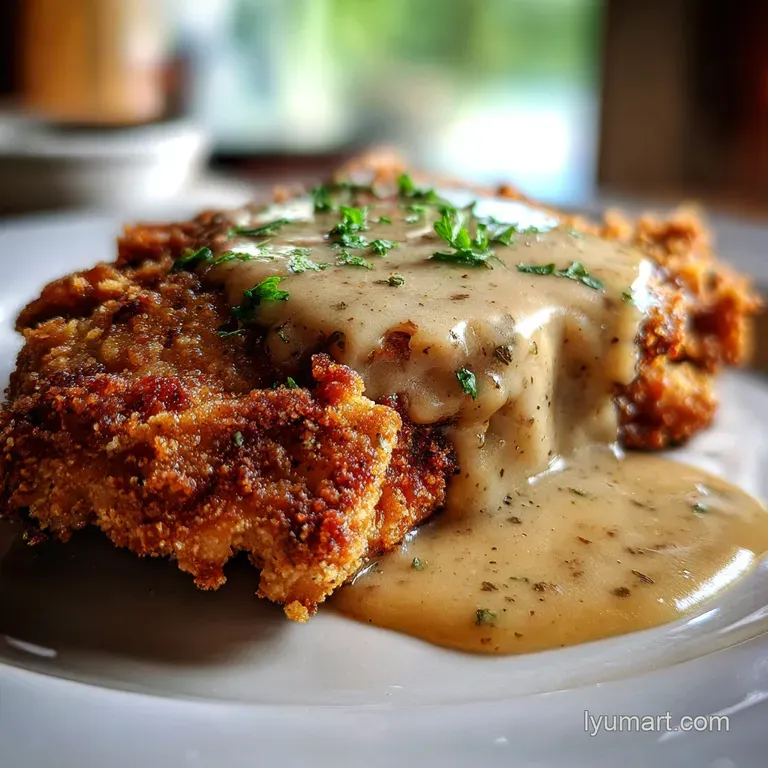
This is where the kitchen starts to smell like a dream. The combination of smoked paprika and beef fat hitting the heat is intoxicating.
Step 1: Prepare and Tenderize the Protein
Take your 4 pieces cube steak (approx. 1.5 lbs / 680g total). Even though they are pre tenderized, use a mallet to flatten them to about 1 cm thickness. Season them lightly with salt. This ensures the seasoning is not just in the crust but in the meat itself.
Step 2: The Double Dredge Method
Set up your bowls. In bowl one, put 0.5 cups of the all purpose flour. In bowl two, whisk 1.5 cups whole buttermilk, 2 large eggs, and 1 tbsp hot sauce. In bowl three, mix the remaining 1.75 cups flour, 1/4 cup cornstarch, 2 tsp smoked paprika, 1 tsp garlic powder, 1 tsp onion powder, 2 tsp kosher salt, 1.5 tsp coarsely ground black pepper, and 0.5 tsp cayenne pepper.
Note: The cornstarch is the secret to the crunch.
Step 3: The Hydration Rest Period
Dredge the steak in plain flour, then the buttermilk mixture, then the seasoned flour. Press firmly. Place the coated steaks on a wire rack for 10 minutes. Wait until the flour looks slightly tacky. This is the "glue" phase that prevents peeling.
Step 4: Achieving the Mahogany Colored Sear
Heat 1.5 cm of vegetable oil in your skillet to 175°C. Carefully lay the steaks in, moving away from you to avoid splashes. Fry for 3-4 minutes per side until the crust is a deep, dark golden brown. The aroma should be nutty and savory. Remove to a clean wire rack.
Step 5: Crafting Velvety Pepper Gravy
Pour off all but 1/4 cup reserved frying oil with beef drippings. Keep those brown bits! Whisk in 1/4 cup of the leftover seasoned flour. Cook for 2 minutes until it smells like toasted bread. Slowly whisk in 2.5 cups whole milk.
Simmer until thick and bubbly, then stir in 1 tsp heavy cracked black pepper. Season with additional salt to taste.
Solving Common Battered Steak Issues
Even the best cooks have a bad fry day. If things go wrong, it is usually a temperature or moisture issue.
Fixing a Peeling Crust
If your breading slides off like a wet blanket, the meat was likely too wet when you started, or you skipped the rest period. Next time, pat the meat dry with paper towels before the first flour dip. If it is already happening in the pan, do not flip it too early.
Let the proteins set completely before you move the steak.
Avoiding Greasy Fried Meat
Greasy steak happens when the oil isn't hot enough. If the oil doesn't sizzle the second the meat touches it, stop. Wait for the heat to climb. If you are cooking in batches, give the oil 2 minutes to come back up to temperature between steaks. A thermometer is your best friend here.
| Problem | Cause | Fix | Pro Tip |
|---|---|---|---|
| Soggy Crust | Oil temp too low | Heat oil to 175°C | Use cast iron for heat stability |
| Bland Gravy | Not enough "fond" | Scrape the pan harder | Use extra black pepper |
| Tough Meat | Not pressed thin | Use a mallet | Aim for 1 cm thickness |
Creative Substitutions and Regional Flairs
While I love the tradition, sometimes the pantry is bare. You can make adjustments without losing the spirit of the dish.
| Original Ingredient | Substitute | Why It Works |
|---|---|---|
| Whole Buttermilk (1.5 cups) | Milk + 1 tbsp Lemon Juice | Mimics the acidity to tenderize the meat. |
| Cube Steak | Round Steak (pounded thin) | Similar lean profile, just requires more manual tenderizing. |
| Vegetable Oil | Lard | Adds a traditional, smoky depth. Note: Lower smoke point than oil. |
Air Fryer Fried Steak Alternative
If you want to use the air fryer, you can, but it is a different beast. Spritz the breaded steaks heavily with oil spray. You cannot have any dry flour spots, or they will stay chalky. Cook at 200°C for 12 minutes, flipping halfway.
It won't have the same deep mahogany color, but it stays surprisingly crispy. This is a great "easy chicken fried steak recipe" for weeknights.
Buttermilk Free Easy Steak Version
If you are looking for a "chicken fried steak without buttermilk," use a mix of whole milk and a dollop of sour cream or plain yogurt. You need that thickness and slight tang to help the flour stick and to soften the beef fibers.
gluten-free Southern Alternative
Swap the all purpose flour for a high-quality 1:1 gluten-free flour blend. I have found that rice based blends actually fry up even crispier than wheat flour. Just be sure to add a little extra paprika for color, as gluten-free flours tend to stay pale.
Storing and Saving Your Scraps
Fried food is always best fresh, but we rarely have zero leftovers in a Southern house.
- Fridge: Store in an airtight container for up to 3 days. To keep it from getting mushy, place a piece of parchment paper between the steak and the gravy.
- Freezer: You can freeze the fried steaks (without gravy) for up to 2 months. Wrap them tightly in foil and then a freezer bag.
- Reheating: Never use the microwave. It turns the crust into rubber. Use a 190°C oven or an air fryer for 5 minutes to bring back the "shatter" factor.
- Zero Waste: If you have leftover gravy, it is a crime to throw it out. Warm it up the next morning and serve it over biscuits or even a Beef Stir Fry Recipe base for a weird but amazing fusion breakfast. Leftover steak bits can be chopped up and tossed into an omelet.
Pairing Your Steak With Sides
In my house, this steak never travels alone. It needs companions that can handle the richness of the gravy.
The Classic Diner Duo
Garlic mashed potatoes are non negotiable. You need a "well" for the gravy to sit in. I also love serving this with honey glazed carrots or snappy green beans. The sweetness of the carrots cuts through the salty, peppery crust perfectly. It is a balance of flavors that reminds me of a big Christmas Dinner Idea recipe, where every side dish has a purpose.
The Morning Southern Special
If you are serving this for breakfast, it has to be with over easy eggs and grits. There is something about the runny yolk mixing with the white gravy that just feels right. It is heavy, sure, but it will keep you full until dinner time.
Grandma always said a proper breakfast should involve a skillet and a nap afterward.
Secrets of Proper Meat Frying
Many people ask about the difference between stovetop and oven methods. For this specific dish, stovetop is the undisputed king.
| Feature | Stovetop (Cast Iron) | Oven (Baking) |
|---|---|---|
| Texture | Shatter crisp and craggy | Evenly browned but softer |
| Flavor | Deep, nutty, and savory | Lighter, less "fried" taste |
| Effort | Active monitoring required | Set it and forget it |
Chef's Note: If you find your gravy is too pale, let the flour and oil mixture (the roux) cook for an extra minute until it reaches the color of peanut butter. This adds a toasted dimension that makes the gravy stand out.
Don't be afraid of the mess. Frying steak is a bit of a commitment, and your stovetop might need a wipe down afterward, but the first bite of that crispy, peppery crust makes every bit of cleaning worth it. Trust your senses listen for the sizzle, watch for the mahogany hue, and smell the spices.
You’ve got this!
Understanding Traditional Frying Techniques Better
Is there a difference between country fried and chicken fried?
Mostly, it comes down to the gravy. Chicken fried steak almost always uses a creamy white pepper gravy, while country fried steak is often served with a brown onion gravy. The breading on chicken fried steak also tends to be thicker and more "craggy," resembling fried chicken.
Why do you use cornstarch in the breading?
Cornstarch is a pure starch with no protein, which means it doesn't develop gluten. Adding it to the flour mixture makes the crust crispier and more brittle (in a good way) because it interferes with the wheat flour's ability to become tough or bready. It literally helps the crust "shatter" when you bite into it.
Can I use a different cut of meat?
While cube steak is traditional and convenient, you can use top round or bottom round. The key is that you must pound it very thin with a mallet until it is about 1 cm thick. This mechanical tenderizing is what allows a tougher cut of beef to feel "soft" after such a short frying time.
Why did my gravy turn out lumpy?
Lumps happen when the milk is added too fast or if the roux wasn't whisked properly. The trick is to add the milk in a very slow, steady stream while whisking constantly. If you still see lumps, don't panic.
You can run the gravy through a fine mesh strainer or give it a quick zap with an immersion blender to smooth it out.

Chicken Fried Steak FAQs
How to make chicken fried steak?
The process is a double dredge, rest, and fry. Pound cube steak thin, dredge in seasoned flour, then buttermilk, then the seasoned flour again, pressing firmly. Let it rest on a rack for 10 minutes before frying in hot oil until golden brown.
How to make chicken fried steak gravy?
Use the rendered pan drippings as your fat base. Whisk in the leftover seasoned flour to create a roux, cook for 2 minutes, then slowly whisk in cold whole milk until thick and creamy. Do not skip scraping the flavorful "fond" off the bottom of the pan.
How to make chicken fried steak tender?
Yes, mechanical tenderizing is essential. Use a meat mallet to pound the cube steak to an even 1 cm thickness. This ensures the interior cooks evenly with the crust, preventing toughness, much like the even heat distribution we aim for when cooking sauces like in our Creamy Garlic Pasta Recipe: Velvety Finish.
How to make chicken fried steak with cube steak?
Cube steak is the perfect cut due to its pre-tenderization. Ensure you press it slightly thinner with a mallet to achieve uniform cooking. Season the meat itself lightly before the dredging process begins to build flavor from the inside out.
How to make chicken fried steak in air fryer?
Yes, but you must heavily oil the crust first. Spritz the double dredged steaks thoroughly with cooking spray or oil so no dry flour remains. Air fry at 200°C for about 12 minutes, flipping halfway through, for a less traditional but lighter result.
What prevents the crust from peeling off the steak?
Allowing the dredged steak to rest is critical for crust adhesion. Let the coated steaks sit on a wire rack for at least 10 minutes; this allows the moisture from the buttermilk to hydrate the flour, turning the coating into a tacky "glue" before it hits the hot oil.
What is the best side dish for CFS?
Silky mashed potatoes or crisp coleslaw are classic pairings. Mashed potatoes act as a perfect base for soaking up the pepper gravy, while something sharp cuts the richness. If you like creamy pairings, mastering the technique for a velvety sauce is key, similar to our Pasta Penne Pasta: Smoky Velvet Sauce.
Chicken Fried Steak Recipe

Ingredients:
Instructions:
Nutrition Facts:
| Calories | 1135 calories |
|---|---|
| Protein | 52 g |
| Fat | 69 g |
| Carbs | 76 g |
| Fiber | 3 g |
| Sugar | 9 g |
| Sodium | 1380 mg |
