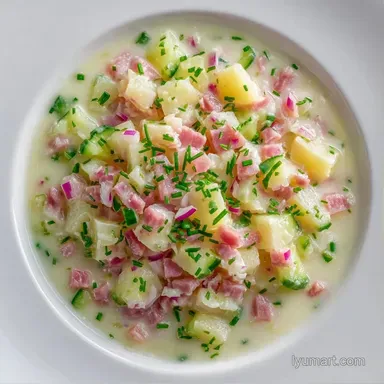
Classic Russian Summer Soup: Authentic Okroshka

- Time: 20 min active + 2 hours 15 mins chilling/cooling
- Flavor/Texture Hook: Tangy, velvety liquid with a crisp, shatter like crunch from radishes
- Perfect for: Sweltering August afternoons or a budget-friendly family lunch
- Classic Russian Summer Soup
- Cold Prep Secrets
- Component Analysis
- Gathering Your Essentials
- Basic Tools You'll Need
- Step-by-Step Assembly
- Fixing Common Soup Issues
- Different Bases and Proteins
- Adjusting the Batch Size
- Storage Guidelines
- Serving For Maximum Impact
- Critical Sodium Level
- Recipe FAQs
- 📝 Recipe Card
Classic Russian Summer Soup
The sharp, clean scent of fresh dill always takes me back to my aunt's kitchen during the hottest weeks of July. I remember the sound of the knife hitting the wooden board in a rapid fire rhythm, dicing radishes into tiny, uniform cubes.
In her house, this wasn't just a meal, it was the only way to survive a humid afternoon without feeling like you were melting into the sidewalk.
If you've never had this, imagine a chilled gazpacho but with the heartiness of a potato salad. It's a strange concept at first, soup that you don't heat up, but one spoonful and you're hooked.
The Classic Russian Summer Soup is all about that bracing coldness and the hit of acidity that wakes up your palate.
We're keeping things simple here. No fancy equipment, just a few bowls and a sharp knife. It's a budget-friendly way to use up leftovers and get your veggies in, making it a go to for any busy weeknight when the oven is simply not an option.
Cold Prep Secrets
Temperature Shock: Dropping boiled potatoes and eggs into ice water stops the cooking instantly. This prevents that "mushy" exterior and keeps the edges sharp when you dice them.
Osmotic Resting: Letting the salted vegetables sit for 30 minutes before adding the liquid allows the salt to penetrate the denser ingredients. This ensures the ham and potatoes aren't bland islands in a tangy sea.
Acid Balancing: The lemon juice doesn't just add flavor, it brightens the fats in the sour cream and kefir. According to Serious Eats, adding an acid to a creamy base cuts through the heaviness and makes the other flavors pop.
Uniformity: Dicing everything to the same size means you get every single ingredient in one spoonful. It stops the cucumbers from dominating the radishes.
| Method | Prep Time | Texture | Best For |
|---|---|---|---|
| Fast Version | 15 mins | Slightly softer | Quick lunch |
| Classic Version | 20 mins | Crisp & Defined | Guests/Family |
Component Analysis
| Ingredient | Science Role | Pro Secret |
|---|---|---|
| Yukon Gold Potatoes | Starch Base | Hold their shape better than Russets when cold |
| Kvass/Kefir | Acidic Medium | Use chilled liquid to avoid warming the veggies |
| Fresh Dill | Aromatic Lift | Chop just before adding to prevent bruising |
| Radishes | Textural Contrast | Peel the skin if they taste too "peppery" |
Gathering Your Essentials
For this recipe, we want a mix of salty, earthy, and fresh. Don't skimp on the herbs, as they provide the signature aroma of a Traditional Okroshka Recipe.
- 10 oz ham, diced small Why this? Provides the necessary salt and protein
- 2 medium Yukon Gold potatoes (300g), boiled and cooled Why this? Creamy texture that doesn't fall apart
- 4 large hard boiled eggs, chopped Why this? Adds richness and thickness to the broth
- 6 medium radishes (80g), finely diced Why this? The essential "snap" and peppery bite
- 1 large English cucumber (300g), peeled and diced Why this? High water content for maximum refreshment
- 4 stalks green onions (30g), thinly sliced Why this? Adds a mild, sharp onion note
- 1/4 cup fresh dill (15g), finely chopped Why this? The defining flavor of Russian Summer Soup Recipes
- 1 tsp salt
- 4 cups chilled kvass or kefir (950ml) Why this? The fermented base that gives the "zing"
- 1/2 cup sour cream (120g) Why this? Creates a velvety mouthfeel
- 1 tbsp lemon juice (15ml) Why this? Balances the richness of the dairy
If you're looking for other ways to use fresh summer produce, my Homemade Coleslaw is another great cold side that uses a similar balance of crunch and cream.
Basic Tools You'll Need
You don't need a culinary studio for this. A few basic items will do the job perfectly.
- Chef's Knife: The most important tool. You'll be doing a lot of dicing, so a sharp blade is a must for safety and precision.
- Large Mixing Bowl: Something big enough to toss the vegetables without them spilling over the sides.
- Medium Pot: For boiling the eggs and potatoes.
- Ice Bath Bowl: A simple bowl filled with cold water and ice cubes.
- Chilled Serving Bowls: To keep the soup cold while you eat it.
Step-by-step Assembly
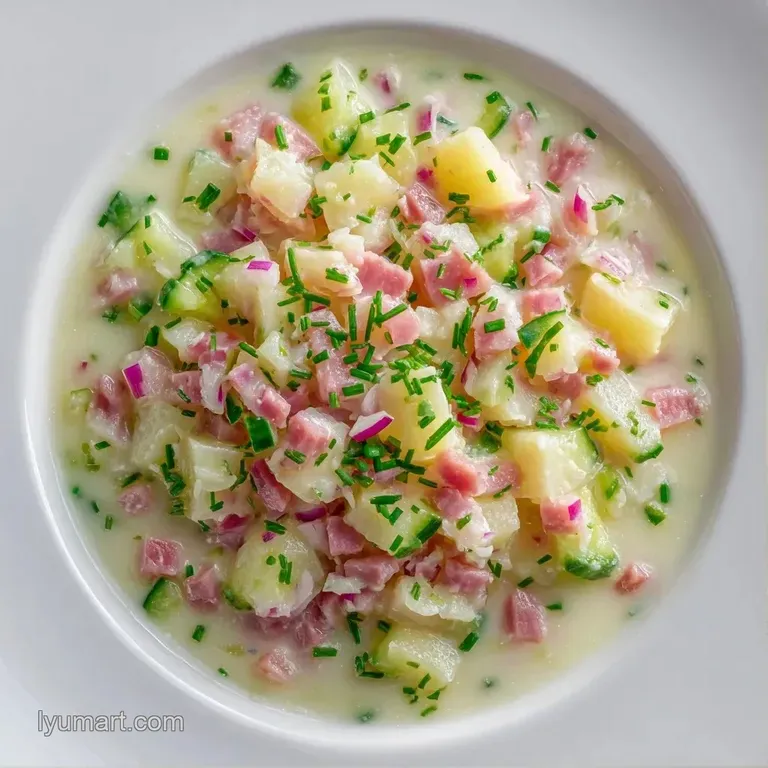
Let's get into the actual process. The goal here is efficiency and coldness.
Phase 1: Preparing the Boiled Components
Boil the potatoes and eggs until tender. Cook for about 15 minutes until the potatoes are fork tender but not falling apart. Immediately plunge both into an ice bath. Note: This stops the carryover cooking that makes potatoes gummy.
Phase 2: The Precision Dice
Once chilled, dice the potatoes, ham, cucumbers, and radishes into consistent 1/4 inch cubes. Ensure they are roughly the size of a pea for the best mouthfeel.
Phase 3: The Cold Assembly
Combine the diced vegetables and ham in a large bowl. Stir in the chopped eggs, sliced green onions, salt, and fresh dill. Toss gently so you don't mash the potatoes.
Transfer the mixture to the refrigerator. Let it rest for 30 minutes to allow the flavors to unify. Trust me, skipping this makes the soup taste like separate ingredients rather than a cohesive dish.
Pour the chilled kvass or kefir over the solids. Stir gently until the liquid is opaque and the vegetables are evenly distributed.
Serve immediately in chilled bowls. Top with a dollop of sour cream and a squeeze of lemon juice to adjust the acidity.
Fixing Common Soup Issues
Most people get this right on the first try, but a few things can happen depending on your ingredients.
Soup is Too Thin?
If the liquid feels too watery, it's usually because the cucumbers released too much moisture or you used a thin kvass. You can fix this by stirring in an extra tablespoon of sour cream or mashing a few of the potato cubes against the side of the bowl to thicken the broth.
Lacks the "Signature Zing"?
If the soup tastes flat, it's missing acid. This is common with store-bought kefir which can be milder. Add a teaspoon of lemon juice or a splash of apple cider vinegar.
Vegetables Too Mushy?
This happens when potatoes are overcooked or not cooled properly before dicing. Next time, use the ice bath and check your potatoes 2 minutes before they're "done."
| Problem | Root Cause | Solution |
|---|---|---|
| Watery Broth | Cucumber moisture | Add more sour cream or mash potatoes |
| Bland Taste | Lack of salt/acid | Add lemon juice or a pinch more salt |
| Dull Color | Bruised herbs | Add fresh dill at the very end |
Common Mistakes Checklist
- ✓ Did you use an ice bath for the potatoes?
- ✓ Are the dice sizes consistent (1/4 inch)?
- ✓ Did the mixture rest in the fridge for 30 minutes?
- ✓ Is the liquid chilled before pouring?
- ✓ Did you add the lemon juice at the end to balance the fats?
Different Bases and Proteins
The beauty of a Cold Russian Borscht Recipe or an Okroshka is that it's very flexible. You can tweak the base depending on what's in your fridge.
The Liquid Choice If you can't find kvass (a fermented rye bread drink), kefir is the best alternative. For a lighter version, you can use a mix of plain Greek yogurt and sparkling water. This keeps the tang but reduces the thickness.
Protein Swaps While ham is the classic choice, you can use boiled chicken breast or even smoked tofu for a vegetarian version. If you're using a leaner protein like chicken, add a tiny bit more salt to the mix to compensate for the lack of cured meat.
The "Borscht Style" Twist If you want a more colorful look, add some finely grated raw beets. This transforms the dish into something closer to a cold beet soup, adding an earthy sweetness that pairs great with the sour cream.
| Original Ingredient | Substitute | Why It Works |
|---|---|---|
| Ham (10 oz) | Boiled Chicken (10 oz) | Similar protein, but less salty, add 1/2 tsp extra salt |
| Kvass (4 cups) | Kefir or Buttermilk (4 cups) | Same lactic acidity; creates a creamier finish |
| Radishes (80g) | Jicama (80g) | Similar crunch, but much milder flavor |
| Yukon Gold | Red Potatoes | Holds shape well, though slightly less creamy |
If you're craving something warm after this cold meal, my Italian Stuffed Shells are a great contrast for a different night of the week.
Adjusting the Batch Size
Scaling this recipe is straightforward since there's no complex baking chemistry involved.
Scaling Down (Half Batch) Use a smaller mixing bowl and reduce all ingredients by half. Since you're boiling fewer potatoes, check them 3-5 minutes earlier than usual. For the egg, boil two instead of four.
Scaling Up (Double or Triple) When doubling the Classic Russian Summer Soup, don't double the salt immediately. Start with 1.5x the salt, taste it during the resting phase, and then add more if needed. Use a very large bowl to ensure you can toss the ingredients without crushing the potatoes.
Work in batches if your pot isn't large enough to hold all the potatoes and eggs at once.
Storage Guidelines
Fridge Life Store the diced vegetable mix (before adding the liquid) in an airtight container for up to 3 days. Once the liquid is added, it's best eaten within 24 hours, as the cucumbers and radishes will begin to lose their crunch and the potatoes will soak up too much liquid.
Freezing Do not freeze this soup. The water content in the cucumbers and the dairy in the kefir/sour cream will separate and break, leaving you with a grainy, watery mess.
Zero Waste Tips
- Potato Peels: If you peel your potatoes, toss them in oil and salt and roast them at 400°F (200°C) for 15 minutes for a quick snack.
- Cucumber Ends: Toss the ends of the cucumber into a blender with some water and a pinch of salt for a quick refreshing drink.
- Egg Whites: If you only use the yolks for a variation, save the whites in a jar for a future omelet.
Serving For Maximum Impact
This dish is as much about the temperature as it is about the taste.
The Bowl Trick Put your serving bowls in the freezer for 10 minutes before plating. This keeps the Classic Russian Summer Soup ice cold even if you're eating outside in the sun.
The Garnish Always add the sour cream as a dollop on top rather than stirring it all in. This gives the eater the choice of how much creaminess they want in each bite. A final sprinkle of fresh dill and a crack of black pepper adds a professional look.
Side Pairings Serve this with a side of dark rye bread or a toasted sourdough. The density of the bread balances the light, acidic nature of the soup. For a full meal, a side of salted fish or a simple plate of sliced tomatoes with oil and salt completes the traditional experience.
Critical Sodium Level
1240 mg 1240 mg of sodium per serving (54% 54% of daily value)
The American Heart Association recommends a daily limit of 2,300 mg of sodium for most adults to maintain heart health.
Tips to Reduce Sodium
-
Swap the Ham-25%
Replace the diced ham with cooked chicken breast or smoked tofu to significantly reduce processed sodium.
-
Eliminate Added Salt-25%
Omit the 1 tsp of salt entirely; the savory flavor from the ham and fermented base provides enough seasoning.
-
Choose Low-Sodium Base-20%
Select a low-sodium kefir or a homemade kvass with minimal salt to lower the sodium in the liquid base.
-
Increase Acidity-5%
Add extra lemon juice or lemon zest to brighten the flavors, which helps the palate perceive saltiness.
-
Boost Fresh Herbs
Double the amount of fresh dill and green onions to add aromatic depth without adding any sodium.
Recipe FAQs
What is the best known traditional Russian soup?
Borscht is the most famous, but this cold summer soup is the seasonal favorite. While Borscht is a hearty beet-based dish, this recipe uses a chilled base specifically for refreshing heat relief.
How to make this classic Russian summer soup?
Boil potatoes and eggs until tender, then plunge them into an ice bath. Dice all ingredients into 1/4-inch cubes, toss with dill and salt, let rest for 30 minutes, and pour over chilled kvass or kefir.
What does this Russian summer soup taste like?
It is tangy, creamy, and refreshing. The combination of chilled kvass or kefir with fresh radishes and cucumbers creates a crisp, acidic profile balanced by savory ham.
Can I freeze this soup for later?
No, do not freeze this soup. The water in the cucumbers and the dairy in the kefir or sour cream will separate, leaving a grainy, watery mess.
Do I have to use kvass for the liquid?
No, kefir is a traditional and popular alternative. You can choose kvass for a fermented, malty taste or kefir for a creamier, tarter result.
How to ensure the vegetables stay crunchy?
Plunge boiled potatoes and eggs immediately into an ice bath. This stops the cooking process instantly to ensure a clean dice. If you enjoyed mastering the precise vegetable preparation here, see how the same principle works in our spaghetti squash guide.
Is it true that this soup must be served hot?
No, this is a common misconception. This specific summer soup is designed to be served in chilled bowls to provide a cooling effect during hot weather.
Classic Russian Summer Soup with Ham