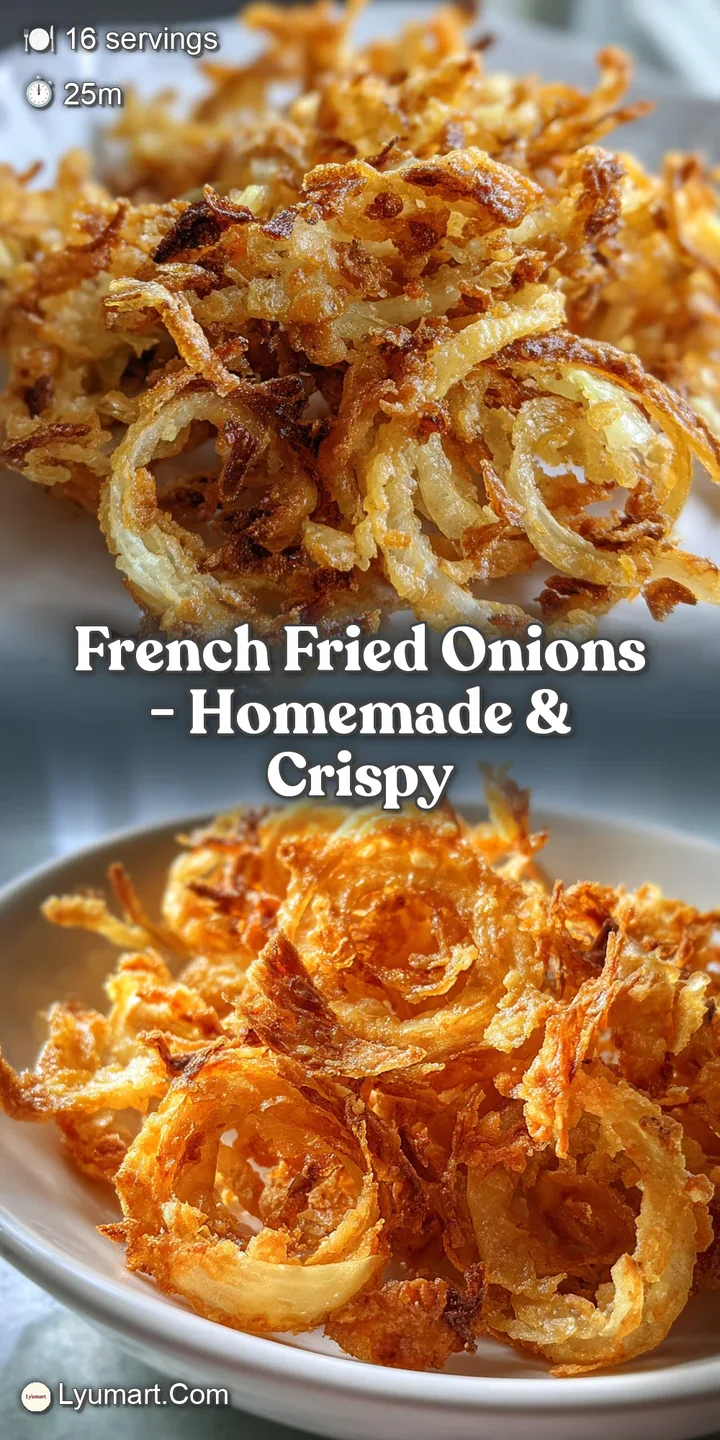
French Fried Onions: Shatter Crisp
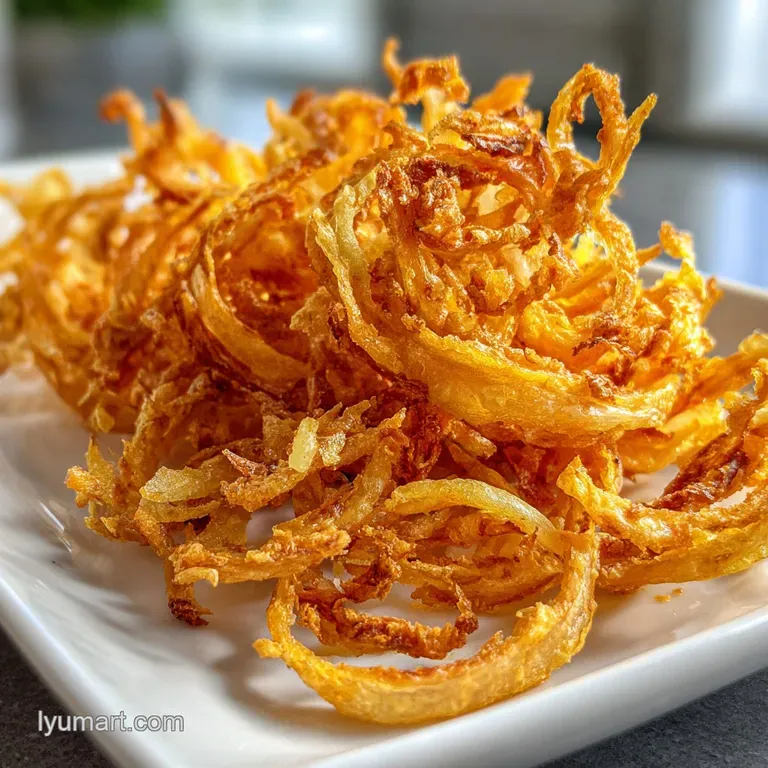
- Time: Active 15 minutes, Passive 10 minutes, Total 25 minutes
- Flavor/Texture Hook: Shatter crisp coating with a savory, smoky finish
- Perfect for: Holiday casseroles, burger toppings, or snacking by the handful
- Secrets to Shatter Crisp French Fried Onions
- The Science Behind the Snap
- Selecting the Best Onion Components
- Essentials for Your Kitchen Counter
- Steps for a Perfect Crunch
- Solving Common Breading Problems
- Easy Swaps and Flavor Twists
- Keeping Your Onions Fresh
- Best Ways to Serve These
- Myths About Frying Onions
- Recipe FAQs
- 📝 Recipe Card
Secrets to Shatter Crisp French Fried Onions
The kitchen currently smells like a state fair in the best way possible. There is a specific, high pitched sizzle that happens when a handful of thin onion whisps hits hot oil, and it's honestly one of my favorite sounds.
I used to rely on the red and white cans for years because I thought getting that paper thin crunch at home was too much work. Then I had a holiday disaster where I forgot to buy them, and I had to wing it with a couple of yellow onions and a bottle of buttermilk.
That "accident" turned out better than anything I'd ever bought. The difference is the texture these aren't thick and bready like a standard onion ring. They are delicate, golden, and they have this incredible snap that makes store-bought versions taste like flavored cardboard.
If you've ever felt like your casserole toppings turned into a soggy mess ten minutes after hitting the table, this is the fix you've been looking for. It's foolproof, fast, and I promise your family will be picking them off the tray before they even make it onto the food.
The Science Behind the Snap
Amylopectin Boost: Adding cornstarch to the all purpose flour creates a crispier, more brittle coating because cornstarch contains no gluten and interferes with the flour's protein structure.
Acidic Tenderizing: The buttermilk soak uses lactic acid to break down the harsh sulfur compounds in the onions while providing a thick, "sticky" base for the flour to cling to.
| Cooking Method | Total Time | Final Texture | Best For |
|---|---|---|---|
| Stovetop Fry | 10 minutes | Maximum shatter crunch | Traditional casseroles and burgers |
| Oven Baked | 25 minutes | Drier, firmer bite | Healthier snacking or salads |
| Air Fryer | 15 minutes | Very light and airy | Quick weeknight meals |
If you are looking for a heavier, more substantial coating for a side dish, you might want to try my Onion Ring Recipe which uses a thicker batter. This specific recipe is designed for those thin, wispy strands that work best as a topping.
Selecting the Best Onion Components
The magic happens in the coating and the soak. Using low-fat buttermilk is a classic trick because it’s thick enough to hold the flour but thin enough that it doesn't become a gummy paste.
We also lean heavily on cornstarch; it’s the secret to that "glass like" crunch that doesn't go soft the second it cools down.
| Ingredient | Science Role | Pro Secret |
|---|---|---|
| Yellow Onions | Sugar caramelization | Use a mandoline for 1/8th inch slices to ensure even frying |
| Cornstarch | Moisture absorption | This prevents the flour from becoming bread like and heavy |
| Smoked Paprika | Maillard reaction depth | Adds a subtle "charred" flavor without needing high heat |
For the onions, stick to 2 Large Yellow Onions. You can use white onions if you want a sharper bite, but yellow onions have a higher sugar content which helps them turn that gorgeous mahogany gold.
You will also need 2 cups low-fat Buttermilk for the soak and a quart of neutral oil I usually go with vegetable or canola oil.
The dry mix is a blend of 1.5 cups All Purpose Flour and 0.5 cup Cornstarch. For the seasoning, we keep it classic with 1 tsp Smoked Paprika, 1 tsp Garlic Powder, 1 tsp Fine Sea Salt, and 0.5 tsp Cayenne Pepper for a tiny bit of back end heat. If you need a swap, check the table below.
| Original Ingredient | Substitute | Why It Works |
|---|---|---|
| low-fat Buttermilk | Whole milk + 1 tbsp Lemon juice | Mimics the acidity needed to tenderize the onion strands. |
| All Purpose Flour | Cup for-cup gluten-free blend | Works well here since we don't want gluten development anyway. |
| Smoked Paprika | Chili Powder | Adds a similar red hue and earthiness but less "smoke." |
Chef Tip: Freeze your sliced onions for exactly 10 minutes before soaking. This slight chill helps the buttermilk adhere better and prevents the onions from releasing too much water into the oil.
Essentials for Your Kitchen Counter
You don't need a deep fryer for this. A heavy bottomed Dutch oven or a deep cast iron skillet (like a Lodge) is actually better because they hold heat more consistently. A mandoline slicer is your best friend here trying to cut onions 1/8th inch thin with a knife is a recipe for frustration and uneven cooking.
You'll also need two large bowls: one for the buttermilk soak and one for the flour dredge. I highly recommend using a spider strainer or a slotted spoon to move the onions. Using tongs often clumps the wet flour together, leaving you with "dredge fingers" and messy onions.
Finally, keep a wire rack set over a baking sheet ready for the onions to drain.
Steps for a Perfect Crunch
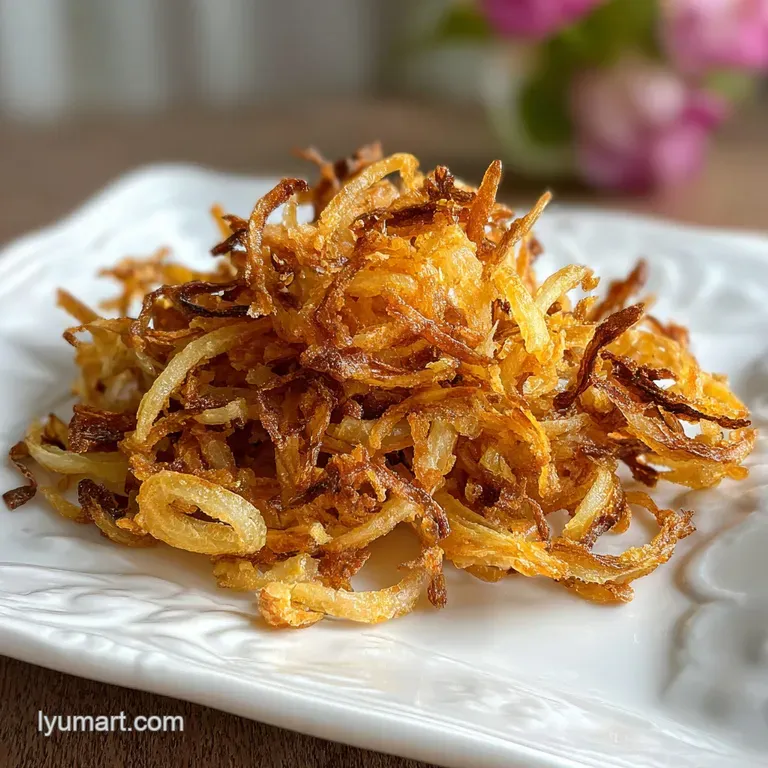
- Slice the onions. Use a mandoline to cut 2 Large Yellow Onions into 1/8th inch rings. Note: Consistency is key so they all finish at the same time.
- Soak in buttermilk. Submerge the slices in 2 cups low-fat Buttermilk for at least 15 minutes.
- Mix the dredge. Whisk together 1.5 cups All Purpose Flour, 0.5 cup Cornstarch, 1 tsp Smoked Paprika, 1 tsp Garlic Powder, 1 tsp Fine Sea Salt, and 0.5 tsp Cayenne Pepper.
- Heat the oil. Pour 1 Quart Neutral Oil into a heavy pot and bring it to 375°F. Wait until the oil shimmers and a pinch of flour sizzles immediately.
- Dredge in batches. Take a handful of onions from the buttermilk, let the excess drip off, and toss them in the flour mixture. Note: Don't do them all at once or they will get soggy.
- Shake off excess. Use a coarse sieve or your fingers to shake away extra flour before frying.
- Fry until golden. Carefully drop the onions into the oil for about 2 minutes until they are a deep golden brown and the bubbling slows down.
- Drain and salt. Move them to a wire rack immediately. Listen for the "shatter" sound as they land.
- Cool and repeat. Let the oil return to 375°F before starting the next batch.
These are the quintessential topping for a French's Green Bean Casserole recipe, but they are also incredible on top of a juicy steak. If you are serving a big crowd, try them alongside a Chicken Fried Steak recipe for the ultimate comfort meal.
Solving Common Breading Problems
The most common issue I hear about is the coating falling off. Usually, this happens because the oil wasn't hot enough, or the onions were too wet when they hit the flour. You want the flour to form a dry shell immediately upon hitting the heat.
If the oil is too cool, the buttermilk and flour just turn into a paste and slide right off the onion.
Why are my onions dark but soft?
This usually happens when the oil is too hot. The outside burns before the moisture inside the onion has a chance to evaporate. If the water stays inside, it steams the crust from the inside out, making it soft.
| Problem | Root Cause | Solution |
|---|---|---|
| Soggy/Greasy | Oil temperature dropped | Fry in smaller batches to keep the heat steady. |
| Clumpy coating | Onions weren't separated | Toss the onions vigorously in the flour to separate every ring. |
| Bitter taste | Burnt spices | Lower the heat slightly or pull them out 10 seconds earlier. |
Common Mistakes Checklist
- ✓ Don't crowd the pot frying too many at once drops the oil temp and leads to grease soaked onions.
- ✓ Use a thermometer to keep the oil at 375°F; guessing usually leads to burnt or soggy results.
- ✓ Always drain on a wire rack, not paper towels, to let air circulate and prevent steaming.
- ✓ Season with an extra pinch of salt the second they come out of the oil while they are still "tacky."
- ✓ Ensure onions are sliced thin; thick slices won't get that "french fried" whispy texture.
Easy Swaps and Flavor Twists
If you need to scale this recipe down for a solo dinner, just use one onion and halve the buttermilk and flour. For scaling up to feed a holiday crowd, don't double the cayenne or salt right away start with 1.5x the spices and taste as you go.
Liquids like buttermilk should be reduced by about 10% when doubling to prevent the dredge from getting too heavy.
French Fried Onions gluten-free
You can easily make these gluten-free by swapping the all purpose flour for a high-quality rice flour or a 1:1 gluten-free baking blend. Since we aren't looking for gluten structure, the swap is nearly seamless. The cornstarch already does most of the heavy lifting for the crunch anyway.
The "Everything Bagel" Twist
For a fun variation, replace the paprika and cayenne with two tablespoons of everything bagel seasoning. It adds a nutty, seedy texture that is out of this world on top of a salad or a bowl of creamy potato soup.
| Servings | Onion Count | Oil Amount | Pan Size |
|---|---|---|---|
| 4 People | 0.5 Large Onion | 2 Cups | Small Saucepan |
| 8 People | 1 Large Onion | 3 Cups | 10 inch Skillet |
| 16 People | 2 Large Onions | 1 Quart | 5 Quart Dutch Oven |
Keeping Your Onions Fresh
Store these in an airtight container at room temperature for up to 3 days. Do not put them in the fridge; the humidity will turn the crisp coating into a gummy mess within hours. If they do lose some of their snap, you can revive them in a 350°F oven for about 5 minutes.
To freeze them, lay the fried and cooled onions in a single layer on a baking sheet. Once frozen solid, transfer them to a freezer bag. They’ll stay good for up to 2 months. To reheat from frozen, just pop them in a hot air fryer or oven for 3 minutes no need to thaw!
For zero waste, save any leftover seasoned flour; it makes an incredible base for a savory gravy.
Best Ways to Serve These
While the green bean casserole is the classic home for these, don't stop there. I love using them as a "crunch factor" on top of homemade mac and cheese or even inside a grilled cheese sandwich. The salty, smoky flavor cuts through rich cheeses perfectly.
If you're hosting a BBQ, set out a bowl of these next to the burger station. They provide a much better texture than a raw onion slice. You can even crush the leftovers and use them as a "breading" for baked chicken breasts.
The possibilities are endless once you move past the idea that they only belong on holiday side dishes.
Myths About Frying Onions
Myth: You must soak onions overnight. Truth: While a long soak doesn't hurt, 15 to 30 minutes in buttermilk is plenty of time for the acid to work its magic and for the liquid to create a bond for the flour.
Myth: More flour equals more crunch. Truth: A thick layer of flour actually leads to a bready, soft exterior. The goal for French Fried Onions is a light, translucent coating that shatters when you bite it.
Myth: Any oil will work. Truth: You need an oil with a high smoke point. Olive oil or butter will burn and turn bitter long before the onions get crispy. Stick to neutral oils like canola or peanut oil.
Recipe FAQs
What are French fried onions made of?
Typically, thinly sliced onions, flour, and a coating mixture. They are often soaked in buttermilk and then dredged in a blend of flour, cornstarch, and seasonings before being fried until crispy.
What is a substitute for French fried onions?
Crispy fried shallots are a great substitute. For a quicker option, store-bought crispy fried onions are readily available, or you can make your own using thinly sliced yellow onions coated and fried.
How to fry onions so they are crispy?
Slice onions thinly and coat them in a light flour and cornstarch mixture. Fry in oil heated to precisely 375°F (190°C) in small batches until golden brown, ensuring they drain on a wire rack to maintain crispness.
What are the ingredients in Chef's Cupboard French fried onions?
Generally, they contain onions, enriched flour, and palm oil. Specific ingredients often include salt, dextrose, and spices; always check the product packaging for the most accurate list.
Can I bake French fried onions instead of frying?
Yes, baking is a viable alternative for a lighter version. Toss your coated onion slices with a little oil and bake on a wire rack set over a baking sheet at around 400°F (200°C) until golden and crisp, flipping halfway through.
Why do my French fried onions turn out soggy?
Likely due to oil temperature or overcrowding. Ensure your oil is consistently at 375°F (190°C) and fry in small batches to prevent the oil temperature from dropping, which leads to greasy, soggy onions.
How can I make my French fried onions extra crunchy?
Use a combination of flour and cornstarch in your coating. The cornstarch helps create a more brittle and shatter crisp texture, and draining them on a wire rack allows air to circulate, keeping them from steaming and losing crispness.
French Fried Onions
Ingredients:
Instructions:
Nutrition Facts:
| Calories | 89 kcal |
|---|---|
| Protein | 1.2 g |
| Fat | 5.1 g |
| Carbs | 9.8 g |
| Fiber | 0.8 g |
| Sugar | 1.4 g |
| Sodium | 152 mg |
