Shatter-Crisp Onion Ring Recipe
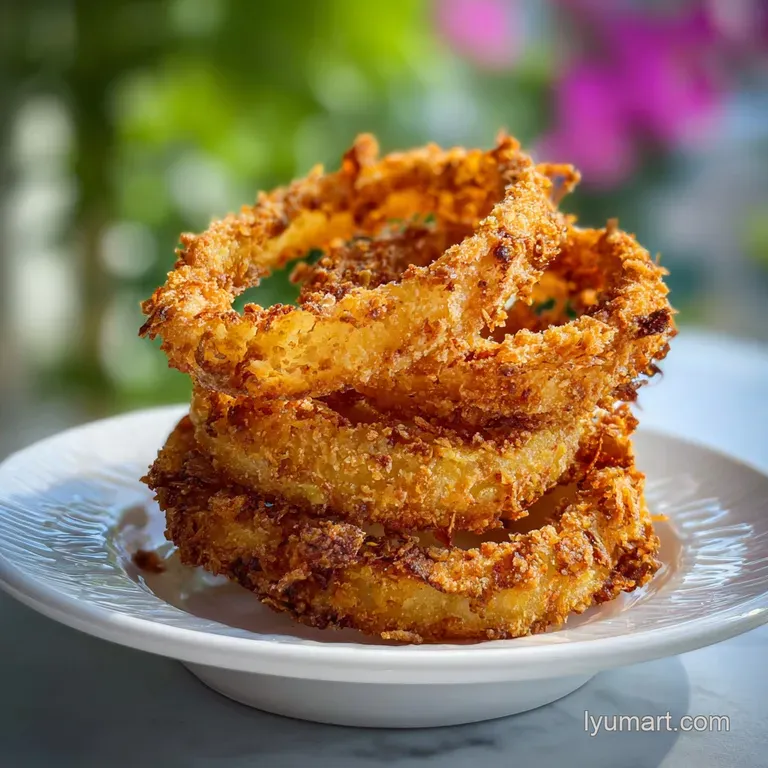
- Time: Active 50 minutes, Passive 15 minutes, Total 1 hour 5 mins
- Flavor/Texture Hook: Shatter crisp exterior with a velvety, sweet interior
- Perfect for: Weekend cookouts, game day snacks, or a budget-friendly family treat
- Master the Ultimate Onion Ring Recipe
- Why This Coating Stays Crunchy
- Key Components for Better Batter
- Essential Ingredients for Better Batter
- Simple Gear for Better Frying
- Clear Steps for Golden Rings
- Fixing Common Frying Mistakes Fast
- Customizing Your Favorite Fried Snack
- Scaling for Large Groups
- Proper Ways to Save Leftovers
- Tasty Pairings for Fried Sides
- Your Top Frying Questions Answered
- Onion Ring Recipe FAQs
- 📝 Recipe Card
Master the Ultimate Onion Ring Recipe
We have all been there. You are at a burger joint, you bite into a massive onion ring, and the entire onion slide right out of the breading in one hot, limp string. It is frustrating, messy, and honestly, a bit of a letdown. I spent years trying to figure out how to get that coating to actually stay put.
I tried breadcrumbs, I tried thick pancake like batters, and I tried air frying them from frozen. Nothing gave me that specific pub style crunch until I realized the secret is not just the batter, but how you treat the onion before it ever touches the flour.
This recipe is the result of plenty of trial and error in my own kitchen. I have learned that temperature is everything. If your buttermilk is not ice cold, or if your oil drops too low, the rings turn into oil soaked sponges. But when you get it right, the sound of that first bite is like a tiny explosion of texture.
It is a foolproof way to turn a couple of humble onions into the star of the table without spending a fortune on fancy ingredients.
Right then, let's talk about why we are doing things this way. We are looking for a coating that is light enough to let the onion shine but sturdy enough to hold its shape. We want a golden hue that looks like it belongs on a magazine cover, but with the honest, salty flavor of home cooking.
Trust me on this, once you master the soak and the dredge, you will never look at a frozen bag of rings the same way again.
Why This Coating Stays Crunchy
Mechanism: The carbon dioxide in the club soda creates tiny air pockets that expand and set instantly in the heat, resulting in a light, porous crumb. Cornstarch prevents excessive gluten development, which keeps the coating brittle and crisp rather than tough or bready.
The Science of the Starch
When we mix all purpose flour with cornstarch, we are essentially diluting the protein content. Too much protein means too much gluten, and gluten is what makes bread chewy. We do not want chewy onion rings. We want them to snap. The cornstarch acts as a barrier, keeping the rings light.
It also helps with moisture evaporation. Since cornstarch absorbs less water than flour, it dries out faster in the hot oil, leading to that signature shatter crisp finish.
Why Cold Carbonation Matters
Using ice cold club soda or a light lager is not just for show. The cold temperature slows down the heat transfer to the flour, which again prevents gluten from getting too excited. More importantly, those bubbles provide the lift. Think of it like a soufflé but in deep fryer form. As the rings hit the 375 degree oil, the gas expands rapidly, pushing the batter away from the onion and creating a hollow, crunchy shell. If you are looking for more side dish ideas, this technique is a world apart from the denser texture found in a Garlic Mashed Potatoes Recipe where we want smoothness over crunch.
The Buttermilk Tenderization
Onions can be sharp and aggressive when raw. A long soak in buttermilk does two things. First, the mild acidity softens the onion's cell walls, so they come out of the fryer tender rather than crunchy raw.
Second, the thick consistency of the buttermilk acts as the perfect "glue." It creates a tacky surface that the flour dredge can actually hang onto. Without this step, the flour just slides off the slick surface of the onion, leading to those bare patches we all hate.
Key Components for Better Batter
| Component | Science Role | Pro Secret |
|---|---|---|
| Buttermilk | Acid tenderizes fibers | Keep it ice cold to prevent the onion from getting mushy |
| Cornstarch | Inhibits gluten formation | Mix it 1:2 with flour for the most brittle crunch |
| Club Soda | Aerates the wet batter | Open the bottle right before mixing to keep the bubbles active |
| Sweet Onions | High sugar for browning | Slice them thick so they do not vanish inside the batter |
If you find yourself missing an ingredient, do not panic. Most of these have easy workarounds that still produce a great result. Just remember that changing the liquid or the starch will slightly alter how the rings feel in your mouth.
| Original Ingredient | Substitute | Why It Works |
|---|---|---|
| Buttermilk (2 cups) | Whole milk + 2 tbsp lemon juice | Acidifies the milk to mimic buttermilk's thickening properties |
| Club Soda (1 cup) | Light Lager (1 cup) | Provides carbonation plus a nutty, fermented flavor profile |
| Cornstarch (1 cup) | Rice Flour (1 cup) | Very low protein. Note: Creates an even lighter, thinner crust |
Essential Ingredients for Better Batter
To make this onion ring recipe, you will need a few pantry staples and a couple of fresh items. Stick to the measurements below for the best balance of salt, spice, and crunch.
- 2 large sweet onions: These are the foundation. Why this?Sweet onions like Vidalia have more sugar, which caramelizes beautifully when fried.
- 2 cups buttermilk: Use the full fat version if you can find it. Why this?The thickness ensures a heavy first coating for the flour to stick to.
- 1 tsp kosher salt: For the soak.
- 2 cups all purpose flour: Divided into two portions.
- 1 cup cornstarch: Also divided for the dry and wet stages.
- 1 tsp garlic powder: Adds a savory depth without burning like fresh garlic.
- 1/2 tsp paprika: Mostly for that gorgeous sunset color.
- 1 large egg: Beaten well. Why this?Acts as a binder to hold the wet batter together during the sizzle.
- 1 cup club soda or light lager: Must be ice cold.
- 1/2 tsp black pepper: Freshly cracked is always better.
- 1 quart neutral oil: Canola, vegetable, or peanut oil work best.
- 1 tsp flaky sea salt: For the final touch.
Simple Gear for Better Frying
You do not need a professional deep fryer to get these right. In fact, I prefer using a heavy bottomed pot. A cast iron Dutch oven is my go to because it holds heat so well. When you drop cold batter into hot oil, the temperature naturally dips. Cast iron fights that dip, keeping the oil at a steady 375 degrees.
You will also want a wire cooling rack set over a baking sheet. Never drain fried food on paper towels. I know, I know, it is what our grandmas did, but paper towels trap steam. Steam is the enemy of crunch. By using a rack, air can circulate around the entire ring, keeping the bottom just as crispy as the top.
A spider strainer or a slotted metal spoon is also vital for safely moving the rings in and out of the oil.
Chef's Note: If you have an instant read thermometer, use it. Guessing oil temperature is the fastest way to ruin a batch. If the oil is too cold, the rings soak up grease. If it is too hot, the outside burns before the onion softens.
Clear Steps for Golden Rings
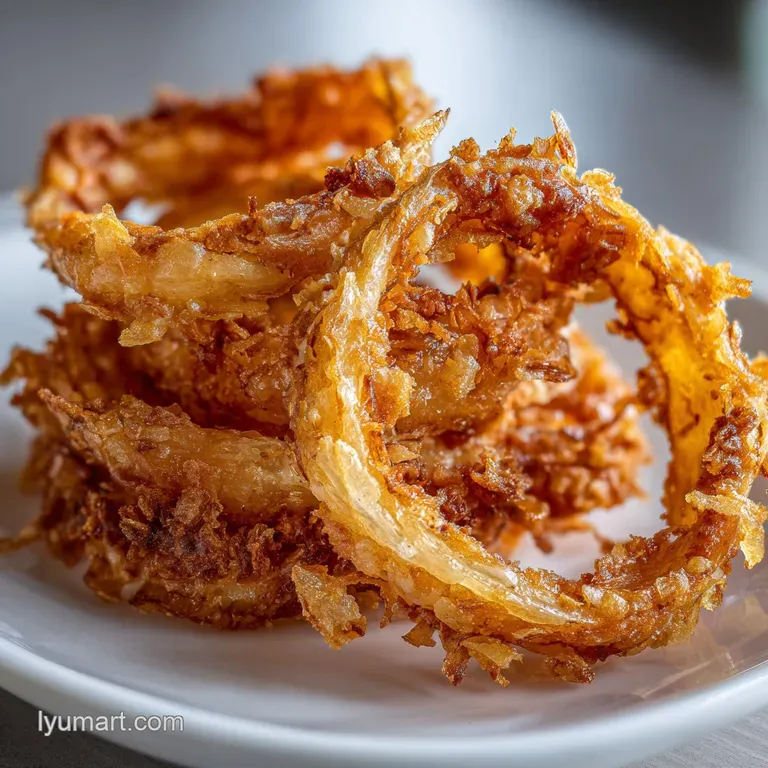
- Prep onions. Peel the onions and slice them into 1/2 inch thick rounds. Carefully separate the rings, discarding the very small centers or saving them for another use.
- Soak rings. Place the onion rings in a large bowl and pour over the 2 cups of ice cold buttermilk and 1 tsp kosher salt. Note: This removes the sharp sulfur flavor.
- Chill onions. Let them sit in the fridge for at least 30 minutes. The colder they are, the better the batter will stick later.
- Whisk dry dredge. In a shallow dish, combine 1 cup of flour, 1/2 cup of cornstarch, garlic powder, paprika, and black pepper.
- Prepare wet batter. In a separate bowl, whisk the remaining 1 cup of flour, 1/2 cup of cornstarch, the beaten egg, and the ice cold club soda until just combined. Note: Do not over mix; a few lumps are fine.
- Heat oil. Pour the quart of oil into a heavy pot and heat to 375 degrees. Use a thermometer to be precise.
- First dredge. Take an onion ring from the buttermilk, let the excess drip off, and coat it thoroughly in the dry flour mixture.
- Wet dip. Submerge the floured ring into the wet batter, ensuring every nook and cranny is covered.
- Fry batch. Drop 4 or 5 rings into the oil. Fry for 2 to 3 minutes until golden and crackling. Flip halfway through with your spider strainer.
- Drain and season. Remove the rings and place them on the wire rack. Immediately sprinkle with flaky sea salt while the oil is still wet on the surface.
Fixing Common Frying Mistakes Fast
One mistake I once made was trying to fry twenty rings at once. The oil temperature plummeted, and I ended up with a greasy mess. Space is your friend. Give the rings room to dance in the oil without touching each other. If they huddle together, they will steam each other and the coating will get soft.
Another tip I swear by is removing the thin, papery membrane on the inside of the onion rings. If you have the patience, peeling that off ensures the batter grips the actual flesh of the onion. It is a bit tedious, but it is the difference between a good ring and a legendary one.
Why Your Batter Slides Off
If you find the coating is sliding off like a loose sweater, it is usually a moisture issue. The onion needs to be tacky, not dripping wet, when it hits the flour. If you are struggling with this, try the "wet hand/dry hand" method.
Use your left hand for the buttermilk and wet batter, and your right hand for the dry flour. This prevents your fingers from becoming breaded clubs and keeps the coating on the onion where it belongs.
| Problem | Root Cause | Solution |
|---|---|---|
| Batter is falling off | Inner onion membrane is too slick | Peel the thin skin off the inside of the ring |
| Rings are oily and heavy | Oil temperature is too low | Wait for oil to return to 375°F between batches |
| Coating is too thick/doughy | Over mixed wet batter | Whisk only until the liquid is incorporated |
If you are looking to round out a meal with more textures, consider serving these alongside a roasted vegetables recipe to balance the fried indulgence with some earthy, charred sweetness.
Customizing Your Favorite Fried Snack
While the classic version is hard to beat, you can easily tweak the spices to match your mood. If you like heat, add a teaspoon of cayenne pepper or some crushed red pepper flakes to the dry dredge. For a more "everything bagel" vibe, toss in some poppy seeds and dried onion flakes.
Spicy Cajun Variation
Swap the paprika for a heavy tablespoon of Cajun seasoning. You might want to reduce the kosher salt slightly if your spice blend is already salty. This version pairs incredibly well with a spicy remoulade or a chipotle mayo.
gluten-free Swap
You can actually make a very respectable gluten-free version by using a 1:1 gluten-free flour blend and increasing the cornstarch by 20 percent. Since there is no gluten to worry about, the rings often come out even crispier, though they might be a little paler in color.
Scaling for Large Groups
- DOWN
- If you only have one onion, halve the flour and starch but still use one small egg to keep the binding strength.
- UP
- When making a massive batch, keep the spices at 1.5x the original amount first, then taste. You can always add more salt, but you cannot take it away.
- Batches
- Work in small batches of 5 rings. If you crowd the pot, you will end up with a soggy pile of disappointment.
Proper Ways to Save Leftovers
Fried food is notorious for not keeping well, but you can save these if you follow a few rules. Store them in a single layer in an airtight container in the fridge for up to 3 days. To reheat, avoid the microwave at all costs. It will turn them into rubber.
Instead, pop them into a 400 degree oven or an air fryer for 3 to 4 minutes. This recrisps the oil and brings back that "shatter" texture. For freezing, lay the cooked and cooled rings on a baking sheet until frozen solid, then transfer to a freezer bag. They will stay good for about 2 months.
Tasty Pairings for Fried Sides
These rings are a natural partner for a juicy burger, but they also work surprisingly well as a topping for other dishes. I love crushing a few and sprinkling them over a steak or even a salad for a bit of unexpected crunch.
If you are planning a full spread, this One Pan Chicken recipe is a great main dish that keeps the kitchen relatively clean while you focus on the frying. The contrast between the roasted chicken and the crispy rings is a family favorite in my house.
Your Top Frying Questions Answered
Can I use white onions instead of sweet?
Yes, but they will be much more pungent. If you use white or yellow onions, I suggest soaking them in the buttermilk for at least an hour to draw out some of that sharp "bite."
What is the best oil for frying?
I prefer peanut oil for its high smoke point and neutral flavor. However, canola or vegetable oil are much more budget friendly and work perfectly well for a quick home fry.
Why did my dough turn out sticky?
If the wet batter feels more like bread dough than heavy cream, you likely measured the flour too heavily or the club soda has lost its carbonation. Add a splash more liquid until it reaches a thick, pourable consistency.
How do I keep the first batch warm?
Set your oven to its lowest setting (usually 170 or 200 degrees) and keep the wire rack with the finished rings inside. This keeps them warm and dry without continuing to cook them.
Onion Ring Recipe FAQs
How do you get batter to stick to onion rings?
Start with a buttermilk soak. The thick, acidic buttermilk creates a tacky surface on the onion that the dry flour dredge can adhere to. Follow this with a double dredge, dipping the onion first in seasoned flour, then in the wet batter, and finally back into the flour mixture.
Why soak onions in ice water before making onion rings?
Soak in ice-cold buttermilk, not just water. While ice water can firm up an onion, ice-cold buttermilk is key as its acidity tenderizes the onion and its thickness provides the crucial tacky layer for the batter to cling to. This soak also neutralizes some of the onion's sharp bite.
What is onion ring batter made of?
Typically a mix of flour, cornstarch, leavening, and liquid. A common base includes all-purpose flour and cornstarch for crispiness, seasoned with salt, pepper, and paprika. Ice-cold club soda or beer is often used as the liquid to create a light, airy batter, and an egg helps bind it.
What's the secret to perfectly seasoned onion rings?
Season both the dry dredge and the final sprinkle. The secret is layering flavor. Mix salt, pepper, garlic powder, and paprika directly into your flour and cornstarch dredge. Immediately after frying, sprinkle them with flaky sea salt while they're still hot and slightly oily.
Can I use frozen onions for onion rings?
No, fresh is best for optimal texture. Frozen onions release too much moisture when thawing, which can make your batter soggy and prevent it from adhering properly. Fresh, firm onions are essential for achieving that shatter crisp coating.
How do I prevent my onion rings from being greasy?
Maintain a consistent oil temperature and don't overcrowd the pot. Ensure your oil is at precisely 375°F (190°C) before frying, and allow it to return to temperature between batches.
Frying too many rings at once will drastically lower the oil's temperature, causing them to absorb excess grease.
What's the best way to reheat leftover onion rings?
Use the oven or an air fryer for crispiness. Avoid the microwave, as it will make them soggy. Reheat in a preheated oven at 400°F (200°C) or in an air fryer for 3-4 minutes until they are heated through and crisp again. This technique is similar to how we aim for a crisp finish in our Shrimp Fried Rice Recipe: Savory & Nutty, where a rapid, high heat prevents sogginess.
Onion Ring Recipe
Ingredients:
Instructions:
Nutrition Facts:
| Calories | 523 kcal |
|---|---|
| Protein | 8.2 g |
| Fat | 22.2 g |
| Carbs | 72.5 g |
| Fiber | 3.2 g |
| Sugar | 6.1 g |
| Sodium | 615 mg |
