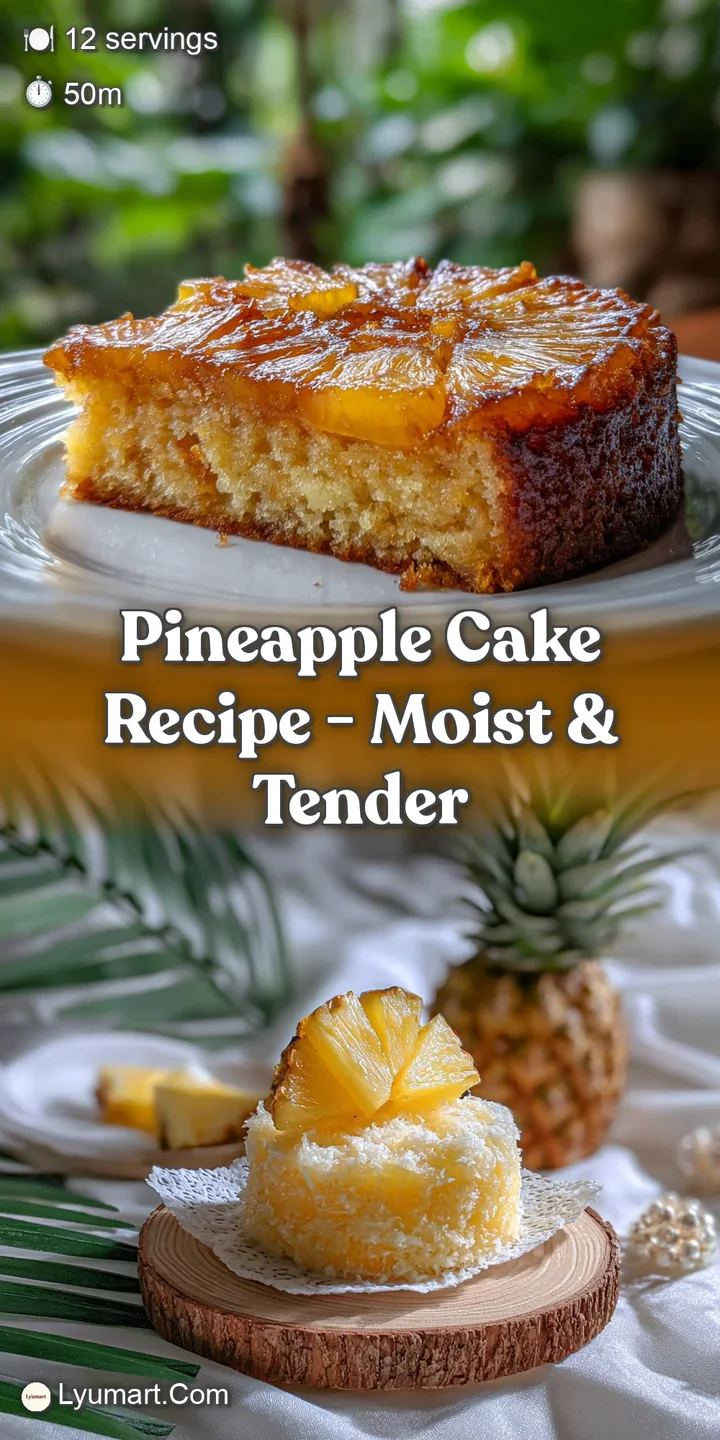
Pineapple Cake Recipe: Moist & Tender
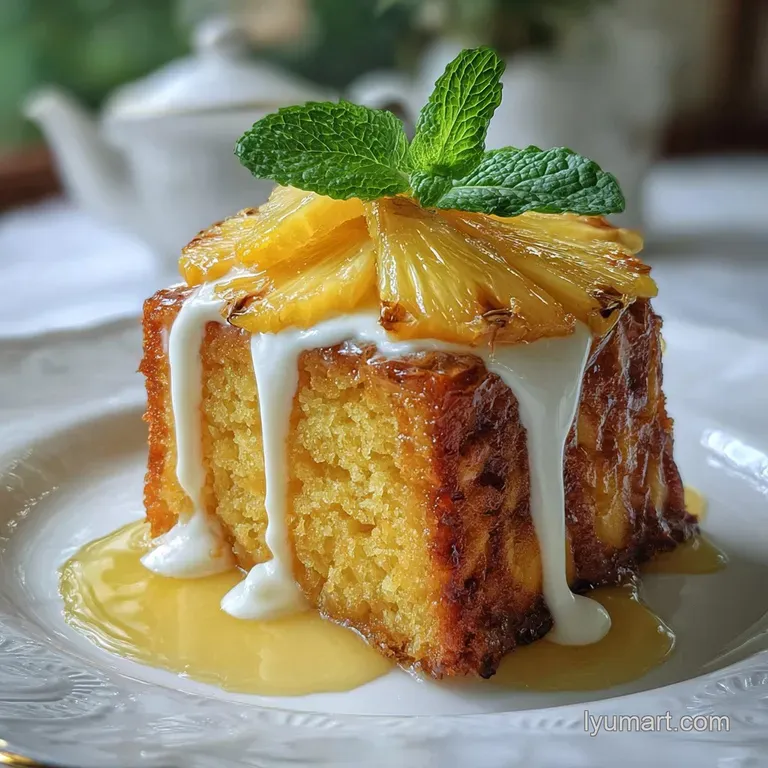
- Time: Active 15 minutes, Passive 35 minutes, Total 50 minutes
- Flavor/Texture Hook: Tropical, moist crumb with golden caramelized edges
- Perfect for: Last minute dinner parties or a cozy weekend treat
- Create a Stunning Golden Pineapple Cake Recipe Today
- The Secret Science Behind the Tropical Crumb
- Components and Their Roles in the Bake
- Everything Needed for the Pineapple Cake Recipe
- Essential Tools for a Flawless Result
- Step by Step to Tropical Perfection
- Troubleshooting Your Pineapple Cake Success
- Adjusting for Different Pan Sizes
- Debunking Pineapple Baking Myths
- Storage and Zero Waste Tips
- How to Serve and Enjoy
- Pineapple Cake Recipe FAQs
- 📝 Recipe Card
Create a Stunning Golden Pineapple Cake Recipe Today
The second you slide this tin into the oven, your kitchen transforms. It starts as a faint, sugary hum in the air, but within twenty minutes, the scent of caramelizing tropical fruit and warm vanilla begins to drift into every corner of the house.
I remember the first time I made this for a neighborhood potluck; the aroma was so intoxicating that people were hovering near the oven door before the timer even buzzed.
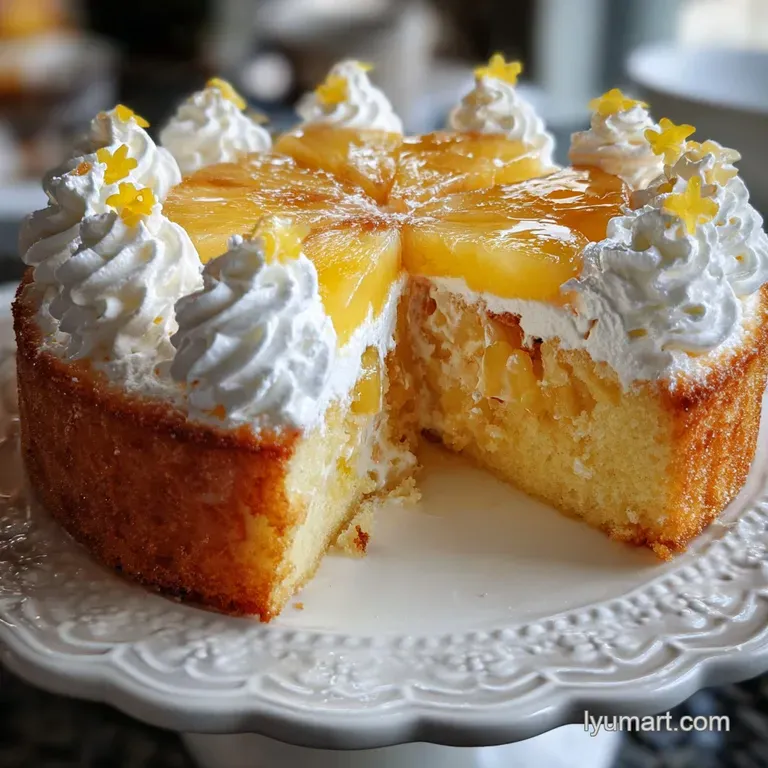
You aren't just making a dessert here; you're creating a little slice of sunshine. This isn't one of those dry, crumbly sponges that needs a gallon of tea to wash down. It's dense in the best way possible, heavy with fruit juice and shimmering with a golden, tender crust.
We are going for that specific "shatter" on the very top edge where the sugar has crystallized against the pan.
Trust me, I've spent years trying to overcomplicate things with fancy frostings and complex techniques, but the magic of this specific pineapple cake recipe lies in its simplicity. We aren't going to overthink it.
We’re going to let the fruit do the heavy lifting, ensuring every bite is a velvety explosion of tropical brightness.
The Secret Science Behind the Tropical Crumb
Enzymatic Tenderization: The bromelain in the 450g crushed pineapple works to break down flour proteins, resulting in an exceptionally soft and delicate crumb structure.
Acid Base Reaction: The combination of fresh lemon juice and the natural acidity of the pineapple reacts instantly with the baking soda to create micro bubbles for a light lift.
Hygroscopic Moisture Retention: The blend of granulated and light brown sugar pulls moisture from the air and the fruit, keeping the cake moist for days after baking.
| Method Type | Prep Time | Texture Result | Best Occasion |
|---|---|---|---|
| Fast Stir and Bake | 15 minutes | Dense, pudding like, velvety | Casual family dinners |
| Classic Creamed | 30 minutes | Airy, light, traditional sponge | Formal birthday parties |
| Upside Down Style | 20 minutes | Caramelized, fruit forward, sticky | Sunday brunch centerpiece |
Choosing between a quick stir and a classic creamed method really depends on your mood. If you love the ease of a stir and bake dessert, you might also adore this Strawberry Cheesecake Dump recipe which relies on similar fruit based moisture to achieve that signature soft bite.
Components and Their Roles in the Bake
| Ingredient | Science Role | Pro Secret |
|---|---|---|
| All Purpose Flour | Provides the structural framework | Sift it twice to prevent dense pockets in the tropical batter |
| Crushed Pineapple | Primary hydrator and flavor source | Never drain the juice; it’s the liquid gold for the crumb |
| Neutral Oil | Ensures fat remains liquid at room temp | Avocado oil adds a subtle richness without masking the fruit |
| Light Brown Sugar | Adds molasses for deep caramelization | Pack it tight to ensure the correct moisture to sugar ratio |
While the pineapple is clearly the star, the balance of fats is what prevents this from becoming a muffin. For those times you want a dessert within a dessert, look at this Cake in a recipe for a true showstopper that uses similar structural principles.
Everything Needed for the Pineapple Cake Recipe
- 300g all purpose flour, sifted: Why this? Provides the essential gluten structure to hold the heavy fruit.
- Substitute: 1:1 gluten-free baking blend (Note: result will be slightly grainier).
- 200g granulated white sugar: Why this? Creates the crisp, golden exterior edges.
- Substitute: Extra light brown sugar for a more toffee like profile.
- 50g packed light brown sugar: Why this? The molasses keeps the center incredibly soft.
- Substitute: Coconut sugar for a lower glycemic, nuttier taste.
- 1 tsp baking soda: Why this? Reacts with the pineapple acid for the perfect rise.
- Substitute: 3 tsp baking powder (Note: texture will be fluffier, less dense).
- 0.5 tsp fine sea salt: Why this? Cuts through the intense sweetness of the fruit.
- Substitute: Kosher salt (use 0.75 tsp for equivalent salinity).
- 2 large eggs, room temperature: Why this? Emulsifies the oil and water based ingredients.
- Substitute: 0.5 cup unsweetened applesauce for a denser, vegan friendly version.
- 120ml neutral oil (avocado or grapeseed): Why this? Guaranteed moistness compared to butter.
- Substitute: Melted coconut oil for an extra tropical punch.
- 1 tsp pure vanilla bean paste: Why this? Adds those gorgeous black specks and floral notes.
- Substitute: Vanilla extract (same quantity).
- 1 tsp fresh lemon juice: Why this? Acts as the catalyst for the baking soda.
- Substitute: White vinegar or apple cider vinegar.
- 450g crushed pineapple in 100% juice (undrained): Why this? This is the soul of the cake.
- Substitute: Fresh pineapple processed in a blender (keep all pulp).
Essential Tools for a Flawless Result
You don't need a kitchen full of gadgets for this one, which is why I love it so much. A simple 9x13 inch baking pan (like one from USA Pan) is the standard, but a heavy duty glass dish also works beautifully for seeing those golden sides.
You'll want a large mixing bowl and a sturdy silicone spatula to fold the pineapple in without overworking the flour.
Chef's Tip: Freeze your mixing bowl for 10 minutes if you're baking in a humid kitchen. It keeps the oil from separating while you're whisking the wet ingredients.
I also highly recommend using a digital scale for the flour and sugars. Volume measurements can be so finicky with flour; one person’s cup is another person’s brick. To get that velvety texture, precision is your best friend.
step-by-step to Tropical Perfection
1. Thermal Preparation and Pan Seeding
Preheat your oven to 350°F (175°C). Grease your baking pan thoroughly with oil and then lightly dust it with a tablespoon of flour, tapping out the excess until the surface is matte.
2. The Hydration Emulsion
In a large bowl, whisk together the 120ml neutral oil, 2 large eggs, 1 tsp vanilla bean paste, and 1 tsp lemon juice. Whisk vigorously for 2 minutes until the mixture looks pale and slightly thickened.
3. Creating the Structural Crumb
Sift the 300g all purpose flour, 200g white sugar, 50g brown sugar, 1 tsp baking soda, and 0.5 tsp salt into a separate bowl. Use a whisk to ensure the baking soda is evenly distributed so you don't get bitter pockets.
4. The Golden Bake
Gradually add the dry ingredients to the wet emulsion, alternating with the 450g undrained crushed pineapple. Fold gently with a spatula until no streaks of flour remain.
5. The Cooling Phase
Pour the batter into the prepared pan. Bake for 35 minutes until the top is deeply golden and a toothpick comes out clean. Note: The center might look slightly wobbly but it sets as it cools.
Troubleshooting Your Pineapple Cake Success
Why did my cake sink in the middle?
This usually happens if the oven door was opened too early, causing a sudden temperature drop. The steam from the pineapple juice needs a consistent environment to support the rising structure. If the middle isn't set, the weight of the fruit will pull the center down as it cools.
My cake is too wet in the center.
You likely used "tidbits" instead of "crushed" pineapple, or the chunks were too large. Large fruit pieces hold onto moisture and create "wet spots" that don't bake through at the same rate as the surrounding crumb. Always ensure your pineapple is finely crushed.
| Problem | Root Cause | Solution |
|---|---|---|
| Burnt Edges | Dark pan or high sugar | Lower oven temp by 25°F and use a light colored pan |
| Rubbery Texture | Overmixing the flour | Fold by hand only until flour disappears |
| No Rise | Expired baking soda | Test soda in vinegar; it should bubble violently |
Common Mistakes Checklist
- ✓ Never drain the pineapple juice; the recipe relies on that specific liquid volume.
- ✓ Ensure eggs are at room temperature to prevent the oil from seizing.
- ✓ Use a metal pan for crisper edges or a glass pan for a softer, more pudding like crust.
- ✓ Don't skip the lemon juice; it's the "on switch" for your leavening agent.
Adjusting for Different Pan Sizes
If you want to scale this down, you can halve the recipe and bake it in an 8x8 inch square pan. Reduce the bake time by about 5-8 minutes and check it early. For a larger crowd, doubling the recipe works well, but I recommend using two separate 9x13 pans rather than one giant deep dish to ensure the center bakes through without burning the top.
| Servings | Pan Size | Pineapple Amount | Bake Time |
|---|---|---|---|
| 6 people | 8x8 inch square | 225g (half can) | 28 minutes |
| 12 people | 9x13 inch rectangular | 450g (full can) | 35 minutes |
| 24 people | Two 9x13 inch pans | 900g (two cans) | 35-40 minutes |
When scaling up, remember that spices and salt shouldn't always be doubled exactly. I usually go for 1.5x the salt when doubling to keep the flavor from becoming too sharp.
Debunking Pineapple Baking Myths
One massive myth is that you can't use fresh pineapple because of the enzymes. While it's true that fresh pineapple contains bromelain which can break down proteins, the heat of the oven actually denatures these enzymes.
Using fresh pineapple processed in a blender works beautifully, though canned is more consistent for sugar content.
Another common misconception is that oil cakes are "cheaper" versions of butter cakes. In reality, oil provides a much more consistent moisture level, especially when the cake is refrigerated. Butter solidifies when cold, making a cake feel dry, whereas oil stays liquid, keeping that velvety mouthfeel intact.
Storage and Zero Waste Tips
This cake is a rare breed that actually tastes better on day two. Keep it in an airtight container at room temperature for up to 3 days. If you live in a very humid climate, the fridge is safer, but let it sit out for 20 minutes before serving so the fats can soften.
- Freezing: This cake freezes like a dream. Wrap individual slices in plastic wrap and then foil. It will stay fresh for up to 3 months. Thaw on the counter for a quick tropical snack.
- Zero Waste: If you find yourself with leftover pineapple juice from a different project, freeze it in ice cube trays. You can use these to replace the lemon juice or add them to the batter of your next Broccoli Cheese Rice Casserole recipe if you're making a sweet and sour variant.
How to Serve and Enjoy
Presentation is everything with a cake this simple. To make it truly stunning, focus on the color balance. I like to add three specific color accents to the top right before serving:
- Vibrant Green: A few sprigs of fresh mint scattered across the center.
- Ruby Red: A single Maraschino cherry placed on each individual slice.
- Shimmering Gold: A light dusting of gold sanding sugar or toasted coconut flakes.
For an Elegant Dessert
Serve a warm slice with a dollop of unsweetened whipped cream. The lack of sugar in the cream allows the natural sweetness of the pineapple to shine without being cloying.
For a Casual Tea Time
Dust the top with a very fine layer of powdered sugar. The sugar will partially melt into the moist top, creating a beautiful glaze like appearance that looks effortless and rustic.
For an Eggless Pineapple Cake Recipe
If you need to skip the eggs, replace them with 0.5 cup of thick Greek yogurt or unsweetened applesauce. The yogurt adds a lovely tang that mimics the lemon juice, while the applesauce keeps the crumb exceptionally heavy and moist.
For an Easy Pineapple Upside Down Cake Recipe
Turn this into the popular variation by melting 50g of butter in the bottom of your pan and sprinkling 100g of brown sugar over it. Lay pineapple rings and cherries down before pouring the batter on top. When you flip it, you'll have a gorgeous, caramelized fruit crown.
Pineapple Cake Recipe FAQs
Can you add crushed pineapple to a box cake mix?
Yes, but with caution. While you can add crushed pineapple to a box mix, it's best to drain it well first. The extra moisture can make the cake gummy or prevent it from baking properly, unlike in our recipe where the undrained juice is key to the moist crumb.
What is the most delicious cake in the world?
This is subjective, but pineapple cake is a strong contender! Its tropical sweetness and incredibly moist crumb are beloved by many. The best cake is often the one that evokes happy memories or suits your personal taste.
What are the ingredients in pineapple cake?
Core ingredients include flour, sugar, eggs, oil, and leavening agents like baking soda. The star, of course, is crushed pineapple (undrained for maximum moisture and flavor), often complemented by vanilla and a touch of lemon juice to enhance the fruitiness.
What is the 1234 cake rule?
The 1234 cake rule is an old baking ratio for a basic butter cake. It stands for 1 cup butter, 2 cups sugar, 3 cups flour, and 4 eggs. Our pineapple cake uses a different oil-based method for superior moisture, which is more forgiving and results in a tenderer crumb.
Why is my pineapple cake sinking in the middle?
A sinking middle usually means the cake wasn't fully baked. This can happen if the oven door was opened too early, causing a sudden temperature drop. The weight of the moist pineapple also needs a set structure to support it as it cools.
Can I use fresh pineapple instead of canned?
Yes, you can use fresh pineapple, but process it very finely. The enzymes in fresh pineapple can break down gluten, but the baking process denatures them. Ensure it's crushed to a pulp like consistency, similar to canned, to achieve the desired texture.
How do I get a golden crust on my pineapple cake?
A golden crust comes from proper caramelization of sugars and adequate baking time. Using a mix of granulated and brown sugar in the batter, baking at the correct temperature, and ensuring the pan is properly greased and floured helps achieve that desirable crisp, golden edge, much like the rich caramelization seen in our Homemade French Toast Recipe: Custard Center.
Pineapple Cake Recipe
Ingredients:
Instructions:
Nutrition Facts:
| Calories | 287 kcal |
|---|---|
| Protein | 3.7 g |
| Fat | 10.3 g |
| Carbs | 45.8 g |
| Fiber | 0.8 g |
| Sugar | 25.3 g |
| Sodium | 135 mg |
