Sauteed Vegetables with Crisp-Tender Bite
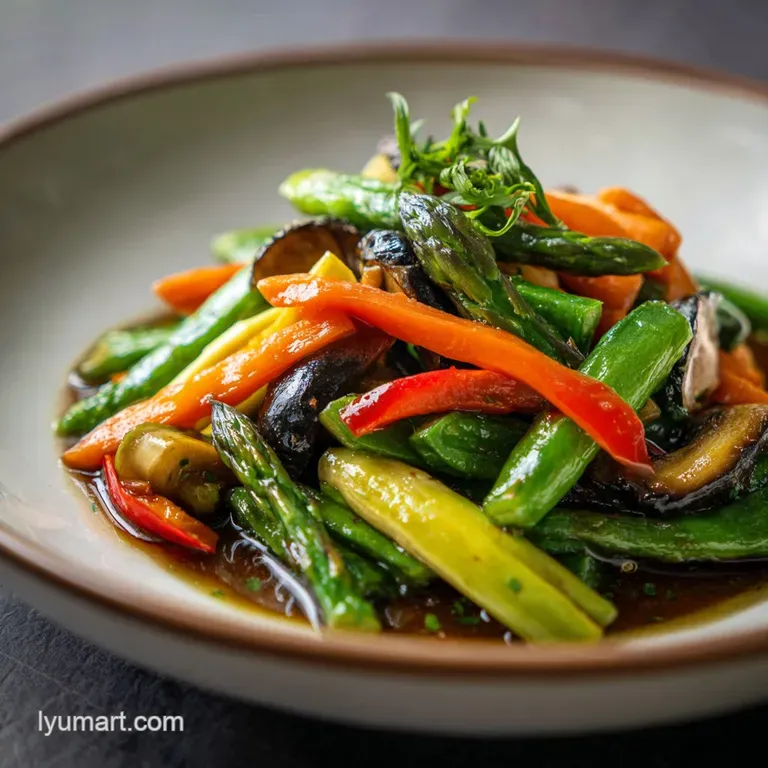
- Time: Active 15 minutes, Passive 0 mins, Total 25 minutes
- Flavor/Texture Hook: Charred edges with a crisp, tender bite
- Perfect for: Busy weeknight dinners and budget-friendly meal prep
- Why These Sauteed Vegetables Beat Any Boring Steamed Side
- Technical Specifications for the Ultimate Fast Veggie Medley
- Selecting Fresh Produce for Maximum Flavor and Snap
- Minimal Kitchen Tools Required for Professional Result
- Step By Step Guide to Searing Your Medley
- Common Pitfalls and Easy Fixes for Soggy Sides
- Adapting This Recipe for Keto and Paleo Lifestyles
- Exploding Myths About High Heat Cooking
- Smart Ways to Store and Repurpose Your Leftovers
- Simple Plating Techniques for a Restaurant Quality Look
- Recipe FAQs
- 📝 Recipe Card
Why These Sauteed Vegetables Beat Any Boring Steamed Side
You know that sound when a cold sliced pepper hits a screaming hot pan? That sudden, aggressive sizzle is the best part of my evening. For years, I used to just toss a bag of frozen mix into a pot and hope for the best, only to end up with a pile of grey, watery mush. It was depressing, frankly.
I thought healthy eating had to be bland until I realized the magic of a wide skillet and a tiny bit of fat.
The first time I got this right, it was a revelation. I had a few stray carrots and a lonely zucchini in the crisper drawer. Instead of boiling them into oblivion, I sliced them thin and let them dance in a hot pan with a splash of oil.
The edges turned brown and caramelized, the onions went sweet, and suddenly I wasn't just "eating my greens" I was actually enjoying them. It's fast, it's cheap, and it's the only way I've found to make asparagus taste like a treat rather than a chore.
We’re going to focus on a few simple rules here: don't crowd the pan, cut things to the right size, and respect the cooking order. You don't need fancy tools or expensive truffle oils to make this work. Just a basic skillet and about 10 minutes of cook time will give you a restaurant quality result that pairs perfectly with a One Pan Chicken recipe for a full meal.
Technical Specifications for the Ultimate Fast Veggie Medley
Thermal Evaporation: High heat quickly evaporates surface moisture, preventing the vegetables from "stewing" in their own juices. This ensures the exterior browns through the Maillard reaction while the interior stays vibrant.
- Density Management: Staggering the start times based on vegetable density prevents the carrots from being raw while the zucchini turns to mush.
- Aromatic Infusion: Adding garlic late in the process prevents the bitter compounds that form when garlic burns at high heat.
- Cellular Tension: Brief cooking times keep the cell walls of the vegetables intact, which provides that satisfying "snap" when you bite into them.
- Acid Balance: The final splash of lemon juice breaks down heavy fats and brightens the earthy notes of the asparagus and green beans.
| Goal | Method | Benefit |
|---|---|---|
| Ultra Crispy | Cast Iron Skillet | Retains heat better for deeper browning |
| Fast & Cheap | Standard Non stick | Uses less oil and cleans up in seconds |
| Bulk Prep | Two Skillets | Prevents overcrowding and maintains high heat |
Choosing the right pan is half the battle when making Sauteed Vegetables. If you use a pan that's too small, the moisture trapped between the vegetables will steam them instead of searing them.
If you’re in a rush, a large non stick skillet is your best friend because it heats up quickly and requires very little oil, keeping things light and affordable.
Selecting Fresh Produce for Maximum Flavor and Snap
| Ingredient | Science Role | Pro Secret |
|---|---|---|
| Extra Virgin Olive Oil | Heat Conductor | Use a high-quality oil to carry fat soluble vitamins to your palate. |
| Red Onion | Sweetness Base | Slicing into wedges instead of rings keeps them from disappearing into the mix. |
| Carrots | Structural Crunch | Slice coins very thin so they soften at the same rate as the peppers. |
| Lemon Juice | Flavor Catalyst | The acid cuts through the oil and resets your taste buds between bites. |
Selecting the right ingredients doesn't have to be expensive. In fact, this recipe thrives on whatever is on sale. Just ensure you’re using fresh garlic rather than the jarred stuff, as the flavor difference is massive when you're searing at high temperatures.
- 1 medium Red Onion (150g): Sliced into 1/4 inch wedges. Why this? Wedges hold their shape better than thin rings during over high heat tossing.
- 3 cloves Garlic (15g): Thinly sliced. Why this? Slices provide toasted "chips" of flavor without the risk of burning that minced garlic has.
- 1 tablespoon (15ml) Extra Virgin Olive Oil: Essential for even heat distribution.
- 2 medium Carrots (120g): Sliced into 1/8 inch coins.
- 1 large Red Bell Pepper (150g): Deseeded and cut into 1 inch strips.
- 1 cup (100g) Green Beans: Trimmed of woody ends.
- 1 small Zucchini (200g): Halved lengthwise and sliced into 1/2 inch half moons.
- 1 bunch (200g) Asparagus: Ends removed, cut into 2 inch pieces.
- 1/2 teaspoon (3g) Sea salt: Fine grain for even distribution.
- 1/4 teaspoon (1g) Cracked black pepper: For a bit of heat.
- 1 teaspoon (5ml) Fresh Lemon juice: To brighten the finish.
Chef's Tip: Freeze your garlic for 5 minutes before slicing. It firms up the cloves, allowing you to get those paper thin, "Goodfellas style" slices that melt into the oil without burning.
Minimal Kitchen Tools Required for Professional Result
You don't need a kitchen full of gadgets for this. A wide skillet (at least 12 inches) is non negotiable. If the pan is too small, you're just making a vegetable stew. I prefer a heavy bottomed stainless steel pan or a well seasoned cast iron, but a large non stick works perfectly if you're watching your fat intake.
A sharp chef's knife is your second most important tool. Uniform cuts aren't just for looks; they ensure that every piece of carrot finishes cooking at the exact same moment. If some coins are thick and others are paper thin, you'll have a mix of raw and mushy bites. If you enjoy this quick style of cooking, you might also like my Melted Cabbage Recipe which uses similar minimal tool techniques.
step-by-step Guide to Searing Your Medley
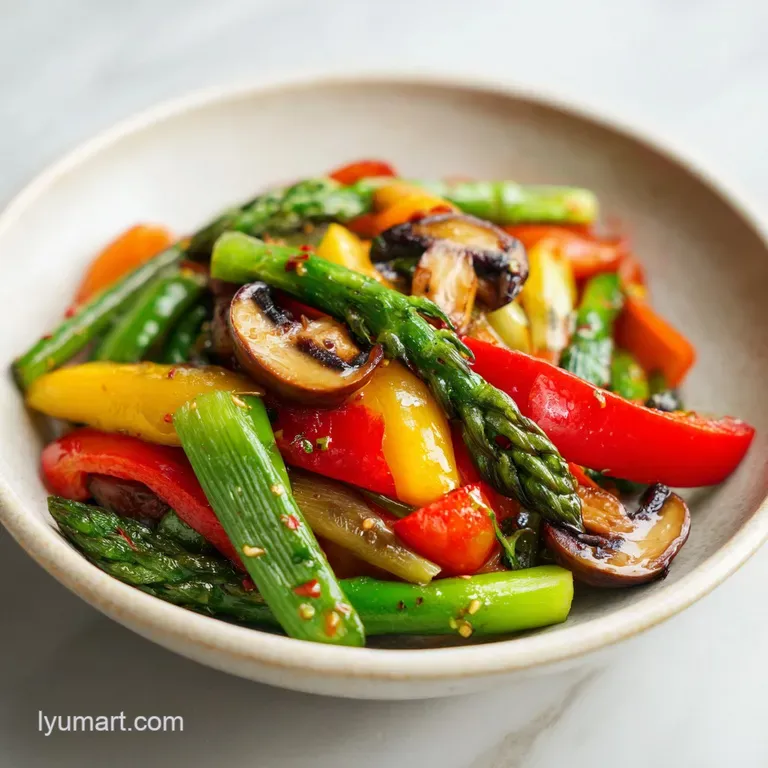
- Prep the vegetables. Slice everything according to the measurements above. Note: Organizing your ingredients by "cook time" (hard vs. soft) makes the process seamless.
- Heat the oil. Place the 1 tablespoon olive oil in a large skillet over medium high heat. Cook 2 mins until the oil shimmers and flows like water.
- Sauté the aromatics. Add the 150g red onion wedges. Cook 2 mins until the edges begin to soften and turn translucent.
- Add the "hard" vegetables. Toss in the 120g carrot coins and 100g green beans. Cook 3 mins until the carrots brighten in color.
- Incorporate the peppers. Add the 150g red bell pepper strips. Cook 2 mins until they just begin to blister.
- Add the delicate vegetables. Stir in the 200g zucchini and 200g asparagus pieces. Cook 3 mins until the asparagus turns vibrant green.
- Season the mix. Sprinkle the 1/2 tsp sea salt and 1/4 tsp black pepper over the pan. Note: Salting now prevents the vegetables from releasing too much water early on.
- Stir in the garlic. Add the 15g sliced garlic. Cook 1 min until the garlic is fragrant and golden but not brown.
- Deglaze and finish. Remove from heat and drizzle with 1 tsp lemon juice. Toss 30 seconds until the pan sizzle subsides.
Common Pitfalls and Easy Fixes for Soggy Sides
Banish Excessive Pan Moisture
The biggest mistake people make is washing their vegetables right before throwing them into the pan. If the veggies are wet, they will steam. Always pat your produce bone dry with a clean kitchen towel. Also, avoid salting the zucchini at the very beginning; salt draws out moisture, and zucchini is basically a sponge.
Save the salt for the final two minutes of cooking.
| Problem | Root Cause | Solution |
|---|---|---|
| Soggy vegetables | Overcrowded pan | Cook in two batches or use a larger skillet. |
| Burnt garlic | Added too early | Add garlic only in the last 60 seconds of cooking. |
| Raw carrots | Sliced too thick | Keep carrot coins under 1/8 inch for fast cooking. |
- ✓ Pat vegetables completely dry before they touch the pan.
- ✓ Ensure the oil is shimmering hot before adding the onions.
- ✓ Resist the urge to stir constantly; let the veggies sit for 30 seconds to get a good sear.
- ✓ Work in batches if your pan is smaller than 12 inches.
- ✓ Use a high smoke point oil if you want a deeper char.
Adapting This Recipe for Keto and Paleo Lifestyles
Scaling this recipe up for a crowd is easy, but you have to be careful with the pan space. If you're doubling the recipe to 8 servings, don't just pile everything into one pan. Use two skillets on two different burners.
If you try to do it all in one, the temperature of the pan will drop too significantly, and you'll lose that crisp texture.
For a keto version, you can swap the carrots for extra zucchini or cauliflower florets to keep the net carbs lower. If you're looking for a more "main dish" feel, adding a protein like sliced chicken breast works well, though I'd recommend searing the chicken first, removing it, then following the veggie steps and tossing the chicken back in at the end. For a different texture profile, you might enjoy my roasted vegetables recipe which uses oven heat for a sweeter finish.
| If you want... | Do this... |
|---|---|
| A Mediterranean Vibe | Add dried oregano and swap lemon for red wine vinegar. |
| An Asian Flare | Swap olive oil for peanut oil and add a dash of soy sauce at the end. |
| A Spicy Kick | Add 1/2 teaspoon of red pepper flakes with the garlic. |
Exploding Myths About High Heat Cooking
Many people think that searing meat or vegetables "seals in the juices." This is a myth. Moisture loss happens whenever you apply heat. The reason we sear is for the Maillard reaction a chemical reaction between amino acids and reducing sugars that gives browned food its distinctive, savory flavor.
Another common myth is that you shouldn't use extra virgin olive oil for sautéing because of its low smoke point. While it’s true that EVOO has a lower smoke point than avocado oil, a quality extra virgin olive oil is perfectly stable for a quick 10 minute sauté.
The antioxidants in the oil actually help prevent it from oxidizing during the short cook time.
Smart Ways to Store and Repurpose Your Leftovers
Storage: These Sauteed Vegetables will keep in an airtight container in the fridge for up to 4 days. Note that they will lose their "snap" as they sit, but the flavors will actually meld and deepen.
I do not recommend freezing this specific medley, as the zucchini and asparagus have a high water content and will become unpleasantly soft upon thawing.
Zero Waste: Don't throw away those asparagus woody ends or carrot peels! Toss them into a freezer bag. Once you have a full bag, boil them with some onion scraps and peppercorns to make a quick, zero cost vegetable scrap broth for soups or risotto.
If you have leftover sautéed veggies, they are incredible folded into a morning omelet or tossed with some cold pasta and a drizzle of balsamic glaze for an easy lunch.
Simple Plating Techniques for a Restaurant Quality Look
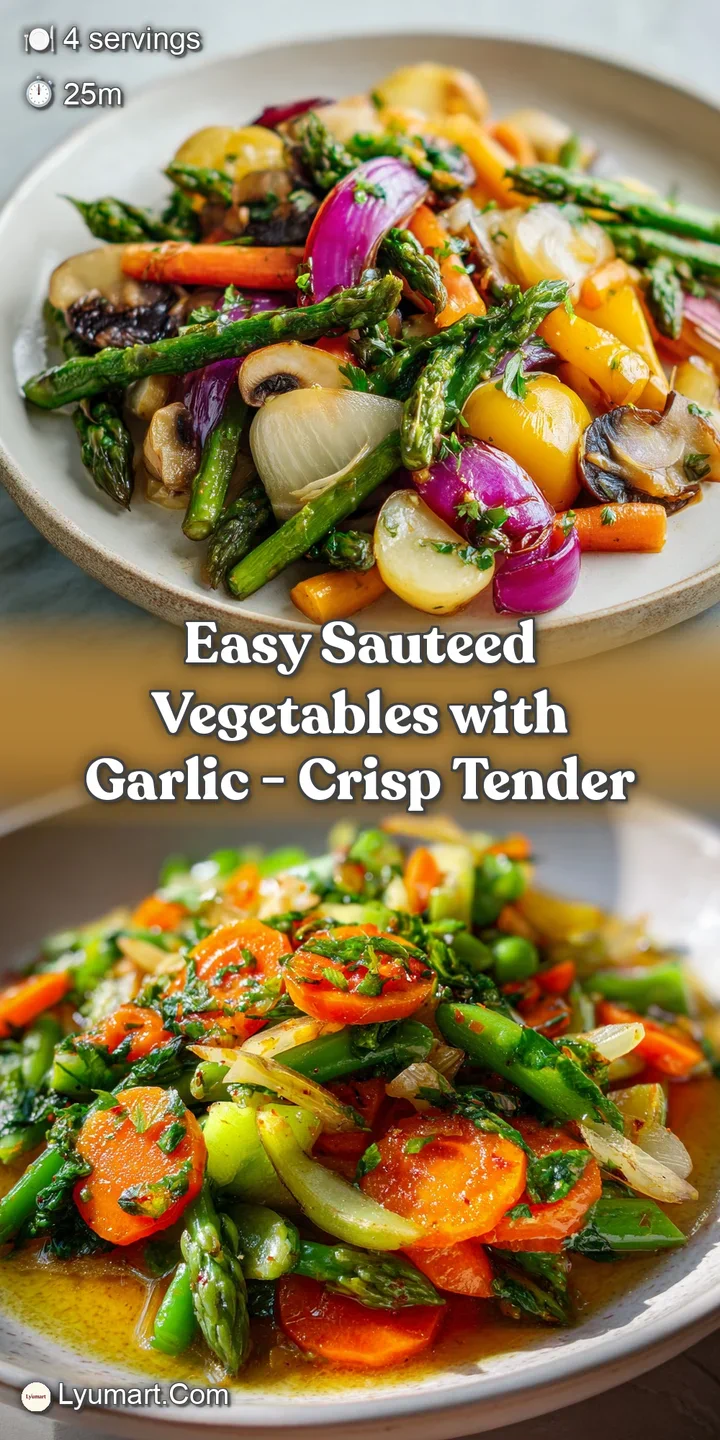
When you're ready to serve, don't just dump the pan onto a plate. Start by layering the larger, flat pieces like the peppers and zucchini at the bottom. Then, pile the "linear" vegetables like the asparagus and green beans on top at different angles. This creates height and makes the dish look much more intentional.
Finish with a tiny sprinkle of flaky sea salt (like Maldon) and maybe some fresh herbs if you have them lying around. Parsley or chives work wonders here. The bright green of the fresh herbs against the charred edges of the vegetables makes the whole dish pop. It's an affordable way to make a simple side dish look like it belongs in a high end bistro. You could even serve these alongside a Broccoli Casserole recipe if you're hosting a big family dinner and want a mix of textures.
Recipe FAQs
Can I use frozen vegetables instead of fresh for sautéing?
No, for best results, use fresh. Frozen vegetables are pre-blanched and contain excess surface water which causes them to steam and turn mushy when aggressively sautéed.
How to prevent vegetables from releasing too much water in the pan?
Ensure the pan is screaming hot before adding any ingredients. Pat all produce thoroughly dry with paper towels and avoid overcrowding the skillet, which traps steam.
What is the correct order to add vegetables with different cooking times?
Start with the densest vegetables first, such as carrots and green beans. Softer items like zucchini and peppers go in halfway through; the most delicate items, like sliced garlic, are added last to prevent burning.
Is it true that adding salt early will ruin the crisp texture?
Yes, this is crucial for texture control. Salt draws moisture out of the vegetable cells; add salt only in the final few minutes of cooking to season the exterior without leaching internal water.
How to chop vegetables so they cook evenly in the high heat?
Slice all ingredients to a uniform thickness, prioritizing thinness for harder items. Consistent sizing ensures that the cell structure breaks down at the same rate, preventing a mix of raw and overcooked pieces.
Can I substitute olive oil with another fat for higher heat cooking?
Yes, you can use avocado oil or clarified butter for a higher smoke point. However, high-quality EVOO works fine for a quick 10-minute sauté; if you enjoyed mastering the technique of quick searing here, apply that principle when making our Easy Beef Stir Fry Recipe for quick protein searing.
What is the purpose of adding a splash of acid like lemon juice at the end?
The acid acts as a flavor catalyst to brighten the finished dish. It cuts through the richness of the fat and balances the earthy caramelized notes created during the high heat sear.
Quick Sauteed Vegetables
Ingredients:
Instructions:
Nutrition Facts:
| Calories | 102 calories |
|---|---|
| Protein | 3.5g |
| Fat | 4.1g |
| Carbs | 15.1g |
| Fiber | 4.6g |
| Sugar | 6.3g |
| Sodium | 315mg |
