One Pot Sausage Cabbage Potato Dinner
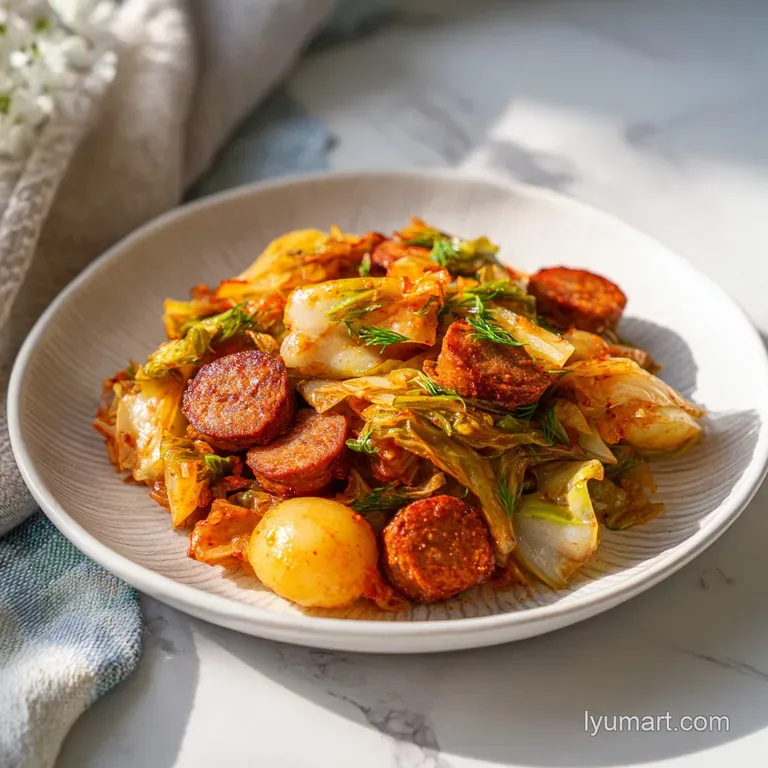
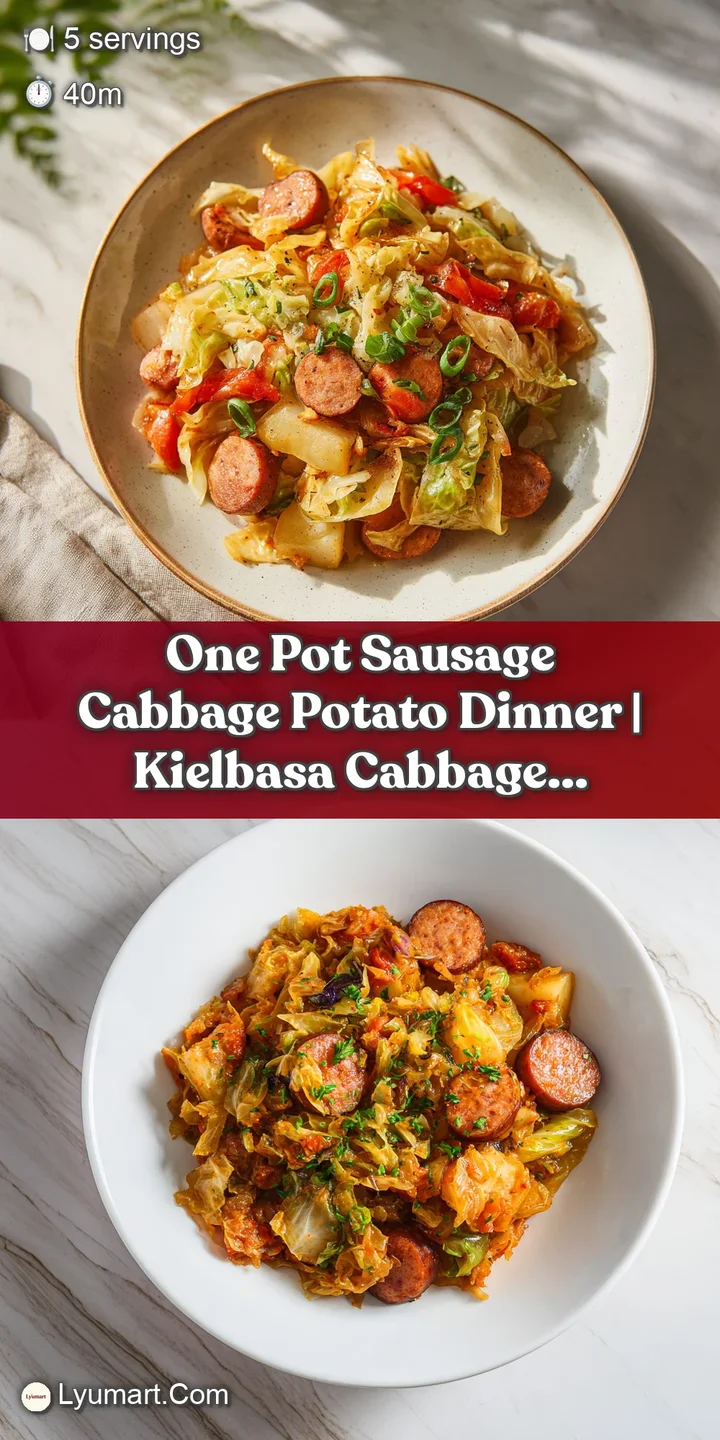
- Time: Active 15 minutes, Passive 25 minutes, Total 40 minutes
- Flavor/Texture Hook: Silky cabbage paired with crispy edged potatoes
- Perfect for: Stress free weeknight dinners or budget-friendly meal prep
- Why This Humble Skillet Works
- Essential Stats For Your Meal
- Selecting The Most Flavorful Components
- The Only Pan You Need
- Step-By-Step Cooking Guide
- Solving Common Kitchen Hiccups
- Adjusting For Larger Crowds
- Debunking Common Cooking Myths
- Keeping Your Leftovers Fresh
- How To Plate Your Feast
- High in Sodium ⚠️
- Recipe FAQs
- 📝 Recipe Card
Why This Humble Skillet Works
- Maillard Reaction: Searing the sausage first builds a foundation of savory compounds that season the entire pan.
- Starch Hydration: Yukon Gold potatoes absorb the chicken broth and rendered fat, resulting in a velvety interior texture.
- Sulfur Reduction: High heat and a quick sear neutralize the sharp sulfur smells in cabbage, leaving behind only its natural sweetness.
- Acid Balance: A final splash of apple cider vinegar cuts through the richness of the fats, brightening every single bite.
1. The Maillard Reaction Advantage
When we talk about browning meat, we're really talking about the Maillard reaction. By giving that sliced kielbasa enough space to breathe in the pan, we create a dark, flavorful crust. This isn't just about color; it’s about creating flavor molecules that simply don't exist in boiled or steamed meat.
Those little brown bits stuck to the bottom of the pan called fond are basically culinary gold that the broth will eventually lift up.
2. Dual Texture Cooking
The magic of this dish is that we are essentially sautéing and steaming at the same time. The potatoes get a head start to develop a crust, while the cabbage acts as a moisture rich blanket on top.
As the cabbage wilts, it releases water that turns into steam, which finishes cooking the potatoes through to the center. You get the best of both worlds: the crunch of a roast and the tenderness of a stew.
3. High Impact Aromatics
Onions and garlic aren't just background players here. By slicing the onions thinly, they caramelize quickly in the sausage fat, adding a jammy sweetness that contrasts the salty meat. Smoked paprika acts as a bridge, tying the smoky notes of the kielbasa to the earthiness of the potatoes.
It’s a simple spice cabinet staple that does a lot of heavy lifting.
Right then, before we get into the nitty gritty of the ingredients, let's look at how thickness affects your results. It's the difference between a soggy mess and a textural masterpiece.
| Sausage Thickness | Sizzle Time | Visual Cue | Texture Result |
|---|---|---|---|
| 1/4 inch | 2 minutes | Curled edges | Crispy and dry |
| 1/2 inch | 4 minutes | Deep brown edges | Snappy and savory |
| 1 inch | 6 minutes | Pale centers | Soft and chewy |
The 1/2 inch slice is our sweet spot for this recipe. It’s thick enough to stay juicy but thin enough to get that beautiful sear on both sides without burning before the potatoes are ready.
Essential Stats For Your Meal
Making sure you have the right weight of ingredients is the first step toward success. This isn't a "measure with your heart" situation when it comes to the liquid to potato ratio, or you'll end up with soup or burnt tubers. We want those potatoes to be soft but not falling apart.
| Ingredient | Science Role | Pro Secret |
|---|---|---|
| Yukon Gold Potatoes | Medium Starch | Keeps shape while softening into a buttery texture |
| Green Cabbage | Moisture Release | Acts as a natural steamer for the harder vegetables |
| Chicken Broth | Heat Transfer | Conducts heat evenly to the center of the potato cubes |
Chef Tip: Freeze your smoked kielbasa for about 10 minutes before slicing. This firms up the fat and meat, allowing you to get perfectly uniform 1/2 inch rounds that won't squish under the knife.
Selecting The Most Flavorful Components
When I’m shopping for this one pot sausage cabbage potato dinner, I’m looking for ingredients that can stand up to high heat. This is comfort food at its most basic, so the quality of your humble vegetables really shines through.
- 14 oz smoked kielbasa: Cut into 1/2 inch rounds. Why this? It provides the primary seasoning and fat for the entire dish.
- Substitute: Andouille sausage if you want a spicy kick.
- 1.5 lbs Yukon Gold potatoes: Cut into 3/4 inch cubes. Why this? Their thin skin means no peeling is required, saving you time.
- Substitute: Red potatoes also work well for their waxy texture.
- 2 tbsp avocado oil: For the initial sear. Why this? High smoke point prevents the oil from breaking down.
- Substitute: Lard or bacon grease for a more traditional, smoky flavor.
- 1 medium green cabbage: Cored and sliced into 1 inch ribbons. Why this? It wilts beautifully without turning into mush.
- Substitute: Savoy cabbage for a more delicate, ruffled texture.
- 1 large yellow onion: Thinly sliced. Why this? Higher sugar content leads to better caramelization.
- Substitute: Shallots for a more sophisticated, mild onion flavor.
- 3 cloves garlic: Minced. Why this? Adds a punch of sulfurous heat that rounds out the savory notes.
- Substitute: 1 tsp garlic powder added with the paprika.
- 0.5 cup low sodium chicken broth: For steaming. Why this? Adds depth without making the dish overly salty.
- Substitute: Vegetable broth or even a dry white wine like Sauvignon Blanc.
- 1 tbsp apple cider vinegar: Added at the finish. Why this? The acidity brightens the heavy fats and starches.
- Substitute: Fresh lemon juice or red wine vinegar.
- 1 tsp smoked paprika: For color and depth. Why this? Enhances the smoky profile of the sausage.
- Substitute: Sweet paprika or a pinch of chipotle powder for heat.
- 1 tsp kosher salt: For seasoning layers. Why this? Easier to control than fine table salt.
- Substitute: Sea salt.
- 0.5 tsp black pepper: Freshly cracked. Why this? Pre ground pepper loses its spicy bite too quickly.
- Substitute: White pepper for a more floral heat.
The Only Pan You Need
You don’t need a kitchen full of gadgets for this. A wide, deep skillet is your best friend here. I personally swear by a 12 inch cast iron skillet because it holds heat like a champion and gives those potatoes a shatter crisp crust that stainless steel just can't match.
If you don't have cast iron, a heavy bottomed Dutch oven (like a Le Creuset) is an excellent second choice. The high sides are actually helpful when you first add the cabbage, as it takes up a lot of room before it wilts down. Just make sure whatever pan you use has a tight fitting lid.
If your skillet doesn't have one, a large baking sheet placed over the top works in a pinch!
step-by-step Cooking Guide
Let’s get cooking. This process is all about timing and heat management. If you rush the browning, you lose flavor. If you overcook the cabbage, it gets funky. Follow these steps for that classic, satisfying result.
1. The Sausage Sear
Place your large skillet over medium high heat and add the 2 tbsp avocado oil. Once the oil is shimmering, add the 14 oz of sliced kielbasa in a single layer. Let them cook undisturbed for about 3-4 minutes until they are deeply browned and sizzling.
Flip them and brown the other side for another 2 minutes. Remove the sausage with a slotted spoon and set aside, leaving the flavored oil in the pan.
2. The Golden Potato Foundation
In the same pan, toss in your 1.5 lbs of cubed Yukon Gold potatoes. Stir them once to coat in the sausage fat, then spread them out. Let them cook for 5-7 minutes, stirring only occasionally, until the edges are golden and starting to crisp.
Note: Don't move them too much or they won't develop that beautiful crust.
3. The Aromatic Bloom
Add the thinly sliced yellow onion to the potatoes. Continue cooking for another 3 minutes until the onions begin to soften and turn translucent. Stir in the 3 cloves of minced garlic and 1 tsp smoked paprika.
Cook for just 30-60 seconds until the aroma is fragrant and the oil turns bright red.
4. The Cabbage Wilt & Steam
Dump the sliced green cabbage on top of the potato and onion mixture. It will look like way too much cabbage for the pan don't panic! Pour the 0.5 cup chicken broth over everything and sprinkle with the 1 tsp kosher salt and 0.5 tsp black pepper. Cover the pan with a tight lid and reduce heat to medium low.
5. The Final Toss
Steam for 12-15 minutes until the potatoes are fork tender and the cabbage is silky. Remove the lid and stir the browned sausage back into the pan. Increase the heat to medium for 2 minutes to cook off any excess liquid and let everything get a final sear together.
Remove from heat, drizzle with the 1 tbsp apple cider vinegar, and toss one last time before serving.
Solving Common Kitchen Hiccups

Even the simplest dishes can go sideways. I’ve definitely had nights where I walked away to check an email and came back to scorched onions. It happens to the best of us! The key is knowing how to pivot before the meal is ruined.
1. Potatoes are still hard?
This usually happens if the cubes were cut too large or if the lid wasn't tight enough to trap the steam. If your cabbage is done but the potatoes have a crunch, add another 1/4 cup of broth, put the lid back on, and give it 5 more minutes. The extra moisture will finish the job.
2. Too much liquid in the pan?
If your cabbage was particularly moisture heavy, you might end up with a bit of a puddle at the bottom. Don't serve it like that! Remove the lid, turn the heat up to high, and let that liquid evaporate for 2-3 minutes while stirring.
This will also help "fry" the cabbage slightly in the remaining fat, which tastes incredible.
| Problem | Root Cause | Solution |
|---|---|---|
| Burnt Garlic | Heat was too high during aromatics | Add garlic later or turn heat down before adding |
| Soggy Cabbage | Cooked too long with the lid on | Remove lid 5 minutes early to let steam escape |
| Bland Flavor | Not enough salt or acidity | Add an extra splash of vinegar and a pinch of salt |
Similar to the technique used in our Melted Cabbage Recipe, the goal is a soft, luscious texture rather than a crunchy one. If you find the flavor still lacking, a tiny pinch of red pepper flakes can work wonders.
Common Mistakes Checklist: ✓ Pat potatoes dry after washing to ensure they sear rather than steam initially. ✓ Don't overcrowd the sausage rounds; work in batches if your pan is smaller than 12 inches. ✓ Always add the garlic last in the sauté phase so it doesn't bitter.
✓ Use a lid that actually fits to maintain the internal temperature for the potatoes. ✓ Wait until the very end to add the vinegar to keep the flavor bright and sharp.
Adjusting For Larger Crowds
If you’re feeding a group or doing meal prep for the week, you can easily scale this recipe. However, you can't just throw double the ingredients into one skillet and expect the same results. Physics just doesn't work that way!
Scaling Down (1-2 servings): Use a 10 inch skillet. You can reduce the cooking time by about 20% since there is less thermal mass in the pan. If you're using half a cabbage, make sure to core it deeply as the stem is much tougher in smaller pieces.
Scaling Up (8-10 servings): Don't try to double this in one skillet. You’ll end up with a mountain of steamed, gray meat. Instead, use two skillets or use the Sheet Pan Sausage Cabbage Potatoes method. Spread everything on two rimmed baking sheets and roast at 400°F (200°C) for 30-35 minutes, tossing halfway through.
| Feature | Stovetop One Pot | Sheet Pan Method |
|---|---|---|
| Texture | Silky and tender | Crispy and caramelized |
| Active Time | 15 minutes | 10 minutes |
| Best For | Weeknight dinner | Large groups/Meal prep |
If you go the oven route, skip the chicken broth and increase the avocado oil by 1 tbsp to ensure nothing dries out during the roast.
Debunking Common Cooking Myths
Myth: You must peel potatoes for them to cook evenly. Actually, leaving the skin on Yukon Golds provides structural integrity. It prevents the potato from turning into mashed potatoes as you stir the cabbage. Plus, the skin is where a lot of the nutrients live!
Myth: Adding salt early makes cabbage tough. It’s actually the opposite. Salting the cabbage early helps it release its moisture via osmosis. This moisture is what creates the steam needed to cook the potatoes.
If you wait until the end to salt, the cabbage will stay watery and won't develop that sweet, concentrated flavor we're looking for.
Keeping Your Leftovers Fresh
This dish is one of those rare beauties that actually tastes better the next day. The flavors have time to mingle, and the potatoes soak up even more of that smoky fat.
Storage: Keep leftovers in an airtight container in the fridge for up to 4 days. I don't recommend freezing this dish; potatoes tend to get grainy and the cabbage can become unpleasantly mushy once thawed and reheated.
Reheating: Avoid the microwave if you can. It makes the cabbage soggy. Instead, toss the leftovers back into a skillet with a tiny splash of water or broth. Cover it for 3 minutes to heat through, then remove the lid for 2 minutes to crisp the potatoes back up.
Zero Waste Tip: Don't throw away the cabbage core! While too tough for this recipe, you can slice it very thin and add it to a stir fry or save it in a freezer bag for making homemade vegetable stock later.
How To Plate Your Feast
Honestly, this is a humble, rustic meal, so I usually just bring the whole skillet to the table. It keeps everything hot and feels very "family style." If you want to brighten up the plate, a sprinkle of fresh parsley or some chopped green onions adds a nice pop of color.
For a bit of extra indulgence, a dollop of sour cream on the side is incredible. It plays so well with the smoked paprika and the starch of the potatoes. If you're looking for a side dish to stretch the meal further, a crusty piece of sourdough bread is perfect for mopping up any leftover juices at the bottom of the bowl.
It's simple, satisfying, and exactly what a "potato dinner" should be.
Whether you're making this as a quick weeknight fix or a comforting Sunday lunch, this one pot sausage cabbage potato dinner is proof that you don't need expensive ingredients to make a world class meal. It's all about the technique, the sizzle, and a little bit of patience.
Let's crack on and get that skillet heating up!
High in Sodium ⚠️
1114 mg 1114mg of sodium per serving (48% 48% of daily value)
The American Heart Association recommends limiting sodium intake to about 2,300mg per day.
Tips to Reduce Sodium in Your Kielbasa and Cabbage Skillet
-
Choose Lower Sodium Kielbasa-25%
Kielbasa is a significant source of sodium. Look for kielbasa labeled 'reduced sodium' or 'low sodium,' which can significantly reduce the overall sodium content. Substituting with a lower sodium option could reduce the sodium by up to 25%.
-
Reduce Added Salt-25%
The recipe calls for 1 tsp of kosher salt. Start by reducing the amount of salt you add by half, or even eliminating it entirely, and taste the dish before adding more. This could reduce sodium by up to 25%.
-
Use Sodium Free Broth-30%
Replace the low-sodium chicken broth with sodium free chicken broth. This simple swap can drastically reduce the sodium content from the broth by up to 30%.
-
Enhance Flavor with Herbs & Spices
Instead of relying on salt, use a variety of herbs and spices to boost the flavor of the skillet. Consider adding garlic powder, onion powder, or a pinch of red pepper flakes.
Recipe FAQs
What is the best type of sausage to use for maximum flavor?
Smoked Kielbasa is recommended. Its high fat content renders out during the sear, flavoring the potatoes and cabbage while providing a necessary smoky base for the whole dish.
How to ensure potatoes are tender without turning cabbage to mush?
Start the potatoes first and cover the pan for steaming. The potatoes require a head start about 12 minutes before the moisture heavy cabbage is added on top to create a steam dome.
Can I substitute Yukon Golds with Russet potatoes?
No, stick to waxy or all-purpose potatoes like Yukon Golds. Russets are high in starch; they will break down too quickly during the steaming phase and result in a soupy texture rather than distinct chunks.
How to prevent the garlic from burning during the short sauté time?
Add minced garlic only during the final minute of sautéing aromatics. Garlic has a low smoke point; adding it right before the broth and covering it prevents scorching and bitterness, similar to technique used when building flavor in our Ground Sausage Recipe.
Is it necessary to use apple cider vinegar at the end?
Yes, the acid is crucial for balance. The vinegar cuts through the richness of the rendered sausage fat and the starchiness of the potatoes, brightening all the savory components in the final dish.
Can this dish be successfully made in the oven instead of on the stovetop?
Yes, using a sheet pan is an excellent alternative for larger batches. Spread the ingredients on two rimmed baking sheets and roast at 400°F (200°C) for 30-35 minutes, tossing once, which ensures better caramelization than crowding a single skillet.
What is the best way to reheat leftovers to maintain potato crispness?
Reheat in a skillet over medium heat, not the microwave. Add a splash of water or broth, cover briefly to steam the cabbage back to tenderness, then remove the lid and cook uncovered for two minutes to recrisp the potato edges.
Sausage Cabbage Potato Dinner

Ingredients:
Instructions:
Nutrition Facts:
| Calories | 452 kcal |
|---|---|
| Protein | 16 g |
| Fat | 26 g |
| Carbs | 38 g |
| Fiber | 7 g |
| Sugar | 6 g |
| Sodium | 1114 mg |
