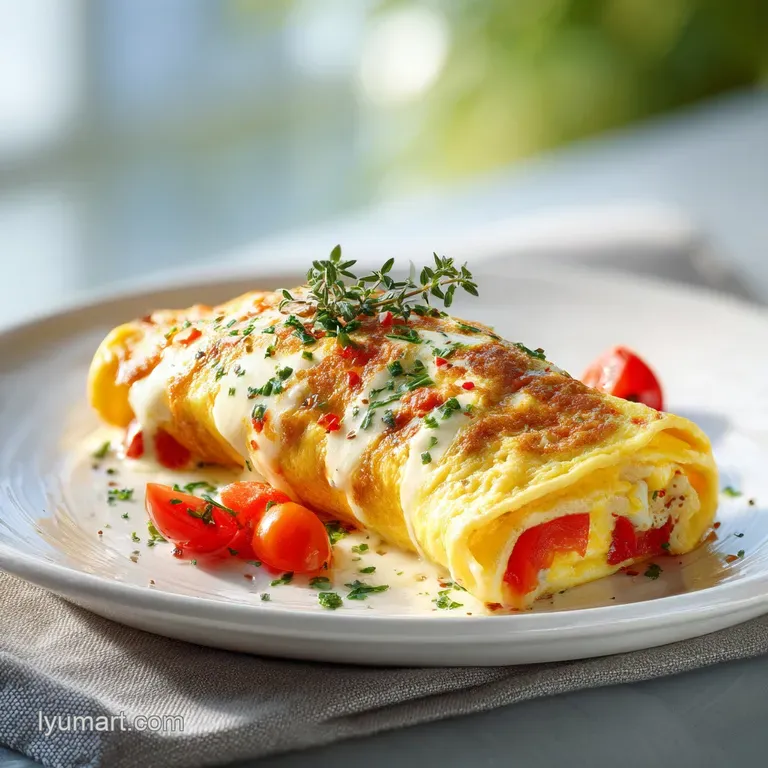
Omelet Roll: Tender Bacon and Egg Loaf
- Time: Active 10 mins, Passive 12 mins, Total 22 mins
- Flavor/Texture Hook: Silky, tender egg layers with a smoky bacon crunch
- Perfect for: Weekend brunch or a low stress holiday breakfast
- Science of the Silken Fold
- Essential Specs and Timing
- Budget Friendly Essential Elements
- Tools for the Perfect Bake
- Key Steps for Rolling Success
- Fixing Common Cooking Errors
- Flavor Variations for Every Meal
- Practical Storage and Reheating Tips
- Elegant Plating and Presentation
- Recipe FAQs
- 📝 Recipe Card
Science of the Silken Fold
Protein Denaturation: Adding heavy cream introduces fat molecules that sit between egg protein strands, preventing them from bonding too tightly and turning rubbery during the bake.
Steam Expansion: The small amount of moisture in the cream and eggs turns to steam in the 325°F oven, creating tiny air pockets that keep the sheet flexible enough to roll without cracking.
| Cooking Method | Cook Time | Texture | Best For |
|---|---|---|---|
| Sheet Pan Oven | 10-12 mins | Uniform, velvety, easy to slice | Large groups and meal prep |
| Traditional Stovetop | 4-6 mins | Crispy edges, custardy center | Individual servings |
| Air Fryer Tin | 8 mins | Denser, slightly browned top | Small batches or singles |
While the oven method is my go to for its consistency, you can achieve similar results on the stove if you have a massive rectangular pan, but the oven provides that "set it and forget it" peace of mind. If you love this custard like egg base, you will notice a similar mouthfeel in my Homemade French Toast Recipe, which relies on the same dairy to egg ratio for a tender center.
Essential Specs and Timing
To get this right on the first try, you need to hit three specific checkpoints. First, your oven must be at exactly 325°F (160°C); any hotter and the eggs will puff up like a souffle and crack. Second, ensure you are using a standard 10x15 inch jelly roll pan.
Finally, the eggs are done when the center no longer jiggles but the surface still looks slightly moist, which usually happens at the 11 minute mark.
| Component | Science Role | Pro Secret |
|---|---|---|
| 8 Large Eggs | Structural base | Room temp eggs emulsify faster |
| 60 ml Heavy Cream | Tenderizing fat | Keeps the roll flexible |
| 15 g Melted Butter | Surface tension | Brush the paper for a clean release |
Using room temperature ingredients is one of those small steps I used to skip because I was lazy. But trust me, cold eggs and cream take longer to set, which often results in overcooked, browned edges. If you're looking for another protein packed meal that uses simple techniques, this Omelet Roll pairs surprisingly well with a side of crispy Burgers in Air Fryer recipe for a "brunch style" dinner.
Budget Friendly Essential Elements
I love this recipe because it uses the cheapest high-quality protein you can find. You don't need fancy truffle oils or imported cheeses to make this work. Standard sharp cheddar and basic bacon do the heavy lifting here, providing that salty, savory punch we all crave in a comfort meal.
- 8 Large Eggs: The foundation of the roll. Why this? Provides the perfect volume for a 10x15 pan.
- Sub: 2 cups of liquid egg whites (will be less rich).
- 60 ml Heavy Cream: Adds the necessary fat. Why this? Prevents the eggs from becoming a dry sponge.
- Sub: Whole milk (less velvety but works).
- 15 g Unsalted Butter: For the pan and the batter. Why this? Adds a rich, nutty aroma.
- Sub: Clarified butter or a light avocado oil.
- 100 g Sharp Cheddar Cheese: The gooey interior. Why this? Melts beautifully and adds a sharp contrast.
- Sub: Monterey Jack for a milder, creamier melt.
- 4 Slices Bacon: The smoky crunch. Why this? Provides texture to the soft eggs.
- Sub: Smoked ham or sautéed mushrooms.
- 30 g Fresh Chives: For brightness. Why this? Cuts through the richness of the eggs.
- Sub: Green onion tops or dried parsley.
| Original Ingredient | Substitute | Why It Works |
|---|---|---|
| Heavy Cream (60 ml) | Full fat Greek Yogurt | Adds a slight tang and similar fat content. |
| Sharp Cheddar (100 g) | Nutritional Yeast (3 tbsp) | dairy-free savory flavor, though it won't "melt." |
| Bacon Slices (4) | Tempeh Bacon | Provides the same smoky crunch for vegetarians. |
A quick note on the cheese: I always suggest grating your own from a block. Pre shredded cheese is coated in potato starch to keep it from clumping in the bag, but that starch can make your Omelet Roll interior feel gritty rather than silky.
Tools for the Perfect Bake
You absolutely need a jelly roll pan (roughly 10x15 inches) for this. If you use a standard large cookie sheet, the egg layer will be too thin and will dry out before it sets. You also need high-quality parchment paper. Don't try this with wax paper; it will melt in the oven and ruin your breakfast.
A whisk and a large mixing bowl are standard, but a silicone spatula is your best friend for the actual rolling process.
Mastering Surface Tension
Before pouring your eggs, make sure the parchment paper is pressed firmly into the corners of the pan. I use a tiny bit of the melted butter to "glue" the paper to the pan. This prevents the egg mixture from seeping underneath the paper, which is the number one cause of sticking.
Achieving a Silken Pour
When you pour the 8 egg mixture into the pan, do it slowly from the center. Tilt the pan gently to let the liquid reach the edges. This ensures a perfectly even thickness so that one corner isn't overcooked while the middle is still raw.
Key Steps for Rolling Success

- Preheat oven. Set your rack to the middle position at 325°F. Note: This ensures even heat distribution.
- Prepare pan. Line your jelly roll pan with parchment and brush with half the 15 g melted butter.
- Whisk base. Combine 8 eggs, 60 ml cream, remaining butter, 3 g salt, and 1 g white pepper. Whisk until no streaks remain.
- Bake sheet. Pour the mixture into the pan and bake for 10-12 minutes until the center is set.
- Add toppings. Sprinkle 100 g cheddar, 30 g chives, and 4 slices crumbled bacon over the hot eggs.
- Start roll. Using the parchment paper as a guide, fold over the first inch of the long side.
- Continue rolling. Peel the paper back as you roll the egg sheet tightly until a log forms.
- Seal shape. Place the roll seam side down and let it sit for 1 minute. Note: Residual heat melts the cheese.
- Slice pieces. Use a sharp serrated knife to cut into 1 inch thick rounds until the spiraled interior is visible.
Fixing Common Cooking Errors
One mistake I once made was trying to roll the omelet while it was stone cold. It shattered like glass. You have to work while the egg sheet is still warm and pliable. If the edges seem a bit crispy or dry, don't panic.
You can trim them off with kitchen shears before you start the roll to ensure a smooth, professional look.
Why Your Omelet Cracks
Cracking usually happens because of overbaking. If the egg proteins lose too much moisture, they become brittle. If you see the edges starting to brown deeply, pull it out immediately. Another cause is rolling too loosely; you want a firm, snug roll to maintain structural integrity.
| Problem | Root Cause | Solution |
|---|---|---|
| Egg sticks to paper | Not enough fat | Brush parchment with butter or oil before pouring. |
| Rubbery texture | High heat/Overcooking | Lower oven to 325°F and check at 10 mins. |
| Soggy bottom | Too many wet veggies | Sauté and drain mushrooms or spinach before adding. |
Common Mistakes Checklist
- ✓ Never skip the parchment paper; foil will stick to the eggs regardless of oil.
- ✓ Whisk the eggs thoroughly to avoid "white spots" in your finished roll.
- ✓ Let the roll rest for a full minute before slicing to let the cheese act as glue.
- ✓ Don't overcrowd the filling - too much bacon or cheese will make it burst.
Flavor Variations for Every Meal
If you want to keep things light, the "Garden Roll" is a winner. Swap the bacon for finely chopped sautéed spinach and bell peppers. For a bit of a kick, I sometimes add a teaspoon of hot sauce to the egg base. If you’re looking for a bread alternative to serve alongside this, my 2 Ingredient Cottage recipe is a fantastic low carb companion that keeps the meal high protein.
Creating a Savory Dinner Roll
To turn this into a full dinner, try a "Philly" version. Use provolone cheese instead of cheddar and fill it with thinly sliced steak and caramelized onions. The beauty of the Omelet Roll is that once you master the egg base, the interior is a blank canvas.
Mastering the Surface Tension
When using watery vegetables like tomatoes or zucchini, you must salt them and let them sit on a paper towel for 10 minutes first. If you skip this, the steam released during the "resting" phase of the roll will turn your beautiful breakfast into a soggy mess.
Practical Storage and Reheating Tips
You can keep leftovers in the fridge for up to 3 days. I recommend wrapping the whole roll in plastic wrap rather than slicing it first, as this keeps the moisture locked inside the egg layers. For long term prep, you can actually freeze individual slices.
Place them on a baking sheet to flash freeze, then toss them into a freezer bag for up to 2 months.
To reheat, avoid the microwave if possible, as it can make the eggs rubbery. A low oven (300°F) for about 10 minutes, covered in foil, works best.
If you're in a rush, a quick sear in a buttered skillet on medium low heat will give the edges a lovely little crunch while warming the center.
Chef's Tip: Use your leftover bacon fat to grease the parchment paper instead of butter for a massive flavor boost without spending an extra dime.
For a zero waste kitchen, don't toss the chive stems! If they are a bit wilted, blend them into your butter or freeze them in an ice cube tray with oil to use for your next Omelet Roll. It's a humble way to ensure every bit of flavor is used.
Elegant Plating and Presentation
A Rolled Omelette Recipe lives or dies by the slice. Use a very sharp knife and wipe it clean between every cut. This ensures that the yellow of the egg and the white of the cheese stay distinct in that beautiful spiral.
I like to garnish the top with a few extra snips of chives and a crack of fresh black pepper.
Serving this on a wooden board gives it a rustic, farmhouse feel that guests love. If you’re hosting a larger brunch, place the slices slightly overlapping each other like shingles on a roof.
It looks incredibly professional, and honestly, no one needs to know it only took you 22 minutes to pull the whole thing together. It’s the ultimate kitchen win maximum style with minimum stress.

Recipe FAQs
What is the ideal oven temperature for baking the sheet pan omelet?
Set the oven to exactly 325°F (160°C). Baking hotter than this will cause the eggs to puff too rapidly and crack when you attempt to roll them.
How can I prevent the finished omelet roll from cracking when I try to roll it?
Underbake slightly and work while warm. The egg layer must remain pliable, so pull it out when the center is still slightly moist. Rolling too tightly or waiting until it cools completely will cause it to fracture.
Is it necessary to use parchment paper when baking this omelet roll?
Yes, parchment paper is non-negotiable. It ensures the delicate egg layer releases cleanly from the pan; wax paper will melt, and baking directly on the metal will cause the eggs to adhere instantly.
How do I prepare the egg mixture for the silkiest texture?
Whisk eggs and cream until completely smooth without streaks. Adding heavy cream introduces fat that keeps the proteins from bonding too tightly, resulting in a velvety, rather than rubbery, texture. If you enjoyed controlling the emulsion here, the same principle of smooth incorporation applies to making a stable dressing, like in our Vanilla Pudding Recipe.
How long should the sheet pan omelet bake before adding the fillings?
Bake for 10 to 12 minutes, depending on your oven calibration. The egg is done when the center stops visibly jiggling but still appears slightly moist to the touch.
What is the best way to slice the finished omelet roll for presentation?
Use a very sharp, clean knife and wipe it between cuts. This prevents the cheese filling from smearing across the yellow egg spirals. For a savory dinner variation, consider trying the similar folding technique in the Thai Basil Beef recipe.
Can I substitute heavy cream with a lower fat dairy alternative in this recipe?
No, substituting heavy cream severely compromises the texture. The high fat content in the cream is essential for keeping the eggs tender and flexible enough to roll without breaking apart during the forming stage.
Sheet Pan Omelet Roll

Ingredients:
Instructions:
Nutrition Facts:
| Calories | 369 kcal |
|---|---|
| Protein | 22 g |
| Fat | 30 g |
| Carbs | 2 g |
| Fiber | 0 g |
| Sugar | 1 g |
| Sodium | 620 mg |
