Beef Bourguignon: Tender and Rich
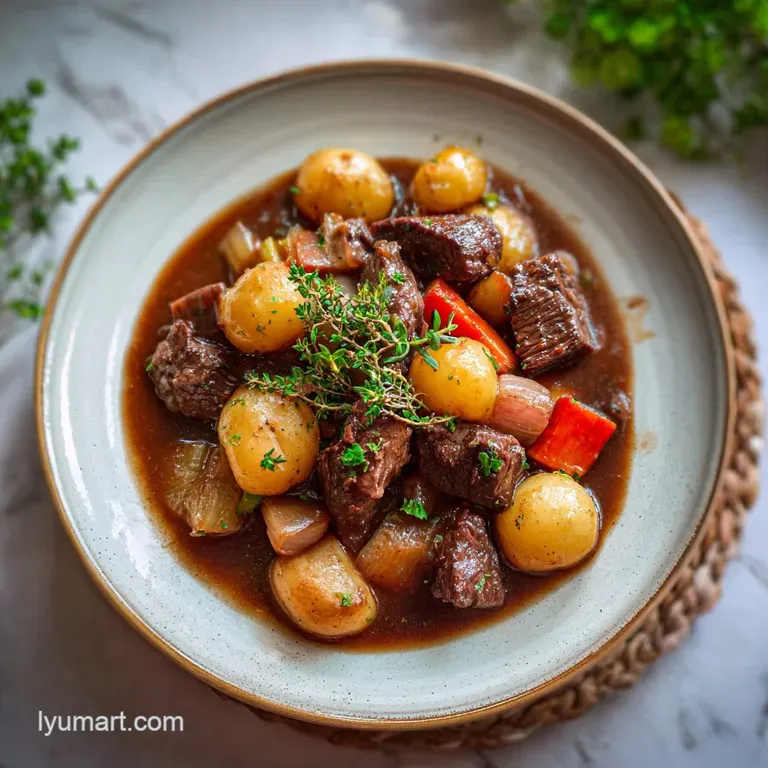
- Time: Active 30 minutes, Passive 165 minutes, Total 195 minutes
- Flavor/Texture Hook: Velvety mahogany sauce with melt in-your mouth beef
- Perfect for: Cozy Sunday family dinners or impressive weekend entertaining
- Creating the Ultimate Hearty Beef Bourguignon Recipe At Home
- Why This Pot of Comfort Succeeds
- Components of a Classic Braise
- Gathering Your Essentials
- Necessary Kitchen Equipment
- The Cooking Process
- Avoiding Kitchen Disasters
- Scaling the Recipe Up or Down
- Culinary Myths Debunked
- Storage & Zero Waste
- Presentation Tips
- Recipe FAQs
- 📝 Recipe Card
Creating the Ultimate Hearty Beef Bourguignon Recipe At Home
The house smells like a dream right now, and it’s all thanks to this heavy Dutch oven bubbling away on the stove. There is something truly hypnotic about the sound of 6 oz of thick cut bacon hit a cold pot, slowly releasing its gold colored fat until the lardons are crisp and bronzed.
It’s the kind of aroma that brings everyone into the kitchen, asking exactly how much longer until dinner is served. When that bottle of dry red wine finally hits the hot pan, the steam rises in a purple cloud, lifting all those savory browned bits off the bottom to create the most incredible base for our sauce.
We aren't just making a stew here; we’re building layers of humble comfort that feel like a warm hug on a plate. I remember the first time I tried to rush this. I didn't dry the beef properly and I crowded the pan, which meant the meat steamed instead of searing. It was a grey, sad mess.
But once I learned the magic of patience and a over high heat sear, everything changed. This beef bourguignon recipe is the result of all those little kitchen lessons, turned into a foolproof plan for your own table.
Trust me, you’ll want to have a crusty baguette standing by because that velvety sauce is far too good to leave behind on the plate. It's rich, savory, and has just enough brightness from the wine to keep you coming back for another spoonful.
Whether it's a rainy Tuesday or a special celebratory Sunday, this dish delivers every single time. Let's get into the mechanics of why this works so well so you can replicate this success in your own kitchen.
Why This Pot of Comfort Succeeds
- Fat Foundation: Starting with cold bacon allows the fat to render out slowly before the meat browns, providing a high flavor cooking medium for the beef.
- Browning Mastery: Searing the beef in small batches ensures the surface temperature stays high enough to create a dark, savory crust rather than steaming the meat.
- Flour Toasting: Cooking the flour with the vegetables for two minutes removes the raw grain taste and creates a stable thickener that won't clump.
- Collagen Conversion: Maintaining a steady 325°F environment allows the tough connective tissues in the chuck roast to transform into silky gelatin.
- Acid Balance: The tannins in the Pinot Noir or Burgundy wine cut through the richness of the beef and bacon, preventing the sauce from feeling heavy or greasy.
| Servings | Beef Amount | Liquid Ratio | Pot Size | Cook Time |
|---|---|---|---|---|
| 2 People | 1 lb Chuck | 250ml Wine / 0.75c Broth | 3 Quart | 2 hours 45 mins |
| 4 People | 2 lbs Chuck | 500ml Wine / 1.5c Broth | 5 Quart | 2 hours 45 mins |
| 6 People | 3 lbs Chuck | 750ml Wine / 2c Broth | 6-7 Quart | 2 hours 45 mins |
| 12 People | 6 lbs Chuck | 1.5L Wine / 4c Broth | 12 Quart | 3 hours 15 mins |
Selecting the right vessel for your stew is just as important as the ingredients themselves. A heavy bottomed cast iron pot is ideal because it retains heat evenly, preventing hot spots that might scorch your sauce during the long braise.
If you find yourself cooking for a larger crowd, remember that doubling the beef doesn't necessarily mean doubling the cook time, but it does mean you'll need to be more diligent about searing in even more batches to maintain that beautiful crust.
Components of a Classic Braise
| Component | Role in the Dish | Home Cook Secret |
|---|---|---|
| 3 lbs Beef Chuck | Primary protein and texture | Cut into 2 inch cubes; smaller pieces will dry out during the long braise. |
| 750 ml Red Wine | Acid and flavor foundation | Use a wine you'd actually drink; the flavors concentrate as the liquid reduces. |
| 2 tbsp Tomato Paste | Umami and color depth | Sauté until it turns a deep rust color to unlock its hidden sweetness. |
| 6 oz Thick Cut Bacon | Smoky fat source | Start in a cold pan to maximize fat rendering without burning the exterior. |
Getting the foundation right starts with your choice of beef. While you might be tempted by leaner cuts, the humble chuck roast is the king of this beef bourguignon recipe because of its marbled fat and connective tissue. As it sits in that 325°F oven, the collagen melts away, basting the meat from the inside out. If you're looking for a quicker weeknight fix using similar flavors but different textures, you might enjoy trying my Beef Mince and Cabbage Recipe which utilizes the same savory profiles in a fraction of the time.
Gathering Your Essentials
The beauty of this dish lies in how simple ingredients transform into something complex. You don't need anything fancy, just fresh produce and a decent bottle of wine.
- 6 oz thick cut bacon: Diced into lardons. Why this? Provides the smoky fat base that flavors the entire dish.
- 3 lbs beef chuck roast: Cut into 2 inch cubes and patted dry. Why this? High collagen content ensures the meat stays juicy after hours of cooking.
- 2 tbsp extra virgin olive oil: For searing. Why this? Adds a clean fat to assist the bacon grease if needed.
- 1 tsp kosher salt & 1 tsp black pepper: Basic seasoning. Why this? Essential for building the flavor profile from the very first step.
- 750 ml dry red wine: Pinot Noir or Burgundy. Why this? The traditional acid source that tenderizes the beef.
- 2 cups beef bone broth: Liquid base. Why this? Adds body and richness that water or standard broth lacks.
- 2 tbsp tomato paste: Concentrated flavor. Why this? Acts as a bridge between the savory beef and acidic wine.
- 3 cloves garlic: Smashed. Why this? Provides a subtle aromatic backbone without overpowering.
- 1 tsp fresh thyme & 1 bay leaf: Herbs. Why this? Infuses the sauce with earthiness during the long simmer.
- 2 tbsp all purpose flour: Thickener. Why this? Creates a roux like consistency when mixed with the fats.
- 1 lb cremini mushrooms: Halved. Why this? Adds a meaty texture and earthy flavor to the final garnish.
- 0.5 lb pearl onions: Peeled. Why this? These little gems soften into sweet, melt in-your mouth bites.
- 2 large carrots: 1 inch chunks. Why this? Adds natural sweetness and visual contrast.
- 2 tbsp unsalted butter: For the mushrooms. Why this? Butter gives the mushrooms a golden, glossy finish.
- 0.25 cup fresh parsley: For garnish. Why this? A pop of freshness to brighten the heavy stew.
| Original Ingredient | Substitute | Why It Works |
|---|---|---|
| Pinot Noir | Beef Broth + 1 tbsp Vinegar | Provides acid without alcohol. Note: Sauce will be less complex. |
| Pearl Onions | Frozen Pearl Onions | Saves time on peeling. Note: Texture is slightly softer but still delicious. |
| Beef Chuck | Venison or Lamb Shoulder | Similar connective tissue. Note: Adds a gamy depth to the flavor profile. |
If you ever find yourself short on time but still craving those deep, slow cooked beef flavors, I often recommend my Crockpot Barbacoa Beef as a great alternative that lets the slow cooker do the heavy lifting while you're away from the house.
Necessary Kitchen Equipment
You don't need a kitchen full of gadgets, but a few specific items will make your life much easier. A 6 or 7 quart Dutch oven is the MVP here. It needs to be heavy enough to hold heat and have a lid that fits tightly to keep the moisture in.
If your lid is a bit loose, you can always place a piece of parchment paper or foil between the pot and the lid to create a better seal.
A good slotted spoon is also non negotiable. You'll be moving bacon and beef in and out of the pot several times, and you want to leave as much of that liquid gold fat behind as possible. Finally, make sure you have a separate large skillet for the mushrooms.
Sautéing them separately at the end is a trick I learned to prevent them from becoming slimy; it keeps them "meaty" and beautifully browned.
The Cooking Process
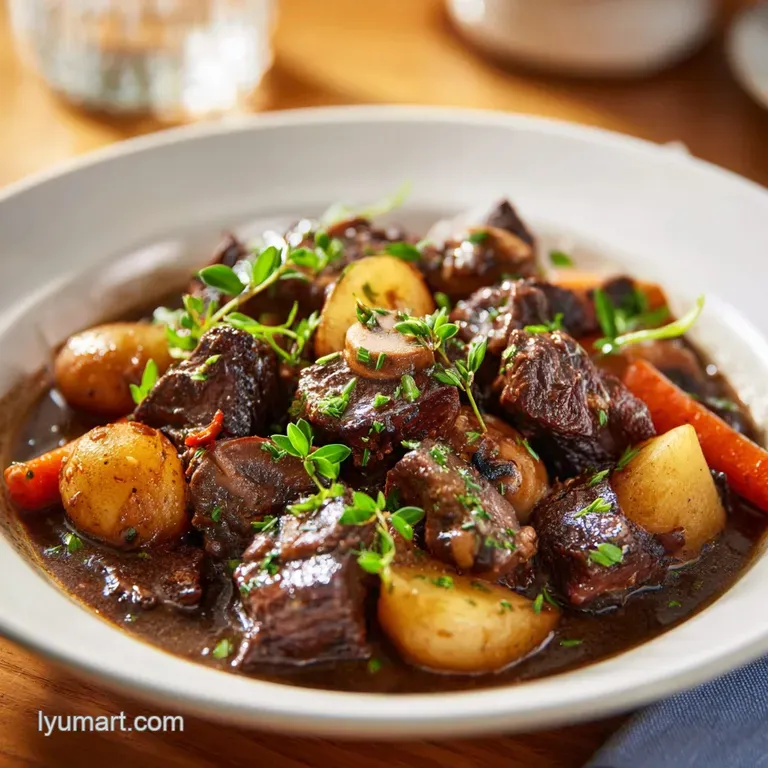
- Render the bacon. Place the 6 oz diced bacon in a cold Dutch oven over medium heat. Sauté until the fat has rendered and the bacon is crispy and golden brown. Note: Starting cold prevents the fat from burning before it melts.
- Sear the beef. Increase heat to medium high. Working in small batches, sear the 3 lbs beef cubes in the bacon fat until a deep brown crust forms on all sides. until a dark mahogany crust appears.
- Sauté the aromatics. Add the sliced carrots and 0.5 lb pearl onions to the pot. Sauté for 5-8 minutes until the onions look translucent and slightly browned.
- Enrich the base. Stir in the 3 smashed garlic cloves and 2 tbsp tomato paste, cooking for 2 minutes until the paste turns a dark, brick red color.
- Toast the flour. Sprinkle 2 tbsp all purpose flour over the vegetables and stir constantly for 1-2 minutes. Note: This cooks out the raw flour taste and thickens the future sauce.
- Deglaze the pot. Gradually pour in the 750 ml red wine and 2 cups beef broth while whisking the bottom until all the browned bits (fond) are dissolved.
- Begin the braise. Return the beef and bacon to the pot. Add the thyme and bay leaf. Bring to a simmer, then cover and transfer to a 325°F oven for 2.5 to 3 hours until the beef is fork tender.
- Prepare the mushrooms. While the beef braises, sauté the 1 lb halved mushrooms in 2 tbsp butter in a separate skillet until golden brown and fragrant.
- Combine and finish. Stir the sautéed mushrooms into the stew during the last 15 minutes of cooking. until the flavors are fully married.
- Final garnish. Discard the bay leaf, sprinkle with 0.25 cup fresh parsley, and serve warm. until the green herbs pop against the dark sauce.
| Cook Method | Time | Texture | Best For |
|---|---|---|---|
| 325°F Oven | 165 minutes | Evenly tender, thick sauce | Authentic, traditional results |
| Stovetop Simmer | 165 minutes | Slightly more "stewed" | When the oven is occupied with sides |
| Slow Cooker | 8 hours | Extremely soft, thinner sauce | Set it and forget it convenience |
Avoiding Kitchen Disasters
Even the most experienced cooks can run into a few hiccups with a long braised dish. The most common issue I see is people panicking when the sauce looks too thin halfway through. Remember, the sauce thickens significantly as it rests and cools slightly.
If it's truly watery at the end, you can simmer it uncovered on the stovetop for 10 minutes to reduce the liquid, but be careful not to overcook the beef into shreds.
Why Your Beef Is Tough
If your beef still feels chewy after 2.5 hours, it simply hasn't spent enough time in the heat. Every cow is different, and some cuts of chuck have more stubborn connective tissue than others.
Don't pull it out just because the timer went off; wait until a fork slides into a cube with almost zero resistance. If it's still tough, give it another 30 minutes.
Why Your Sauce Is Bitter
This usually happens for two reasons: either the wine was too acidic/tannic, or you scorched the tomato paste. If the sauce tastes a bit sharp, a tiny pinch of sugar can balance the acidity.
If the tomato paste or the "fond" (those brown bits) on the bottom of the pot turned black instead of dark brown, it will impart a burnt flavor that's hard to fix. Always keep an eye on your heat levels!
| Problem | Root Cause | Solution |
|---|---|---|
| Grey, lackluster beef | Pan was overcrowded | Sear in smaller batches with more space between cubes. |
| Flour clumps in sauce | Added liquid too fast | Pour wine in a slow stream while whisking the flour coated veggies. |
| Greasy surface | Too much bacon fat left | Skim the excess oil off the top with a wide spoon before serving. |
Common Mistakes Checklist
- ✓ Pat the beef bone dry with paper towels before searing (moisture is the enemy of a good crust).
- ✓ Don't skip the tomato paste sautéing step; it needs heat to lose its metallic edge.
- ✓ Ensure the wine is a "dry" variety sweet wines will make the stew cloying.
- ✓ Wait to add the mushrooms until the end so they don't disappear into the sauce.
- ✓ Keep the lid tightly sealed to prevent the braising liquid from evaporating too quickly.
Scaling the Recipe Up or Down
When you're cooking for a crowd, doubling this beef bourguignon recipe is fairly straightforward, but there are a few rules to follow to keep the flavor balanced. For the spices and salt, don't just double them automatically. Start with 1.5x the amount and taste near the end.
Liquids also don't scale linearly; you might only need about 10% less liquid than a direct double would suggest, as there is less surface area for evaporation in a massive pot.
If you are scaling down for a romantic dinner for two, you can use a smaller 3 quart Dutch oven. Keep the beef chunks the same 2 inch size, but reduce your cook time by about 20%. You’ll still want to check for tenderness at the 2 hour mark.
For the wine, even a half bottle (375ml) will work perfectly for a smaller batch.
Chef's Tip: If you are doubling the recipe, do not try to sear all the meat at once. It will take longer, but searing in 4 or 5 batches is the only way to ensure that deep flavor foundation.
Culinary Myths Debunked
Many people believe that searing meat "seals in the juices." This is actually a myth! Searing is purely for the Maillard reaction the chemical process that creates those complex, savory flavors on the surface of the meat.
The moisture loss happens regardless of the sear, but the crust provides the depth of flavor that defines a great bourguignon.
Another common misconception is that all the alcohol cooks out of the wine. While most of it evaporates during the 165 minutes of cooking, a tiny percentage usually remains. However, the flavor transforms from "boozy" to "fruity and rich," which is why using a wine you enjoy drinking is so important.
Don't use "cooking wine" from the grocery store it's often loaded with salt and lacks the complexity needed for this dish.
Storage & Zero Waste
- Fridge
- Store in an airtight container for up to 4 days.
- Freezer
- This freezes beautifully for up to 3 months. Thaw overnight in the fridge before reheating.
- Reheating
- Warm gently on the stovetop over medium low heat. You might need to add a splash of beef broth or water to loosen the sauce back up.
Zero Waste Tip: Don't toss those parsley stems! Chop them finely and add them to the pot along with the thyme and bay leaf during the braise. They hold a ton of flavor.
Also, if you have leftover sauce but no beef, it makes an incredible base for a pasta dish or a "poutine" style topping for roasted potatoes the next day.
Presentation Tips
When it comes to serving, this beef bourguignon recipe deserves a stage that highlights its rustic elegance. I love serving this in wide, shallow bowls rather than deep ones. It allows you to see the chunks of beef, the bright carrots, and those glossy pearl onions clearly.
A heavy garnish of fresh parsley right before it hits the table provides a necessary contrast to the deep browns of the stew.
Pairing is also key. Traditionally, this is served over buttered egg noodles or alongside a mountain of creamy mashed potatoes. If you want to keep it simple, a thick slice of toasted sourdough rubbed with a raw garlic clove is all you need to scoop up every last drop of that velvety sauce.
Whatever you choose, make sure it's something that can act as a sponge for the mahogany liquid gold you've spent the afternoon creating. Enjoy every single bite you've earned it!
Recipe FAQs
What is the secret to beef bourguignon?
Patience during the searing process is the true secret. By browning the beef in small batches in the rendered bacon fat, you create the deep, dark fond on the bottom of the pot that provides the stew with its signature complex depth.
What is the difference between beef bourguignon and beef stew?
The primary difference lies in the cooking liquid and the base flavor profile. Beef bourguignon specifically utilizes a full bottle of dry red wine like Pinot Noir as the primary braising liquid, whereas traditional beef stew typically relies on beef broth with only a splash of wine or none at all.
What cut of beef do you use for beef bourguignon?
Use beef chuck roast. This cut contains the necessary marbling and connective tissue that breaks down during the 2.5 to 3 hours of braising, resulting in melt-in-your mouth tender meat. If you enjoyed mastering the searing technique here, you will find it is essential for developing flavor in other hearty beef dishes.
Is beef stew good for anemia?
Yes, this dish is an excellent source of heme iron. Beef chuck roast is a red meat rich in bioavailable iron, which is the most easily absorbed form of iron for the human body.
How to ensure the sauce thickens correctly?
Toast the flour over the vegetables for at least 2 minutes. Ensuring the flour is well coated in the bacon fat and cooked before adding the liquids allows it to act as a proper thickener once the beef broth and wine are introduced.
Is it true I must boil the meat before braising?
No, this is a common misconception. Boiling or blanching the beef would prevent it from developing the dark brown crust essential for the sauce's flavor; always sear the beef in hot bacon fat instead.
How to reheat leftovers without drying out the beef?
Warm the stew gently on the stovetop over medium low heat. If the sauce has thickened too much while in the fridge, add a small splash of beef broth to loosen the consistency without overcooking the meat.
Beef Bourguignon Recipe
Ingredients:
Instructions:
Nutrition Facts:
| Calories | 742 kcal |
|---|---|
| Protein | 48 g |
| Fat | 44 g |
| Carbs | 12 g |
| Fiber | 2 g |
| Sugar | 4 g |
| Sodium | 675 mg |
