Ultra-Smooth Mango Ice Cream
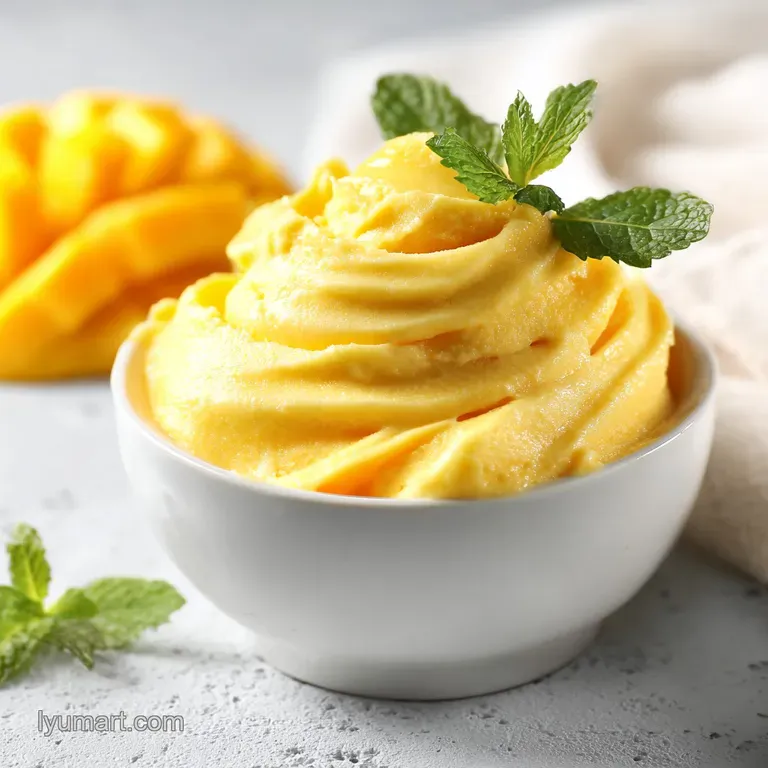
- Time: Active 20 minutes, Passive 6 hours, Total 6 hours 20 minutes
- Flavor/Texture Hook: Velvety, buttery creaminess meets the vibrant, sunshine bright tang of tropical fruit.
- Perfect for: Summer dinner parties, effortless weekend treats, or impressive fruit forward entertaining.
- Mastering the Most Velvety Mango Ice Cream
- Understanding the Timing and Texture Specs
- Component Analysis for Fruit Perfection
- The Essential Grocery List
- Tools for a Silky Professional Finish
- Step-by-Step Instructions for Pure Mango Bliss
- Avoiding Common Texture Flaws and Kitchen Mistakes
- Customizing Your Scoop with Flavorful Swaps
- Preservation Secrets for Long Lasting Freshness
- Presentation Styles from Simple to Restaurant Level
- Recipe FAQs
- 📝 Recipe Card
Mastering the Most Velvety Mango Ice Cream
You know that specific disappointment when you pull a container out of the freezer, expecting a luscious scoop, but your spoon hits a block of solid ice instead? I used to struggle with that constantly, especially when trying to capture the bright flavor of tropical fruit.
The water content in the fruit would crystallize, leaving me with something that felt more like a gritty popsicle than a luxury dessert. It was frustrating because I wanted that heavy, velvety mouthfeel you only get from high end shops, but I didn't want to invest in a bulky machine that sits in the back of my cupboard.
This Mango Ice Cream is the answer to every icy texture failure I have ever had. By bypassing the traditional custard base and focusing on a no churn method that relies on the magic of aeration and sugar concentration, we achieve a texture that stays soft even after a full night in the deep freeze.
When you take that first bite, it doesn't just melt - it dissolves into a rich, tropical cloud that coats your palate. The secret is all in how we handle the fruit's natural fibers and the structure of the heavy cream.
We are going to focus on the interplay between the acidic lime and the dense sweetness of the condensed milk. This isn't just about mixing ingredients; it is about creating a stable emulsion that holds onto air bubbles.
Whether you are serving this at a sun drenched garden party or just sneaking a spoonful at midnight, the result is always the same - pure, golden perfection. Let's walk through why this method actually works and how you can avoid the "icy brick" syndrome for good.
Understanding the Timing and Texture Specs
Before we get our hands messy, we need to look at the roadmap for this dessert. Success in the kitchen often comes down to knowing exactly what to look for at every stage. This isn't a recipe where you can rush the freezing process.
The physics of sugar and fat require time to stabilize, so patience is just as much an ingredient as the mangoes themselves.
Sugar Suppression: The high sugar content in the sweetened condensed milk lowers the freezing point of the water in the mangoes, ensuring the mixture stays soft enough to scoop.
Fat Stability: Using heavy whipping cream with a high fat content provides the structural scaffolding that prevents the fruit puree from settling at the bottom.
Acid Balance: The lime juice isn't just for flavor; it breaks up the cloying sweetness, making the mango flavor feel more "alive" and three dimensional.
Fiber Removal: Passing the puree through a sieve is the difference between a "homemade" feel and a professional, velvety finish that mimics a high end gelato.
| Thickness of Base | Setting Time | Ideal Texture | Visual Cue |
|---|---|---|---|
| Liquid Puree | 0 minutes | Runny syrup | Bright orange and glossy |
| Folded Mixture | 10 minutes | Thick mousse | No white streaks visible |
| Semi Frozen | 3 hours | Soft serve | Edges are firm, center wobbles |
| Fully Set | 6 hours | Scoopable ice cream | Dull surface, no movement |
The transition from a folded mousse to a solid dessert takes exactly 6 hours in a standard domestic freezer. If you pull it out too early, you will have a delicious but messy mango cream.
If you wait the full duration, you will be rewarded with a scoop that holds its shape beautifully on a cone or a warm tart.
Component Analysis for Fruit Perfection
Selecting the right components is the foundation of any great dessert. We aren't just looking for fruit; we are looking for the right type of sugar and fat to create a stable environment for our flavors to shine.
Using 14 oz of sweetened condensed milk is non negotiable because it provides the exact amount of sugar needed to prevent large ice crystals from forming.
| Ingredient | Science Role | Pro Secret |
|---|---|---|
| Fresh Mango Cubes | Flavor & Body | Use Kent or Ataulfo varieties for the least amount of stringy fiber. |
| Heavy Whipping Cream | Aeration & Fat | Ensure it is at least 36 percent fat and ice cold to hold the maximum amount of air. |
| Sweetened Condensed Milk | Freezing Point Depressant | This is the "secret" to no churn recipes, replacing the need for a cooked custard base. |
| Vanilla Bean Paste | Flavor Depth | The tiny black specks add a visual "gourmet" cue and a more intense aroma than extract. |
When choosing your mangoes, look for ones that give slightly under gentle pressure and smell incredibly fragrant near the stem. A Mango Ice Cream is only as good as the fruit you start with. If the mango is tart or underripe, the ice cream will feel flat.
We want that deep, floral sweetness that only comes from fruit that has had time to fully mature on the branch.
The Essential Grocery List
Gathering these items before you start is the best way to ensure a smooth process. Since we are dealing with whipped cream, you don't want to be hunting for a spatula halfway through. I always recommend having everything measured out so you can focus on the texture of the cream.
- 3 cups fresh mango cubes: You will need about 3 to 4 large mangoes depending on their size. Why this? Fresh fruit provides a vibrant, natural acidity that canned pulps often lack.
- 14 oz sweetened condensed milk: This provides the sugar and milk solids. Why this? It creates a smooth texture without the graininess of granulated sugar.
- 2 cups heavy whipping cream: Keep this in the coldest part of your fridge until the very last second. Why this? Cold fat globules bond better, creating a more stable foam.
- 1 tbsp fresh lime juice: One small lime should be enough. Why this? The acidity brightens the fruit and balances the heavy dairy fats.
- 1 tsp vanilla bean paste: You can use extract, but paste is a luxury worth having. Why this? It adds those beautiful dark flecks and a more complex floral note.
- 1 pinch sea salt: Just a tiny bit to sharpen the other flavors. Why this? Salt suppresses bitterness and makes the sweetness feel more rounded.
If you cannot find fresh mangoes, you can use frozen mango chunks that have been thawed completely. However, keep in mind that frozen fruit often has a higher water content, which might make the final result slightly more firm. For another incredible tropical twist, you might consider how Cream of Coconut could replace a portion of the dairy for a dairy-free-ish experiment, though the texture will change significantly.
Tools for a Silky Professional Finish

You don't need a lot of gadgets, but the ones you use should be high-quality. A powerful blender is essential for getting that mango puree as smooth as possible. If you leave chunks behind, they will freeze into hard ice nuggets, which ruins the velvety experience we are aiming for.
A fine mesh sieve is my "must have" tool here. Even the best mangoes have small fibers that the blender can't quite catch. Pushing the puree through that mesh ensures your Mango Ice Cream feels like it came from a professional creamery. You will also need a large metal or glass bowl for whipping the cream.
Metal is preferred because you can chill it in the freezer for 10 minutes beforehand, which helps the cream whip up faster and with more volume.
Finally, have a shallow, wide container ready for the freezing stage. A standard loaf pan works brilliantly because the increased surface area helps the mixture freeze more evenly. Cover it tightly with plastic wrap, making sure the wrap actually touches the surface of the cream.
This prevents a "skin" from forming and keeps those pesky ice crystals from developing on the top layer.
step-by-step Instructions for Pure Mango Bliss
- Place the 3 cups of fresh mango cubes, 1 tbsp lime juice, and a pinch of sea salt into a high speed blender.
- Process on high until the mixture is completely liquefied and looks like a glowing orange mirror.
- Press the puree through a fine mesh sieve into a clean bowl, discarding any fibrous pulp left in the mesh. Note: This step is crucial for that signature professional mouthfeel.
- Whisk the 14 oz of sweetened condensed milk into the strained mango puree until the color is a uniform, creamy orange.
- In a separate, pre chilled large bowl, pour in the 2 cups of heavy whipping cream and 1 tsp vanilla bean paste.
- Whip the cream on medium high speed until stiff peaks form, taking care not to over beat it into butter.
- Fold a large dollop of the whipped cream into the mango mixture using a spatula to lighten the base.
- Add the remaining whipped cream and use a gentle figure eight motion until no white streaks remain and the mixture is airy.
- Pour the mixture into your chilled container and smooth the top with the back of a spoon.
- Cover the surface directly with plastic wrap and freeze for at least 6 hours until firm.
When you are folding the cream, be as gentle as possible. You spent all that time whipping air into the cream; if you stir it too vigorously, you will deflate those bubbles and end up with a dense, heavy dessert.
The figure eight motion allows you to incorporate the heavy mango puree without crushing the structure of the whipped cream.
Avoiding Common Texture Flaws and Kitchen Mistakes
The biggest hurdle with Mango Ice Cream is controlling the water content. If your mangoes are over ripe and leaking juice, that extra liquid can turn into ice. Similarly, if you don't whip your cream enough, the final result will be icy because there aren't enough air bubbles to break up the frozen matrix.
Why Your Ice Cream Is Gritty
If the texture feels like there are tiny sand particles on your tongue, it is likely the mango fibers. Even if your blender is top of-the line, mangoes contain cellulose strands that don't break down. Always use the sieve! Another cause could be using granulated sugar instead of condensed milk.
Granulated sugar needs to be fully dissolved, or it will remain crunchy in the frozen state.
Why Your Ice Cream Separated
If you find a layer of icy fruit at the bottom and a layer of fatty cream at the top, it means the emulsion broke. This usually happens if the mango puree was too warm when you folded in the cream, or if you didn't fold it thoroughly enough. Make sure both the puree and the whipped cream are cold when they meet.
| Problem | Root Cause | Solution |
|---|---|---|
| Rock hard texture | Too much water/too little fat | Use full fat heavy cream and don't skip the condensed milk. |
| Greasy mouthfeel | Over whipped cream | Stop whipping as soon as the cream holds its shape; don't let it turn yellow. |
| Bland flavor | Underripe fruit | Add a teaspoon of honey or an extra squeeze of lime to boost the fruit profile. |
A quick checklist for success:
- ✓ Chill your mixing bowl and whisk attachment for 15 minutes before whipping the cream.
- ✓ Always sieve the fruit puree to remove "hairs" or fibers.
- ✓ Use the "touch test" with plastic wrap to prevent surface crystallization.
- ✓ Let the ice cream sit on the counter for 5 minutes before scooping for the perfect glide.
Customizing Your Scoop with Flavorful Swaps
While the classic Mango Ice Cream is a masterpiece on its own, it is also a fantastic canvas for other tropical flavors. If you are a fan of creamy fruit desserts, you might even find inspiration in my Paula Deen Banana Pudding recipe, which uses a similar dairy heavy base to achieve that decadent comfort.
Creating a Mango Coconut Ice Cream
To give this a more tropical, beachy vibe, you can replace half of the heavy cream with chilled, full fat coconut cream. Be careful to only use the thick part at the top of the can. This adds a nutty depth and a slightly different fat profile that pairs beautifully with the lime.
You can also fold in toasted coconut flakes at the very end for a bit of crunch.
Adapting for the Ninja Creami
If you have a Ninja Creami, you can skip the whipping step entirely. Simply blend the mango, lime, salt, condensed milk, and liquid heavy cream together. Pour it into the pint container and freeze for 24 hours. Process it on the "Ice Cream" setting, and then do a "Re spin" if it looks crumbly.
The machine does the aeration for you, resulting in an even denser, more gelato like texture.
Preservation Secrets for Long Lasting Freshness
Because this is a homemade product without commercial stabilizers like guar gum or carrageenan, it is more susceptible to "freezer burn" than store-bought brands. To keep it fresh, you need to minimize its exposure to air.
Every time you open the container, warm air enters, melts the surface slightly, and then refreezes into larger ice crystals.
Store the ice cream in the very back of the freezer, which is the coldest spot. Avoid the door, as the temperature fluctuates every time you open it. This recipe will stay at peak quality for about 2 weeks. After that, it is still safe to eat, but the texture will slowly start to become more icy and less velvety.
Zero Waste Tip: If you find yourself with leftover mango peels or the large pits, don't throw them away! Put them in a pitcher of water with some mint for a refreshing mango infused spa water. You can also simmer the pits with a little sugar and water to make a simple syrup for cocktails or iced tea.
Presentation Styles from Simple to Restaurant Level
How you serve this Mango Ice Cream can change the entire experience. Since we have worked so hard on that velvety texture, we want to show it off!
| Level | Plating Tweak | Visual Impact |
|---|---|---|
| Simple | Single scoop in a chilled glass bowl | Homey and inviting |
| Polished | Two scoops with fresh mango fans and mint | Elegant and fresh |
| Restaurant | Quenelle on a bed of toasted macadamia crumble | High end and sophisticated |
1. Simple: The Family Classic
There is nothing wrong with a honest scoop in a bowl. To make it feel a bit more special, use a warm ice cream scoop to get those perfect, round edges. A sprinkle of sea salt on top can really make the mango flavor pop against the cream.
2. Polished: The Dinner Party Scoop
For guests, I like to serve two smaller scoops in a wide coupe glass. I add a few thin slices of fresh mango arranged like a fan on the side. A small sprig of fresh mint adds a pop of green that contrasts beautifully with the deep orange of the ice cream. This looks effortless but feels very intentional.
3. Restaurant: The Deconstructed Dessert
If you really want to impress, create a "soil" using crushed shortbread cookies or toasted macadamias. Place a "quenelle" (an oval shaped scoop made using two spoons) of the ice cream on top of the soil. Add a few dots of a bright raspberry coulis around the plate for color and acidity.
The crunch of the nuts combined with the velvety ice cream creates a truly professional dessert experience that your friends won't believe you made at home.
Enjoy the magic of this golden treat. It is a reminder that with just a few simple ingredients and a little bit of science, we can create something truly extraordinary in our own kitchens. Keep it sweet!

Recipe FAQs
Where do you get the viral mango ice cream?
You make it at home using this recipe. The "viral" nature of this dessert comes from the combination of fresh mango, sweetened condensed milk, and heavy cream whipped to stiff peaks.
What is the famous mango ice cream called?
It is commonly referred to as Mango Float or Mango No-Churn Ice Cream. If you enjoyed the no-bake assembly method used here, you will find the same technique creates a smooth, scoopable texture without an ice cream maker.
Can mango lower cholesterol?
No, this is a common misconception. While mangos contain fiber and vitamins, adding heavy cream and sweetened condensed milk to make ice cream results in a treat that should be enjoyed in moderation, not as a health supplement.
Can a diabetic eat mango ice cream?
No, this recipe is high in natural sugars and carbohydrates. It is best to consult your healthcare provider or a nutritionist regarding your specific dietary needs before consuming high sugar desserts.
How to get the perfect smooth texture without ice crystals?
Press the mango puree through a fine mesh sieve before mixing. Removing the fibers is essential for a silky mouthfeel, and covering the surface directly with plastic wrap during the 6-hour freeze prevents unwanted surface ice crystallization.
How to fold the whipped cream without losing volume?
Use a gentle figure eight motion with your spatula. Start by folding in a small dollop of whipped cream to lighten the mango base, then carefully incorporate the rest until no streaks remain.
Is it true I need to use an ice cream maker for this?
No, this is a common misconception. By whipping the heavy cream to stiff peaks and folding it into the condensed milk and mango base, you introduce enough air to create a creamy structure that sets perfectly in the freezer without churning.
Creamy Mango Ice Cream

Ingredients:
Instructions:
Nutrition Facts:
| Calories | 267 kcal |
|---|---|
| Protein | 3.8 g |
| Fat | 17.1 g |
| Carbs | 25.3 g |
| Fiber | 0.7 g |
| Sugar | 24.6 g |
| Sodium | 55 mg |
