Refrigerator Dill Pickles Recipe
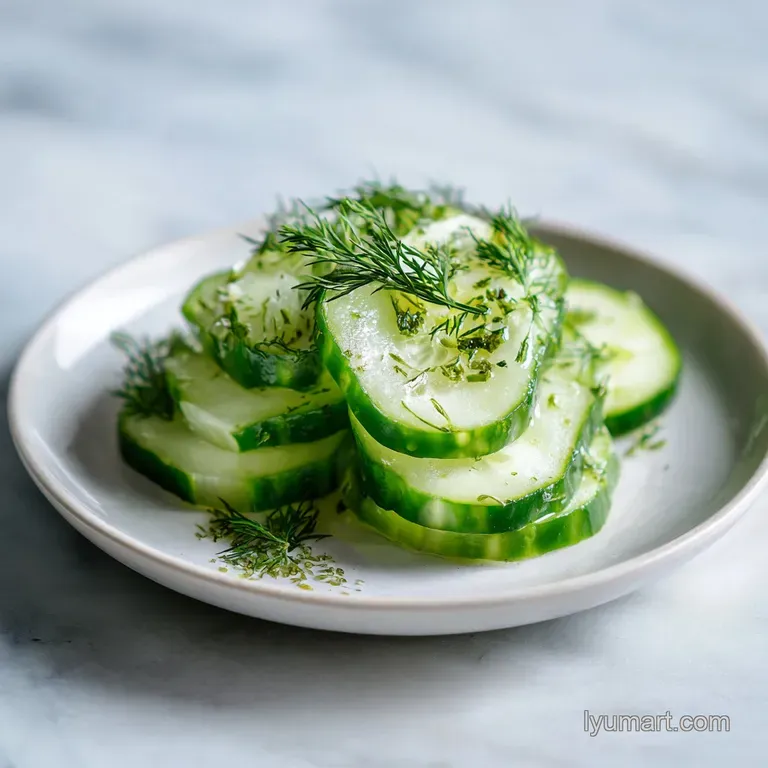
- Time: Active 15 minutes, Passive 24 hours, Total 24 hours 15 mins
- Flavor/Texture Hook: Sharp, garlicky, and incredibly crunchy
- Perfect for: Summer BBQs, burger toppings, or snacking straight from the jar
- Master the Ultimate Refrigerator Dill Pickles
- The Science of the Cold Snap
- Performance Metrics for Brining
- Selecting Your Brining Components
- Minimal Tools for Pickling
- The Step-by-Step Brining Method
- Solving Your Texture Issues
- Personalizing Your Pickle Flavor
- Scaling Your Batch
- Debunking Common Pickle Misconceptions
- Storage and Waste Tips
- Best Dishes for Serving
- Recipe FAQs
- 📝 Recipe Card
Master the Ultimate Refrigerator Dill Pickles
That first sharp snap when you bite into a cold pickle is basically the soundtrack of summer. I remember sitting on my back porch last July, balancing a heavy plate of grilled burgers and reaching for a jar of store-bought pickles that turned out to be as soft as wet bread. It was honestly tragic.
There is nothing worse than a limp pickle when you are expecting a refreshing, salty crunch.
I vowed then and there to never settle for mediocre jars again. After a few batches that were way too salty or just plain weird, I finally dialed in this specific method. It is the kind of recipe you'll want to keep on a sticky note inside your pantry door.
We are talking about pickles that actually sound like a cracker breaking when you bite them.
You don't need any fancy canning equipment or a giant boiling pot that steams up your whole kitchen. This is the "lazy" way that actually yields a better result because we aren't cooking the life out of our vegetables. It is simple, humble, and honestly, a total game changer for your fridge door.
Trust me on this, once you make these, the grocery store jars will never look the same again.
The Science of the Cold Snap
The Secret to the Shatter: Cold brining prevents the breakdown of cellular pectin within the cucumber. This keeps the cell walls rigid and structural instead of turning them into a mushy, water logged sponge through heat exposure.
- Pectin Preservation: By avoiding the high heat of traditional canning, we keep the natural pectins in the cucumber skin intact, which is what gives you that signature "pop" when you bite.
- Osmotic Balance: The salt in the brine draws out just enough moisture to allow the vinegar and spices to penetrate the flesh without making the cucumber shrivel.
- Acidic Equilibrium: Using a 5% acidity distilled vinegar ensures the environment is safe from spoilage while providing that sharp, clean tang we love.
- Tannin Integration: Ingredients like whole peppercorns and fresh dill sprigs release oils slowly in a cold environment, leading to a brighter flavor profile than heat extracted spices.
| Prep Method | Time | Texture | Best For |
|---|---|---|---|
| Thin Slices (Chips) | 2 hours | Medium Crisp | Sandwiches and burgers |
| Thick Spears | 24 hours | Very Crunchy | Side dish snacking |
| Whole Cucumbers | 48 hours | Maximum Snap | Deli style presentation |
Choosing your cut is the biggest decision you'll make here. Slices are ready to eat almost immediately, but spears have that satisfying "shatter" that makes them feel truly homemade. If you are in a rush, go for the chips, but if you have a day to wait, the spears are the gold standard for texture.
Performance Metrics for Brining
| Ingredient | Science Role | Pro Secret |
|---|---|---|
| Kosher Salt | Moisture control | Use Diamond Crystal for better dissolving speed. |
| Distilled Vinegar | Preservative & Tang | Stick to 5% acidity to ensure safety and balance. |
| Filtered Water | Liquid Base | Avoid tap water; chlorine can soften the pickles. |
| Granulated Sugar | Flavor Balancer | Just a touch cuts the harshness of the acid. |
The relationship between salt and water is the most important part of this whole process. If you use too much salt, your cucumbers will shrivel into little green raisins. If you use too little, they will stay bland and won't keep as long.
This recipe uses exactly 2 tbsp of Kosher salt to hit that "just right" savory note.
Selecting Your Brining Components
For this recipe, we are keeping the tools minimal but the quality of the produce high. You will need:
- 1.5 lbs Kirby or Persian Cucumbers: Why this? Their thick skins and low water content ensure a superior crunch. (Substitute: English cucumbers, but they will be softer.)
- 1 small White or Yellow Onion: Why this? Adds a savory, aromatic sweetness to the brine. (Substitute: Red onion for a pink tinted brine.)
- 4 cloves Garlic: Why this? Smashed garlic releases all those pungent, classic deli oils. (Substitute: 1 tsp garlic powder, but it won't be as fresh.)
- 1.5 cups Distilled White Vinegar (5% acidity): Why this? Provides the cleanest, sharpest "pickle" flavor. (Substitute: Apple cider vinegar for a fruitier, mellower tang.)
- 1.5 cups Filtered Water: Why this? Prevents mineral flavors from interfering with the spices. (Substitute: Regular tap water if your local water tastes great.)
- 2 tbsp Kosher Salt: Why this? Dissolves cleanly without the cloudiness of table salt. (Substitute: Sea salt, but use a bit less by weight.)
- 1 tbsp Granulated Sugar: Why this? Smooths out the sharp edges of the vinegar. (Substitute: Honey or agave syrup.)
- 1 bunch Fresh Dill sprigs: Why this? Essential for that grassy, herbaceous aroma. (Substitute: 2 tbsp dried dill seed.)
- 2 tsp Yellow Mustard Seeds: Why this? Adds a tiny pop of texture and classic spice. (Substitute: Brown mustard seeds for more heat.)
- 1 tsp Black Peppercorns: Why this? Provides a slow burning floral heat. (Substitute: White peppercorns.)
- 0.5 tsp Red Pepper Flakes: Why this? Just a hint of warmth in the background. (Substitute: A slice of fresh jalapeño.)
If you find yourself making these often, you might want to try other preserved treats like my Pickled Jalapeno Peppers recipe to keep the pantry stocked.
Minimal Tools for Pickling
You really don't need much to get these going. A sharp chef's knife is non negotiable for clean cuts. If you use a dull knife, you'll bruise the cucumber flesh, which leads to mushy spots.
I also recommend a glass jar with a tight fitting lid anything from an old spaghetti sauce jar to a fancy Mason jar works perfectly here. Just make sure it is scrubbed clean with hot, soapy water.
A small saucepan is used just to heat the brine enough to dissolve the salt and sugar. We aren't boiling it for ten minutes; we just want it warm enough to be a clear liquid. Using a glass bowl to ice your cucumbers beforehand is a great "pro move" if you have the extra ten minutes.
It shocks the vegetables and tightens the skins before they ever touch the vinegar.
The step-by-step Brining Method
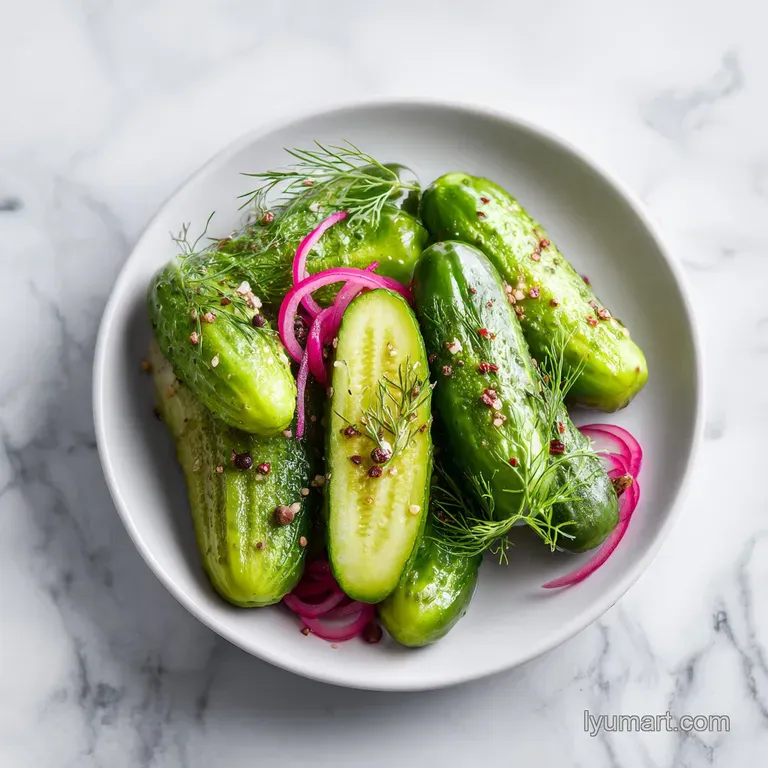
- Prep the cucumbers. Wash 1.5 lbs of cucumbers and slice them into halves, spears, or 1/4 inch chips. Note: Trimming the "blossom end" (the non stem end) is vital to prevent softening enzymes from ruining the crunch.
- Aromatize the jar. Smash 4 cloves of garlic and roughly chop 1 bunch of dill. Place them at the bottom of your clean jar along with the 1 small sliced onion.
- Pack it tight. Shove the cucumber pieces into the jar as tightly as possible until they are wedged in and won't float.
- Heat the brine. In a small saucepan, combine 1.5 cups vinegar, 1.5 cups water, 2 tbsp salt, and 1 tbsp sugar.
- Dissolve the solids. Heat over medium until the liquid is clear and the salt has vanished. This should only take about 3 to 5 minutes.
- Add the spices. Stir in 2 tsp mustard seeds, 1 tsp peppercorns, and 0.5 tsp red pepper flakes into the warm liquid.
- Pour the infusion. Carefully pour the warm brine over the cucumbers in the jar until every piece is fully submerged.
- Cool and seal. Let the jar sit on the counter for about 20 minutes to reach room temperature before putting the lid on.
- The long chill. Place the jar in the back of the fridge. Wait at least 24 hours until the cucumbers turn from bright green to a translucent olive color.
If you love the flavor of fresh dill, you should definitely check out my dill dip recipe which uses similar aromatics for a creamy snack pairing.
Solving Your Texture Issues
Why Your Pickles Are Soft
If your pickles lack that "shatter," it's usually due to the temperature of the brine or the cucumber variety. Using standard salad cucumbers instead of Kirby or Persian types will almost always result in a softer bite.
Also, if you pour boiling hot brine over them, you are essentially cooking the cucumber, which destroys the crunch.
Why Your Brine Is Cloudy
Cloudy brine can be a bit scary, but it’s usually just the salt or the garlic reacting. If you use table salt with anti caking agents, the brine will look like pond water. It's safe to eat, but it looks unappealing. Using Kosher salt is the best way to keep things crystal clear.
| Problem | Root Cause | Solution |
|---|---|---|
| Bitter taste | Cucumber skin enzymes | Slice off 1/8 inch of the blossom end. |
| Hollow pickles | Old or dry cucumbers | Use the freshest produce possible; buy "firm" ones. |
| Too salty | Brine not stirred well | Ensure salt is fully dissolved before pouring. |
Common Mistakes Checklist ✓ Never use table salt; the iodine and anti caking agents make the brine murky. ✓ Don't skip the sugar; even if you want "sour" pickles, that 1 tbsp balances the acid. ✓ Avoid over heating the brine; it should be warm, not a rolling boil.
✓ Check that all cucumbers are below the liquid line to prevent brown spots. ✓ Use a clean jar; any leftover oil or food residue can cause spoilage.
Personalizing Your Pickle Flavor
This recipe is a "blank canvas." If you want Refrigerator Dill Pickles No Sugar, simply omit the granulated sugar. The pickles will be significantly more tart and sharp, which some people absolutely love.
For Spicy Refrigerator Dill Pickles, you can double the red pepper flakes or add three or four slices of fresh habanero for a real kick.
If you are a fan of Old Fashioned Refrigerator Dill Pickles with Onions, you can double the amount of onion and use a sweet Vidalia variety. The onions themselves become a delicious snack alongside the pickles.
For a "Zesty Garlic Bomb" version, double the garlic and add a teaspoon of dried coriander seeds to the mix.
Scaling Your Batch
Scaling Down (1/2 Batch): If you only have a few cucumbers, you can easily halve this. Use a pint jar and reduce all ingredients by 50%. Since you are working with smaller volumes, the brine will heat up in about 2 minutes.
Scaling Up (2x - 4x Batch): When doubling or tripling for a big party, only increase the spices like red pepper flakes and mustard seeds to 1.5x the original amount. Spices can become overwhelming when scaled linearly. Ensure you work in batches if your saucepan is small so the salt dissolves evenly.
| Servings | Cucumbers | Vinegar/Water | Salt |
|---|---|---|---|
| 32 (Standard) | 1.5 lbs | 1.5 cups each | 2 tbsp |
| 64 (Party) | 3 lbs | 3 cups each | 4 tbsp |
| 128 (Canning Day) | 6 lbs | 6 cups each | 8 tbsp |
Debunking Common Pickle Misconceptions
One major myth is that you must use a grape leaf to keep pickles crunchy. While grape leaves contain tannins that can help, the real secret is the temperature and trimming the blossom end. Another misconception is that "refrigerator pickles are just fermented pickles." This is false.
Fermented pickles use salt and time to create natural acids, while refrigerator pickles use vinegar for immediate acidity.
Another common one: "The brine must be boiling when you pour it." Actually, pouring boiling brine is a recipe for mush. Let the brine sit for 2 minutes off the heat before pouring it over your cold cucumbers to preserve that cellular structure we talked about earlier.
Storage and Waste Tips
Storage: These pickles must stay refrigerated. They will keep their peak crunch for about 3 weeks. After that, they are still safe to eat for up to 2 months, but they will gradually become softer as the vinegar continues to break down the fibers.
Do not freeze these; the ice crystals will turn the cucumbers into mush upon thawing.
Zero Waste: Once the pickles are gone, do not pour that brine down the drain! It is liquid gold. You can use it as a marinade for chicken breasts the salt and acid make for an incredibly juicy bird.
You can also toss it into a potato salad or use it to quick pickle some shredded carrots or thinly sliced radishes. It's even great in a Bloody Mary if you are feeling adventurous.
Best Dishes for Serving
These pickles are the perfect partner for heavy, savory comfort foods. They provide the necessary "acid hit" that cuts through the fat of a grilled cheese sandwich or a double patty smash burger. I always serve them alongside my Stuffing Balls Recipe during the holidays because they provide such a bright contrast to the rich sausage and bread.
They are also brilliant on a charcuterie board. Pair them with a sharp cheddar cheese and some salty prosciutto. The vinegary crunch resets your palate between different bites of meat and cheese. Honestly, though?
My favorite way to eat them is standing in front of the fridge at 10 PM, straight out of the jar with a fork. It is the humblest, most satisfying snack there is.
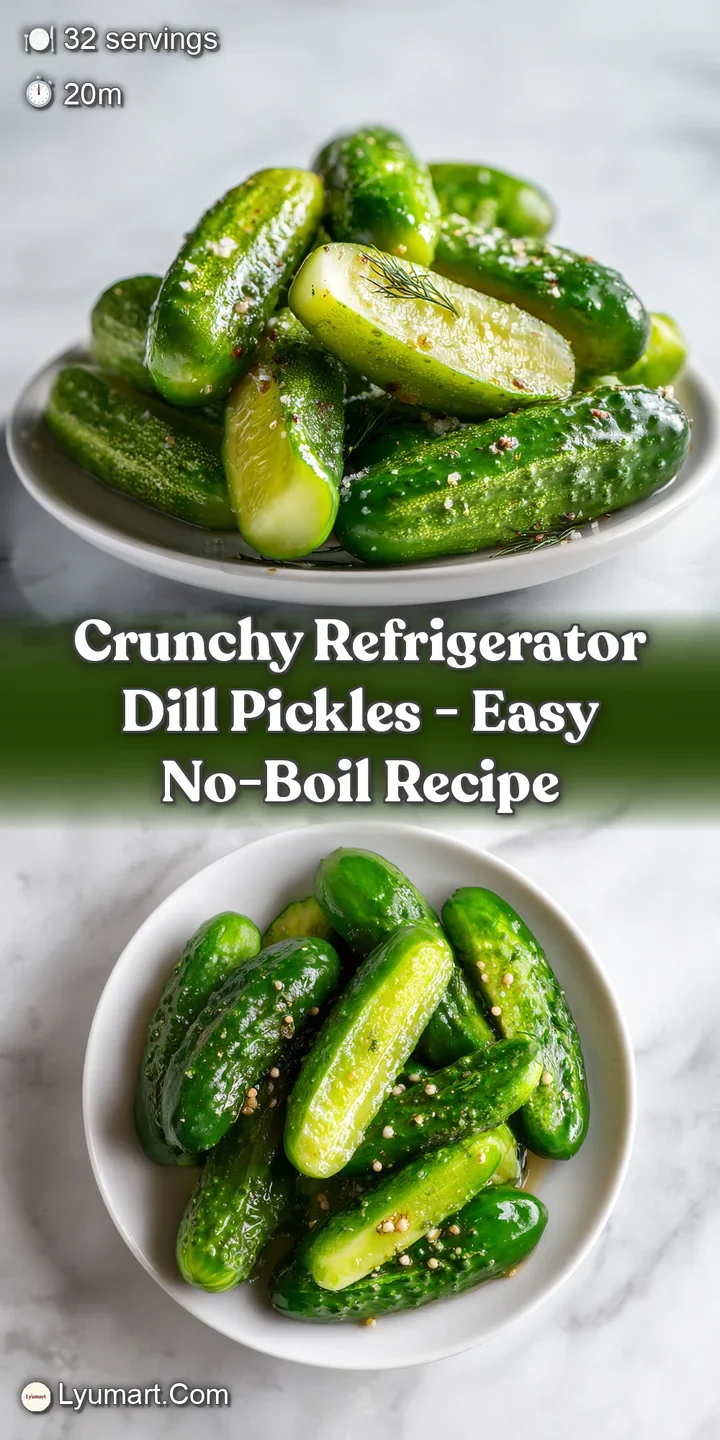
Recipe FAQs
What is the 321 rule for pickles?
No, the 321 rule does not apply here. The 3-2-1 rule is specific to traditional salt brine fermentation, not quick refrigerator pickles which use vinegar.
What is the secret to crisp dill pickles?
Trim the blossom end of the cucumber. This small cut removes enzymes that cause softening during the brining process.
How long will refrigerator pickles last in the refrigerator?
They stay optimally crisp for about 3 weeks. They remain safe to eat for up to 2 months, but the texture will gradually soften as the acid penetrates the cucumbers.
Can you use dill in refrigerator pickles?
Yes, use fresh dill sprigs for the best flavor. Fresh dill imparts a brighter, more herbaceous flavor profile than dried seeds, which is essential for classic refrigerator dill flavor.
How to make refrigerator dill pickles without boiling the brine?
Heat the brine just until the salt and sugar dissolve. You are aiming for warm, not boiling, liquid so you do not cook the cucumbers and make them soft.
Is it true that table salt will ruin the clarity of the brine?
Yes, this is very common. Table salt contains anti caking agents that do not fully dissolve, resulting in a cloudy, murky brine.
What is the best use for leftover pickle brine?
Use the brine as a marinade for poultry. The acid and salt tenderize chicken beautifully; if you enjoyed mastering the acidity here, see how the same principle works in our Keto White Chicken Chili recipe.
Refrigerator Dill Pickles
Ingredients:
Instructions:
Nutrition Facts:
| Calories | 9 kcal |
|---|---|
| Protein | 0.2 g |
| Fat | 0.1 g |
| Carbs | 1.8 g |
| Fiber | 0.3 g |
| Sugar | 0.9 g |
| Sodium | 435 mg |
