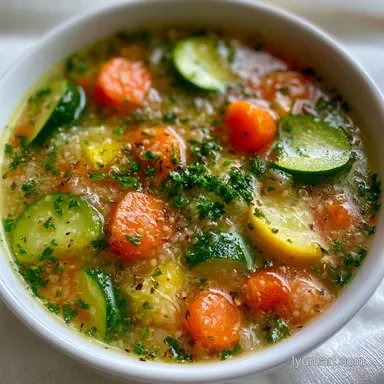
Summer Soup Olive Oil: Silky and Vibrant
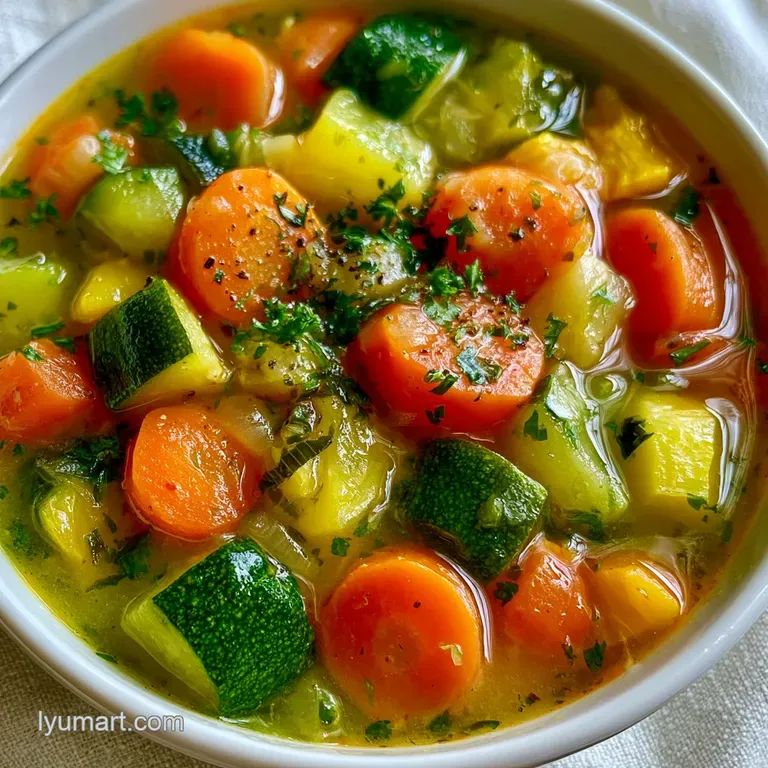
- Time: 10 min active + 15 min cook = 25 min total
- Flavor/Texture Hook: Velvety, bright, and silky
- Perfect for: Weeknight lunches or a light dinner for busy parents
That sharp sizzle of garlic hitting hot oil is basically the sound of a good day starting in my kitchen. I remember one July afternoon where the heat was so oppressive that the thought of turning on the oven felt like a crime.
I had a pile of zucchini and yellow squash from the neighbor's garden that were about to turn into mush, and I desperately wanted something that felt light but actually filled me up.
I used to think "light" meant "watery," but this Summer Soup Olive Oil changed that for me. I stopped trying to make thick cream based soups in the heat and started relying on the emulsion of olive oil and blended vegetables.
It's a complete pivot from the heavy winter stews we usually make, focusing on speed and the natural brightness of the produce.
You can expect a meal that takes less than half an hour from start to finish. It's not some fancy, slow simmered project, but a practical, minimal tool dish that delivers a velvety texture.
Trust me on this, the finishing drizzle of oil at the end is what takes it from a simple vegetable puree to something that feels special.
Summer Soup Olive Oil
The magic here is in the olive oil. While many people just use it to sauté, we're using it as a structural element. By blending the oil into the hot vegetables and then adding a raw drizzle on top, you get two different layers of flavor.
The first is a mellow, integrated richness, and the second is that peppery, fresh punch that defines high-quality extra virgin oil.
Because we're using a fast 15 minute simmer, the zucchini and squash don't lose their structural integrity or turn that sad, brownish grey color you see in overcooked vegetable soups. We're aiming for a vivid yellow green hue that looks as fresh as the ingredients taste.
It's a budget friendly win that makes the most of cheap, seasonal produce.
If you're running low on time, this is the ultimate "dump and blend" meal. You don't need a dozen pots or a complex set of gadgets. A single Dutch oven and an immersion blender do all the heavy lifting.
It's the kind of recipe that fits perfectly into a chaotic weeknight schedule without sacrificing the quality of the meal.
The Trick Behind the Texture
The texture of this soup isn't from heavy cream or flour, but from a simple process of breaking down the vegetable fibers and suspending them in fat. When you blend the cooked squash and zucchini with olive oil, you're creating a stable mixture that feels thick on the tongue.
- Fat Integration
- Blending the oil while the soup is hot helps it bind to the vegetable puree, creating a silky consistency.
- Acid Balance
- The lemon juice cuts through the oil, preventing the soup from feeling greasy.
- Fiber Breakdown
- Using a high speed blender turns the carrots and squash into a smooth, velvety base.
- Temperature Control
- Keeping the simmer short prevents the vegetables from breaking down too much, which maintains the body of the soup.
Right then, let's look at how this compares to the long simmered versions you might find in traditional cookbooks. Most people think you need hours of cooking to get depth, but with the right ingredients, 15 minutes is plenty.
| Feature | Fast Method (This Recipe) | Classic Simmer | Impact |
|---|---|---|---|
| Cook Time | 15 minutes | 60+ minutes | Saves 45+ mins |
| Color | Vibrant Green/Yellow | Dull Olive/Brown | Much more visual appeal |
| Texture | Velvety/Light | Thick/Heavy | Feels more refreshing |
| Tool Use | Single Pot + Blender | Multiple Pots/Sieves | Fewer dishes to wash |
Component Analysis
Understanding what each part does helps you tweak the recipe without ruining the balance. We're not just throwing things in a pot; we're building a flavor profile that celebrates summer.
| Ingredient | Science Role | Pro Secret |
|---|---|---|
| Extra Virgin Olive Oil | Flavor carrier & emulsion | Use a "fruity" oil for the finish to pop |
| Yellow Squash/Zucchini | Bulk & creamy base | Don't peel them; the skins hold the color |
| Lemon Juice | pH adjuster | Add it at the very end to keep the tang sharp |
| Fresh Basil | Aromatic top note | Blend it in for a green hue or stir for streaks |
Since we're focusing on minimal tools, you don't need anything fancy here. Just a good heat source and a way to blend.
What You'll Need
For this recipe, stick to the measurements. I've found that too much broth makes it watery, while too little makes it a puree rather than a soup.
- 3 tbsp extra virgin olive oil Why this? Used for the initial sauté to build base flavor.
- 1 medium (110g) yellow onion, diced Why this? Provides a sweet, savory foundation.
- 3 cloves (9g) garlic, minced Why this? Adds pungent depth that cuts through the squash.
- 2 medium (120g) carrots, sliced into rounds Why this? Adds a subtle sweetness and orange tint.
- 2 medium (400g) zucchini, chopped Why this? The primary source of the velvety texture.
- 2 medium (400g) yellow squash, chopped Why this? Complements zucchini with a milder flavor.
- 3 large (450g) ripe tomatoes, diced Why this? Adds essential acidity and body.
- 4 cups (950ml) low sodium vegetable broth Why this? Provides the liquid base without oversalting.
- 1 tsp (5g) sea salt Why this? Enhances all the natural vegetable sugars.
- 1/2 tsp (3g) cracked black pepper Why this? Adds a slight heat to balance the sweetness.
- 2 tbsp (30ml) fresh lemon juice Why this? Brightens the entire dish instantly.
- 1/4 cup (15g) fresh basil leaves, packed Why this? Provides a fresh, peppery aroma.
- 2 tbsp (30ml) extra virgin olive oil Why this? The "finishing oil" for a raw, grassy flavor.
If you're out of something, don't panic. Most of these are interchangeable if you know what to look for.
| Original Ingredient | Substitute | Why It Works |
|---|---|---|
| Yellow Squash | Baby Zucchini | Same texture. Note: Slightly more intense flavor |
| Vegetable Broth | Water + bouillon | Similar base. Note: Watch the salt levels carefully |
| Fresh Basil | Fresh Parsley | Similar freshness. Note: More "grassy" than "sweet" |
| Lemon Juice | Apple Cider Vinegar | Similar acidity. Note: Adds a slight fruitiness |
Equipment Needed
You don't need a professional kitchen for this. I usually just use what's on my counter. A Dutch oven is great because it holds heat evenly, but any large pot will do. For the blending, an immersion blender is a total lifesaver it means you don't have to pour boiling liquid into a blender jar and risk a "soup volcano" in your kitchen.
If you only have a countertop blender, just work in small batches and leave the lid slightly cracked (covered with a towel) to let the steam escape. Trust me, I've learned that the hard way.
The Cooking Process
Let's crack on. This moves fast, so have your veggies chopped and ready before you turn on the heat.
Phase 1: Building the Aromatic Foundation
- Heat 3 tbsp of olive oil over medium heat in a Dutch oven or large pot. Add the diced onion and carrots, stirring frequently until onions are translucent and carrots soften. Note: Don't brown the onions; we want sweetness, not a toasted flavor.
- Add minced garlic and sauté for 60 seconds until it smells fragrant but hasn't turned brown. Note: Garlic burns fast, so keep it moving.
Phase 2: The Rapid Simmer
- Stir in the zucchini, yellow squash, and diced tomatoes until they are well coated in oil. Pour in the vegetable broth and bring to a gentle boil.
- Reduce heat to low and simmer for 10–12 minutes until vegetables are tender but still bright in color. Note: If you simmer too long, you'll lose that "summer" vibrancy.
Phase 3: Emulsifying and Finishing
- Remove from heat. Stir in fresh basil and lemon juice. Note: Adding these at the end prevents the basil from turning black and the lemon from losing its zing.
- Using an immersion blender, process the mixture until smooth and velvety. Note: Blend for about 2 minutes to ensure all carrot chunks are gone.
- Serve immediately or chilled, drizzling the final 2 tbsp of extra virgin olive oil over each portion.
Chef's Note: For a more complex flavor, try roasting the carrots and squash for 10 minutes before adding them to the pot. It adds a caramelized note that pairs brilliantly with the raw olive oil finish.
Common Mistakes & Troubleshooting

Most issues with this Summer Soup Olive Oil come down to heat management or over processing. If the soup feels "off," it's usually a simple fix.
| Issue | Solution |
|---|---|
| Why Your Soup Separated | If you see beads of oil floating on top (besides the intentional drizzle), your emulsion has broken. This usually happens if the soup was boiled too aggressively after blending. To fix it, simply puls |
| Why Your Soup Looks Dull | If the soup is a muddy brown instead of a bright yellow green, you've likely overcooked the vegetables. The chlorophyll in zucchini and squash breaks down with prolonged heat. Next time, stick strictl |
| Is the Flavor Too Muted | Vegetables can vary in water content, which sometimes dilutes the salt and acid. If it tastes "flat," it doesn't need more salt it needs more acid. Add another teaspoon of lemon juice, and you'll noti |
Common Mistakes Checklist
- ✓ Don't peel the squash (you lose the color and nutrients).
- ✓ Don't boil the soup after adding the lemon juice.
- ✓ Don't skip the finishing oil; it's the key to the mouthfeel.
- ✓ Don't overcook the veg; 12 minutes is the sweet spot.
- ✓ Don't blend the basil for too long or it can taste "metallic."
Make It Your Own
One of the best things about this recipe is how flexible it is. You can easily shift the flavor profile depending on what's in your fridge. If you want a more heartier version, try adding a can of rinsed cannellini beans before blending. This adds protein and an even creamier texture without adding dairy.
For those who prefer a "Cold Summer Soup Recipe," simply let the finished soup cool to room temperature, then refrigerate for at least 2 hours. Serve it in chilled bowls with a pinch of smoked paprika on top for a little kick. It's incredibly refreshing on a 90°F day.
If you're looking for a vegan version, this recipe is already naturally vegan! Just ensure your vegetable broth is certified plant based. You can also swap the lemon juice for a splash of white balsamic vinegar if you want a more sophisticated, slightly sweeter tang.
For a bit of a twist, try adding a half teaspoon of ground cumin during the garlic sauté. This gives the soup an earthy, Mediterranean vibe that works surprisingly well with the sweetness of the yellow squash.
Adjusting the Batch Size
When you're cooking for a crowd or just yourself, you can't always just double the numbers. There are a few rules of thumb I follow to keep the flavor balanced.
Scaling Down (½ batch): Use a smaller pot to prevent the liquid from evaporating too quickly. Reduce the simmer time by about 2-3 minutes since there's less mass to heat up.
If the recipe calls for 1.5 cloves of garlic, just use 2 it's better to have a bit more than too little.
Scaling Up (2x-4x): This is where people usually mess up the seasoning. Do NOT double the salt or black pepper right away. Start with 1.5x the amount, then taste and adjust at the end. Also, reduce the total broth by about 10% because larger batches trap more steam and evaporate less liquid.
Baking Adjustments: While this is a stovetop soup, if you decide to roast the veg first in a large batch, lower your oven temp by about 15°C (roughly 25°F) and extend the roasting time. This ensures the middle of the tray cooks through before the edges burn.
Kitchen Myths
There are a few things people tell you about vegetable soups that just aren't true. Let's clear them up.
Myth: You need to peel carrots and squash to get a smooth soup. Truth: A decent immersion blender handles the skins of zucchini and yellow squash with ease. Keeping the skins preserves the vibrant color and adds essential fiber.
Myth: Olive oil makes a soup feel "heavy" or "greasy." Truth: It's all about the quality and the timing. By emulsifying the oil into the puree and using a high-quality extra virgin oil for the finish, you get a silky, clean feeling rather than a greasy one.
Myth: You have to simmer vegetables for hours to get a "deep" flavor. Truth: For summer soups, long simmers actually destroy the fresh, bright notes we want. A quick, precise simmer combined with fresh herbs and acid provides all the depth you need.
Storage Guidelines
This soup keeps surprisingly well. Store it in an airtight glass container in the fridge for up to 4 days. When you reheat it, do it gently on the stovetop over low heat. Avoid the microwave if possible, as it can cause the oil to separate and create "hot spots."
Regarding freezing, I'd actually suggest against it. Zucchini and squash have high water content, and when they freeze and thaw, the cellular structure breaks down. This often results in a watery soup with oil droplets floating on top.
If you must freeze it, only do so for up to 2 months and be prepared to re blend it with a bit of fresh oil upon thawing.
To keep things zero waste, don't throw away your onion skins, carrot peels, or the ends of the zucchini. Toss them into a freezer bag. Once the bag is full, boil them with water for an hour to make your own homemade vegetable broth for the next time you make this Summer Soup Olive Oil.
Pairing Ideas
Since this soup is light and velvety, you want pairings that provide a bit of a "crunch" or a sharp contrast. A toasted sourdough baguette rubbed with a raw garlic clove is the classic choice here.
If you're planning a full menu, this pairs beautifully with a crisp salad. My Homemade Coleslaw recipe adds a tangy, crunchy element that balances the smoothness of the soup.
For those who love the combination of roasted vegetables, you might also enjoy my Roasted Pepper Summer Soup as a side or a starter. Both use a similar emulsion technique, making them great for a themed summer lunch.
Finally, if you're serving this to kids, try adding some homemade croutons or a few slices of avocado on top. It adds a bit of heartiness that makes the meal feel more complete. This Summer Soup Olive Oil is all about simplicity, and the best pairings are the ones that don't overshadow the fresh garden flavors.
High in Sodium
810 mg 810 mg of sodium per serving (35% 35% of daily value)
The American Heart Association recommends a daily sodium limit of 2,300 mg to reduce the risk of high blood pressure and heart disease.
Ways to Reduce Sodium in Your Recipe
-
Swap the Broth-30%
Replace the low-sodium vegetable broth with unsalted vegetable broth or water to significantly lower the base sodium levels.
-
Omit Added Salt-25%
Completely remove the 1 tsp of sea salt; the natural flavors of the vegetables and the broth provide sufficient seasoning.
-
Boost Acidity-10%
Increase the fresh lemon juice or add a bit of lemon zest to brighten the flavors, which tricks the palate into needing less salt.
-
Amplify Fresh Herbs
Increase the amount of fresh basil or add other aromatic herbs like oregano and thyme to enhance the savory depth without adding sodium.
Recipe FAQs
What type of soup is good during the summer?
Light, vegetable based soups served chilled or warm. This recipe uses zucchini and yellow squash to create a refreshing profile that doesn't feel heavy in the heat.
What does adding olive oil to soup do?
It enhances flavor and creates a velvety mouthfeel. The initial sauté softens the aromatics, while the final drizzle adds fresh, peppery notes to the finished dish.
Which soup is best for diabetics?
Vegetable soups using low-sodium broth and non-starchy vegetables. This version relies on zucchini and yellow squash, providing a nutrient dense, low-glycemic option.
How to make a refreshing chilled soup for hot summer days?
Process the simmered vegetables with an immersion blender until smooth and refrigerate. Serve chilled with a fresh drizzle of extra virgin olive oil over each portion.
How to make a quick vegetable soup recipe?
Sauté onions and carrots, simmer with squash and broth for 10 12 minutes, and blend. The entire process takes only 25 minutes from start to finish.
What soup is good for gastritis?
Mild, blended vegetable soups that are easy to digest. The smooth, velvety texture of this blended soup reduces irritation to the stomach lining.
How to get a perfectly smooth texture?
Use an immersion blender directly in the pot until the mixture is velvety. If you enjoyed mastering this smooth emulsion here, see how a similar creamy consistency is achieved in our dessert dips.
Summer Soup Olive Oil