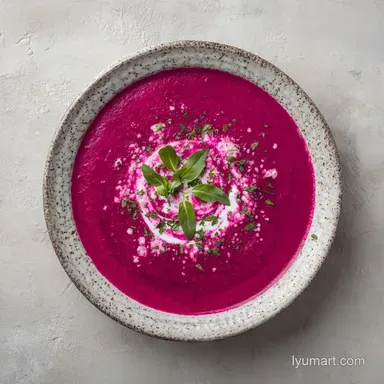
Russian Summer Beet Soup: Tangy and Refreshing
- Time: 20 min active + 4 hrs chilling
- Flavor/Texture Hook: Tangy, neon pink, and crisp
- Perfect for: Hot July afternoons or a light lunch
Making a Fresh Russian Summer Beet Soup
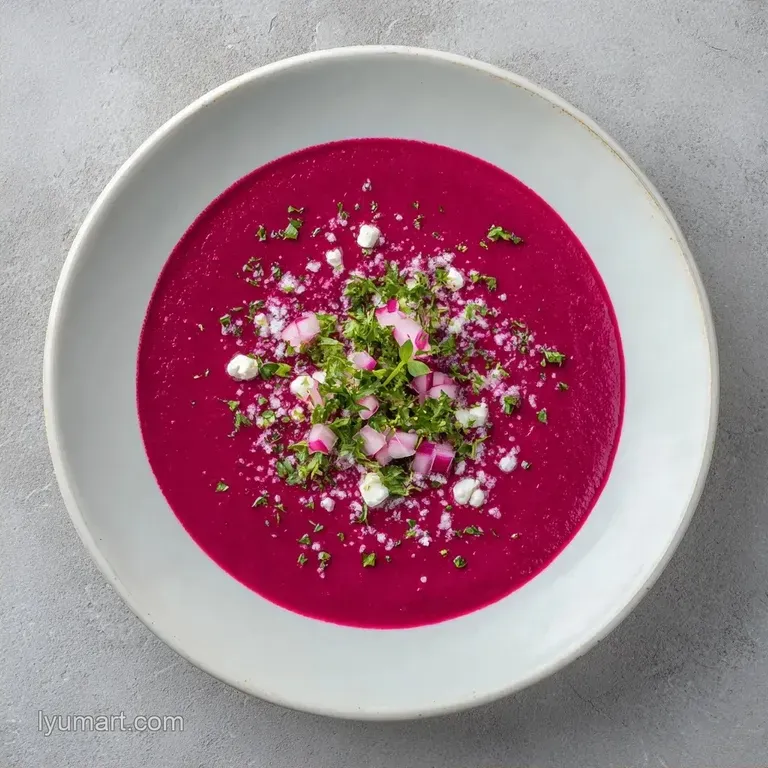
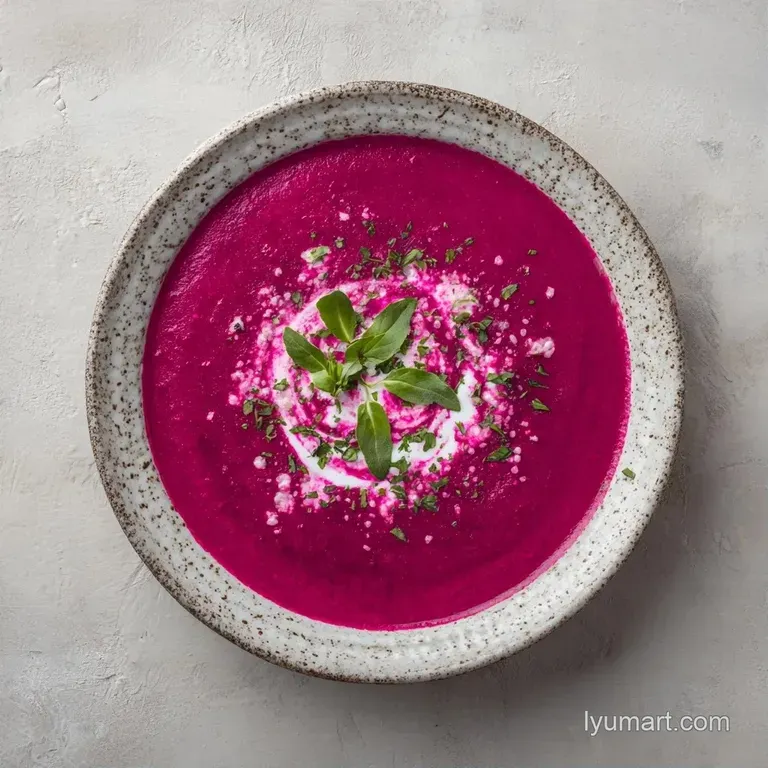
The first thing you notice is the color. It's not just red, it's an electric, neon pink that looks like it belongs in a mood ring from the 90s. I remember the first time I made this for a group of friends who had never tried cold soup.
They looked at the bowl with a mix of curiosity and genuine fear, probably wondering if it was some kind of chilled dessert. Then they took a sip, and the look on their faces shifted from "what is this" to "give me the whole pot."
It's a weirdly satisfying experience. You get the earthy depth of the beets, but it's immediately cut by the sharp tang of kefir and the crunch of fresh cucumber. It's the kind of meal that makes you realize why people in Eastern Europe actually look forward to these recipes when the heat becomes unbearable.
If you've never tried a cold beet dish, don't let the temperature throw you. This Russian Summer Beet Soup doesn't feel like "cold food" in a bad way. It feels like a refreshing tonic. It's humble, it's cheap to make, and it's one of the few dishes that actually tastes better the longer it sits in the fridge.
The Real Secret
The biggest hurdle with this dish is usually the color and the balance. If you just throw everything in a bowl, you might end up with a muddy purple liquid that looks more like a science experiment than a meal. The trick is in the timing and the acidity.
Color Locking: Adding lemon juice directly to the grated beets before anything else prevents the pigments from oxidizing. According to Serious Eats, the betalains in beets are sensitive to pH, and acid keeps them bright.
Texture Contrast: We keep the cucumbers and onions raw and add them last. This prevents them from wilting into the base, ensuring you get a distinct "snap" in every spoonful.
Flavor Melding: The four hour chill isn't just for temperature. It allows the garlic to mellow out and the sugar to balance the kefir's natural sourness.
| Component | Fresh Beets | Pre Cooked Vacuum Beets |
|---|---|---|
| Prep Time | 60+ mins (boil/peel) | 5 mins (open pack) |
| Flavor | Sweeter, more "green" | Concentrated, earthy |
| Best For | Slow Sunday cooking | Weeknight quick win |
Component Analysis
I've spent way too much time thinking about what makes the base of this soup actually work. It's all about the fat to acid ratio. If you use a kefir that's too thin, the soup feels like colored water. If it's too thick, it's more like a dip.
| Ingredient | Science Role | Pro Secret |
|---|---|---|
| Beets | Base flavor and pigment | Grate them fine for better infusion |
| Kefir | Thickener and probiotic tang | Use full fat for a velvety mouthfeel |
| Lemon Juice | pH balancer/Color stabilizer | Use fresh juice, not bottled |
| Fresh Dill | Aromatic top note | Chop right before adding to keep oils active |
Essential Ingredients
Keep it simple. You don't need fancy equipment here, just fresh produce. I always suggest buying the beets with the greens still attached if you can, though we only need the roots for this.
- Cooked beets (300g), grated Why this? Earthy sweetness and neon color
- Substitute: Canned beets (drain well, but they are saltier)
- Kefir or buttermilk (480ml)Why this? Provides the creamy, sour base
- Substitute: Greek yogurt thinned with water
- Cold water or chilled vegetable broth (240ml)Why this? Adjusts the consistency
- Substitute: Unsweetened almond milk (for a nuttier tone)
- Lemon juice (15ml + 15ml)Why this? Brightens the flavor and locks the pink
- Substitute: Apple cider vinegar
- English cucumber (60g), finely diced Why this? Fresh crunch and hydration
- Substitute: Persian cucumbers (no peeling needed)
- Green onions (30g), thinly sliced Why this? Sharp, fresh onion bite
- Substitute: Chives
- Fresh dill (30g), chopped Why this? The signature herbal note
- Substitute: Parsley (though it lacks the dill punch)
- Garlic (6g), minced finely Why this? Savory depth
- Substitute: Garlic powder (use 1/4 tsp)
- Salt (3g)Why this? Enhances all other flavors
- Sugar (3g)Why this? Cuts through the kefir's acidity
The Tool Kit
You don't need a fancy blender for this. In fact, I prefer not using one because you want the texture of the grated beets and diced veggies. A blender turns this into a smoothie, and we want a soup.
- Box Grater: For getting the beets into fine shreds.
- Large Mixing Bowl: To fold everything together without splashing.
- Whisk: To ensure the kefir and water are completely smooth.
- Glass Container: Glass is better than plastic here because beets will stain plastic containers forever.
Step by step Process
Right then, let's get into it. This is more of an assembly job than "cooking," since we're using pre cooked beets.
- Grate the cooked beets into a bowl. Immediately toss them with 15ml of lemon juice and 3g of salt. Note: This "pickles" them slightly and saves the color.
- Let the beets sit for 10 minutes. until the liquid looks vibrant and glossy.
- In your large bowl, whisk together the 480ml kefir, 240ml cold water, 3g sugar, and the remaining 15ml lemon juice.
- Pour the beet mixture into the kefir base. Stir until the liquid is a uniform pink.
- Fold in the 60g diced cucumbers, 6g minced garlic, 30g sliced green onions, and 30g chopped dill.
- Stir slowly. Note: Don't overmix or you'll bruise the dill.
- Transfer everything to a glass container.
- Refrigerate for at least 4 hours. until chilled through and flavors have melded.
Fixing Common Issues
The most common mistake I see is people trying to serve this immediately. If you do, the garlic tastes too raw and the beets feel "separate" from the cream. Trust the chilling process.
Bland Tasting Broth
If the soup tastes flat, it's usually a lack of acid. Beets are very sweet, and kefir varies in tartness. Add another squeeze of lemon juice or a pinch of salt. If you're looking for other refreshing summer options, my Instant Pot Zucchini Soup uses a similar balancing act of acidity and cream.
Dull Color
If your soup looks purple or brown, the pH is too high. This happens if you skip the initial lemon juice soak. You can try adding a bit more vinegar or lemon juice to the finished pot to shift the color back toward pink.
Separated Liquid
Kefir can sometimes separate if it sits for too long or if the salt draws too much water out of the cucumbers. Give it a quick stir with a spoon before serving to bring the emulsion back together.
| Problem | Root Cause | Solution |
|---|---|---|
| Muddy Color | Not enough acid | Add 1 tsp lemon juice |
| Too Thick | High fat kefir | Stir in 50ml cold water |
| Bitter Taste | Over minced garlic | Balance with extra dill |
Common Mistakes Checklist
- ✓ Didn't soak beets in acid first (Color loss)
- ✓ Used a blender (Lost texture)
- ✓ Served immediately (Raw garlic taste)
- ✓ Used plastic containers (Permanent stains)
- ✓ Added cucumber too early (Soggy texture)
Personalizing Your Bowl
Once you've got the base down, you can play around with it. I often treat the base as a canvas. If you want something more filling, add a chopped hard boiled egg on top. It adds a rich, creamy contrast to the sharp soup.
If you're going vegan, you can swap the kefir for a cashew based kefir or a mix of soy yogurt and lemon juice. It doesn't have the exact same probiotic tang, but it's still very satisfying. For another cold option, you might like Russian Okroshka, which uses a similar base but skips the beets for a more savory, veggie heavy vibe.
For a protein twist, some people add diced ham or smoked tofu. I find that smoked tofu works brilliantly because the smokiness plays off the earthiness of the Russian Summer Beet Soup. Just make sure the tofu is chilled before you stir it in.
| If you want... | Do this... | Result |
|---|---|---|
| More Heartiness | Add 1 hard boiled egg | Richer, filling meal |
| Extra Crunch | Add diced radishes | Peppery, sharp snap |
| Vegan Version | Use cashew kefir | Creamy, dairy-free |
Storage And Leftovers
This soup lasts in the fridge for about 3 to 5 days. In fact, day two is usually when the flavor peaks. Store it in a glass jar with a tight lid to keep the aromatics from leaking into your other food.
One warning: do not freeze this. The kefir will break and the cucumbers will turn into mush upon thawing. It's just not meant for the freezer.
For zero waste, don't throw away your beet peels if you roasted the beets yourself. You can toss them in a pot with some water and a bay leaf to make a quick, earthy vegetable stock. This stock can then be used as the "cold water" component in your next batch of Russian Summer Beet Soup for extra depth.
Serving Suggestions
The right sidekick makes a huge difference. You absolutely need a piece of dense, toasted rye bread. I like mine with a thick slab of salted butter. The bitterness of the rye cuts through the creaminess of the soup perfectly.
Pour the soup into chilled bowls. I like to garnish with an extra sprig of dill and a crack of black pepper right before serving. If you have some fresh radishes, slice them paper thin and float them on top. It adds a bit of peppery heat that wakes up the whole dish.
Trust me on this: keep the bowls in the freezer for 10 minutes before pouring. When the soup hits a frosted bowl, it stays icy cold until the last spoonful, which is exactly what you want on a 90 degree day.
Recipe FAQs
How to make this Russian summer beet soup?
Grate cooked beets and toss them with lemon juice and salt. Let them sit for 10 minutes, then whisk them into a base of kefir and water before folding in the cucumbers, garlic, and fresh herbs.
What does Russian summer beet soup taste like?
It is creamy, tangy, and refreshing. The earthy sweetness of the beets is balanced by the acidity of the kefir and the crisp, clean flavor of fresh cucumbers and dill.
Can I use buttermilk instead of kefir?
Yes, buttermilk works perfectly. It provides a similar creamy consistency and the necessary tartness required for this chilled soup.
Why do I need to toss grated beets with lemon juice first?
It preserves the vibrant pink color. The acid prevents the beets from oxidizing and turning brown. If you enjoyed balancing flavors here, see how the same acid technique works in our spiced summer tomato soup.
Is it true I can freeze this beet soup for later?
No, this is a common misconception. Freezing will cause the kefir to break and the cucumbers to become mushy upon thawing.
What is the difference between this cold soup and traditional hot borscht?
The temperature and the base are different. Traditional borscht is a hot, savory broth, whereas this summer version is a chilled, kefir-based soup designed for cooling down.
How long should I refrigerate the soup before serving?
Chill for at least 4 hours. Letting it sit overnight is ideal, as it gives the minced garlic and chopped dill more time to meld with the other flavors.
Russian Summer Beet Soup in 20 Minutes