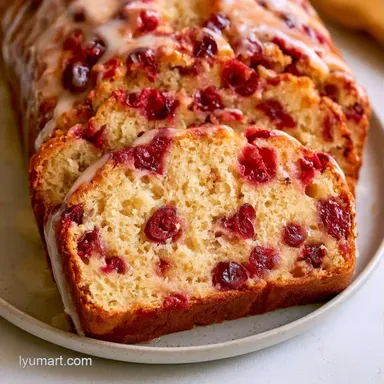
Cranberry Orange Bread with Zesty Glaze
- Time:15 minutes active + 50 minutes baking
- Flavor/Texture Hook: Tangy, zesty, and tender
- Perfect for: Holiday mornings or winter gifting
The scent hits you before the oven even finishes preheating. It is that sharp, clean smell of fresh orange zest mixed with the warmth of melting butter. This is the kind of bread that turns a quiet Sunday morning into an event.
I usually make this for my family during the December rush, when the house is full and we need something that feels special but doesn't keep me in the kitchen all day.
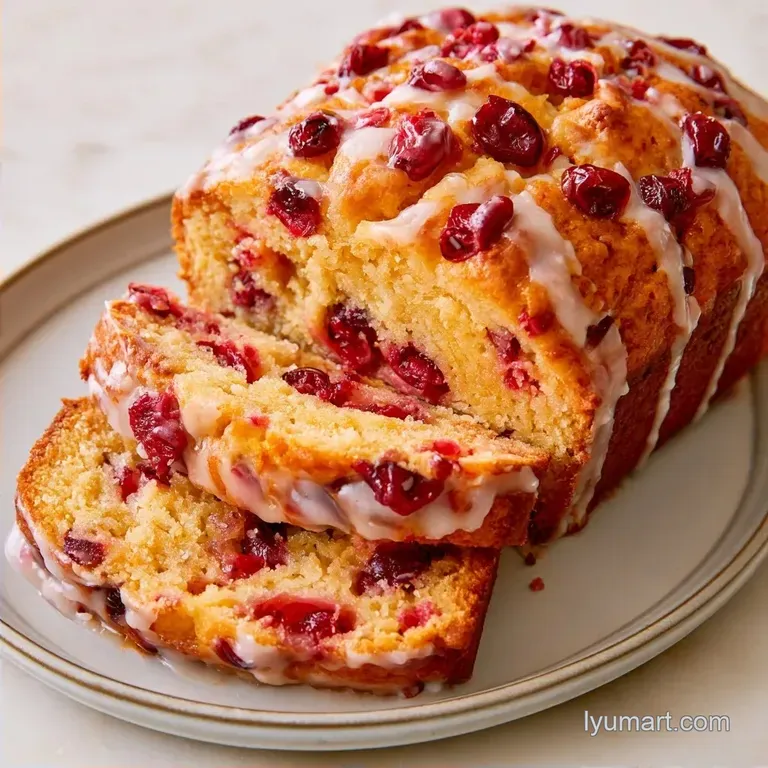
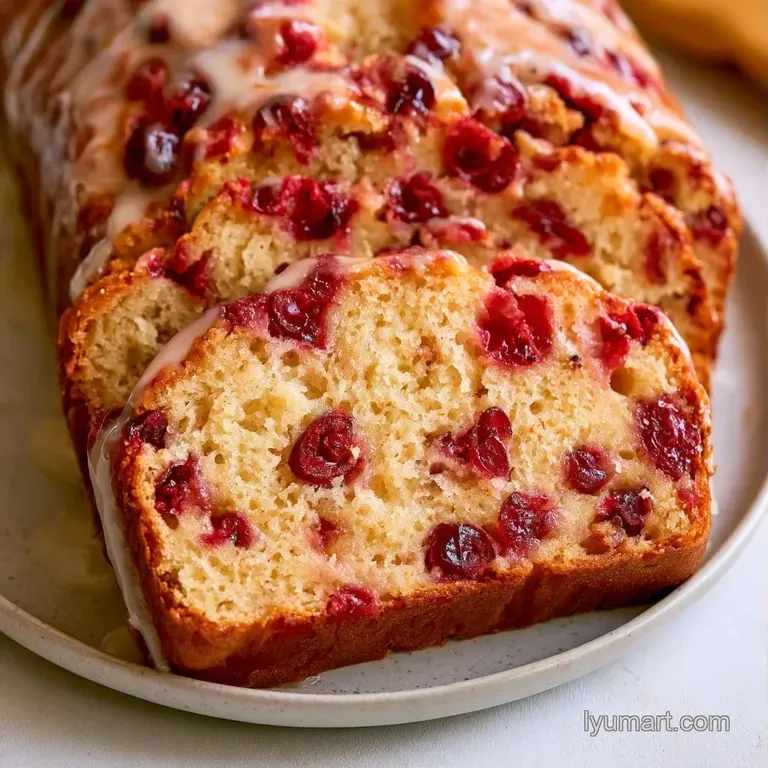
You can practically taste the winter air in every slice. The crimson berries pop against the golden crumb, and the glaze adds a hit of sweetness that ties everything together. It is bright, cheerful, and honestly, just comforting.
Whether you are hosting a big brunch or just want something to go with your morning coffee, this Cranberry Orange Bread delivers. It is a simple bake that looks like you spent hours on it, but it really just comes down to a few smart steps and some fresh citrus.
Why This Loaf Works
Zest and Juice: The juice adds moisture and a mild tang, but the zest is where the magic happens. The oils in the zest provide a concentrated citrus punch that doesn't evaporate in the heat.
Floured Berries: Tossing dried cranberries in a bit of flour stops them from sinking. This ensures you get berries in every single bite, from the bottom of the pan to the top.
Room Temp Egg: Using a room temperature egg helps the batter emulsify. This creates a more uniform structure and a better rise. If you love these flavors, you might also enjoy my Cranberry Brie Bites for a more savory twist on the same seasonal ingredients.
| Method | Time | Texture | Best For |
|---|---|---|---|
| Quick Mix | 65 mins | Tender & moist | Easy morning treats |
| Creamed Butter | 90 mins | Cake like & airy | Dessert style loaves |
Right then, let's look at what we need to make this happen.
Essential Baking Tools
Basic equipment will do. You'll need a standard 9x5 inch loaf pan. I recommend using parchment paper or a pan with a removable bottom to avoid the struggle of prying a sticky cake out of a metal tin.
Grab a large mixing bowl and a jug to combine your wet ingredients. I rely on a silicone spatula to fold everything together gently, which prevents the batter from becoming overmixed. While a KitchenAid or similar stand mixer can handle the initial whisking, I prefer doing it by hand to better manage the texture.
Lastly, use a fine grater for the zest. A Microplane is ideal for creating those small, aromatic orange pieces while avoiding the bitter white pith.
The Ingredient List
A combination of all-purpose flour and granulated sugar ensures a traditional crumb. Baking powder is used for leavening, while a touch of salt helps temper the sugar. For a luxurious, tender texture, we incorporate melted unsalted butter.
Fresh orange juice and zest provide the core flavor profile. It is crucial to use fresh juice, as store-bought versions can have a metallic quality that dulls the vibrant taste of the Cranberry Orange Bread. A splash of whole milk is added to mellow the citrus acidity.
The glaze consists of powdered sugar mixed with a bit more orange juice for a thick, pourable consistency. Once set, it creates a glossy white contrast against the golden-brown loaf.
For the Bread Base
- 2 cups (250g) all purpose flour Purpose: Gives the loaf the structure it needs to rise
- 1 cup (200g) granulated sugar Purpose: Adds sweetness and ensures a tender texture
- 2 tsp (10g) baking powder Purpose: Key for creating a good lift
- ½ tsp (3g) salt Purpose: Heightens the flavors of the berries and citrus
- ½ cup (113g) unsalted butter, melted and slightly cooled Purpose: Ensures a moist, rich crumb
- 1 large egg, room temperature Purpose: Acts as a binder and stabilizes the batter
- ½ cup (120ml) fresh orange juice Purpose: Main liquid and primary flavor source
- 1 tbsp (6g) orange zest, finely grated Purpose: Provides aromatic, concentrated citrus oils
- 1 tsp (5ml) vanilla extract Purpose: Introduces a warm, subtle depth
- ¼ cup (60ml) whole milk, room temperature Purpose: Helps soften the overall texture
- 1 cup (120g) dried cranberries Purpose: Adds tangy pops of flavor and color
For the Orange Glaze
- 1 cup (120g) powdered sugar, sifted Purpose: Forms a sweet, smooth coating
- 2 tbsp (30ml) fresh orange juice Purpose: Adjusts consistency and adds zestiness
- ½ tsp (2g) orange zest Purpose: Provides an extra burst of citrus and color
| Original Ingredient | Substitute | Why It Works |
|---|---|---|
| All Purpose Flour | Almond Flour | A gluten-free alternative. Note: Results in a nuttier flavor and denser crumb |
| Whole Milk | Oat Milk | dairy-free choice. Note: Offers a similar texture with a subtle taste |
| Dried Cranberries | Dried Cherries | Provides a similar tang. Note: Naturally sweeter than cranberries |
| Unsalted Butter | Coconut Oil | Vegan-friendly swap. Note: May introduce a light coconut scent |
I highly recommend sifting the powdered sugar. It's much harder to remove lumps from the glaze after the orange juice has been mixed in.
Recipe Basics
The timing for this Cranberry Orange Bread is quite simple. Preparation and mixing take about 15 minutes, followed by 50 minutes of baking at 350°F (175°C).
Including cooling and glazing, the entire process takes approximately 65 minutes.
This recipe makes one standard loaf, which I typically divide into 12 slices. Each piece is a hearty serving, ideal for breakfast.
For a smooth finish, make sure your milk and eggs are at room temperature. Cold components can cause the melted butter to clump, leading to a lumpy batter. To warm your eggs more quickly, let them sit in a bowl of warm water for 5 minutes.
Baking Guide
Phase 1: Prep and Priming
Preheat your oven to 350°F (175°C). Grease your 9x5 inch loaf pan and line the bottom with parchment paper. This is a lifesaver when it comes to getting the loaf out. In a small bowl, toss the dried cranberries with one tablespoon of the flour you already measured.
Stir until the berries are coated in a thin white powder.
Phase 2: Mixing the Batter
Whisk the remaining flour, sugar, baking powder, and salt together in a large bowl. In a separate jug, combine the melted butter, room temp egg, orange juice, zest, vanilla, and milk. Pour the wet mixture into the dry ingredients. Stir with a spatula just until combined.
Stop as soon as you see no more flour streaks. Overmixing develops too much gluten, which makes the bread tough instead of tender. Gently fold in the floured cranberries with a few slow turns of the spatula.
Phase 3: The Bake
Pour the batter into the pan and smooth the top with your spatula. Place it on the center rack of the oven. Bake for 50-55 minutes until the top is deep golden brown and a toothpick comes out clean. I usually check it at the 45 minute mark.
If the top is browning too fast, you can tent it loosely with foil. Let it cool in the pan for 10 minutes before moving it to a wire rack.
Phase 4: Finishing with Glaze
Once the loaf is completely cool, whisk together the powdered sugar, orange juice, and zest. The result should be a velvety consistency that holds its shape but still drips. Drizzle it over the top of the bread, letting it run down the sides naturally.
Chef Note: For a more professional look, use a fork to drizzle the glaze in thin, zig zagging lines across the top.
Solving Baking Issues
If your loaf didn't come out quite right, don't panic. Most bread issues are easy to fix in the next batch. One of the most common problems is a "sinkhole" in the middle. This usually happens if you open the oven door too early, letting out the heat and causing the structure to collapse.
Keep the door shut until at least 40 minutes have passed.
Another issue is a dense, gummy center. This is almost always caused by overmixing the batter. When you stir too much, you pop the air bubbles created by the baking powder. Be gentle with your spatula.
If the edges are burnt but the middle is raw, your oven might be running hot. Using an oven thermometer is the only way to be sure. Otherwise, try moving the rack one position lower.
Sinking Middle
The structure collapsed during the bake, usually due to a temperature drop or overmixing.
Burnt Top
The sugars in the glaze or the top of the batter caramelized too quickly.
Dense Crumb
The bread feels heavy or rubbery instead of soft.
| Problem | Root Cause | Solution |
|---|---|---|
| Sinking center | Opening oven door too early | Keep door closed until 40 mins |
| Gummy middle | Overmixing the batter | Stir only until flour disappears |
| Burnt crust | Oven temperature too high | Tent with foil after 30 mins |
| Berries at bottom | Not coating berries in flour | Toss berries in 1 tbsp flour first |
If you are looking for other winter bakes, my Fresh Pumpkin Bread uses a similar method but a warmer, spicier profile.
Baking Truths
Some people say you should use a stand mixer for everything to get the best rise. That's not true for quick breads. A stand mixer often overworks the batter, which leads to a tough loaf. A hand stirred batter is usually more tender.
There is also a belief that room temperature eggs are just a suggestion. In reality, cold eggs can cause the melted butter to clump. This disrupts the emulsion and can lead to an uneven bake.
Finally, some think fresh cranberries are always better. While they are tart, they release a lot of moisture during baking. This can make the bread soggy. Dried cranberries are more reliable for this specific loaf.
Freshness Tips
This Cranberry Orange Bread remains tender for several days. Keep it sealed in a container on your counter for up to 3 days. In high-humidity climates, store the loaf in the refrigerator for up to 5 days, though a light toast will restore the bread's softness.
This bread is excellent for freezing. Wrap each slice in parchment paper before tucking them into a freezer-safe bag. These will remain high-quality for up to 3 months. For warming, use a toaster or microwave the slice for 20 seconds.
Avoid wasting your orange peels. You can zest the skins and keep that zest in a small tub in the freezer for later recipes, or simmer the peels along with a cinnamon stick to create a natural scent for your home.
Creative Twists
If you want to change the vibe of this recipe, there are a few easy ways to do it.
- Extra crunch? → fold in 1/2 cup of chopped walnuts or pecans.
- More tang? → replace 1 tbsp of orange juice with lemon juice.
- Double the fruit? → add 1/2 cup of dried apricots.
You can also try making this as a "mini loaf" for gifts. Divide the batter into four small loaf pans and bake for about 25-30 minutes. These are great for holiday baskets. If you prefer a different citrus, lime works well for a zingier, more tropical feel.
Just swap the orange juice and zest for lime versions.
Plating Ideas
For a professional presentation, pay attention to the color palette. With the gold of the bread and the crimson of the berries already present, adding a few vibrant accents will really elevate the dish.
Arrange a few thin slices of fresh orange on your serving platter. Scattering fresh pomegranate seeds adds a ruby red brilliance that complements the dried cranberries. For a final touch, a light dusting of powdered sugar around the base of the loaf creates a clean, snowy effect.
Serve the slices while still slightly warm with a pat of salted butter. The saltiness balances the sweetness of the glaze and enhances the orange notes, making the entire presentation feel more refined.
Precision Checkpoints
- Batter Consistency: Should be thick and droppable, not pourable.
- Internal Temp: A toothpick should come out with a few moist crumbs, not wet batter.
- Glaze Thickness: Should be thick enough to coat a spoon but fluid enough to drizzle.
Recipe FAQs
What makes the berries stay evenly distributed instead of sinking?
Toss the dried cranberries in a tablespoon of flour. This coating creates friction against the batter, preventing the fruit from settling at the bottom of the pan.
How to ensure the loaf doesn't sink in the middle?
Bake for 50-55 minutes until a toothpick comes out clean. Removing the bread too early prevents the structure from setting, which leads to a collapsed center as it cools.
Is it true that this bread is a low-calorie health food?
No, and here's why. Each slice contains 295 calories and a significant amount of sugar, making it a treat rather than a health-focused meal.
Can I use fresh cranberries instead of dried?
Yes, but you must manage the extra moisture. Fresh berries release liquid during baking; if you prefer a denser, more stable crumb, you might enjoy the texture of our pumpkin bars.
Which method keeps the bread moist for several days?
Store individual slices in a sealed container. This prevents air from drying out the crumb and keeps the orange glaze from crystallizing.
Why is my cranberry bread tough or rubbery?
You likely overmixed the batter. Stirring too vigorously develops excess gluten, so use a spatula to combine ingredients until just blended.
Is the glaze supposed to be applied before baking?
False. Drizzling the glaze over a completely cooled loaf ensures it stays thick and glossy instead of absorbing into the bread or burning.
Cranberry Orange Bread for 12 Slices